Rome (AsiaNews) - On Friday, 15 November, a conference entitled ‘Matteo Ricci, a legacy of friendship, dialogue and peace’ was held at the Gregorian University in Rome, alternating historical reflections on the legacy of Ricci and the Jesuit mission in China with statements on current events and hopes for future prospects in relations between Christianity and China.
The conference was divided into two distinct moments: in the opening session - attended by a large audience of students and scholars from abroad and many Chinese residents in Rome, journalists, the bishop of Macerata and authorities working in offices of the Holy See, including Archbishop Claudio Celli, the protagonist of recent missions to China on behalf of the Holy See) - some of the protagonists of the dialogue between the Holy See and China spoke.
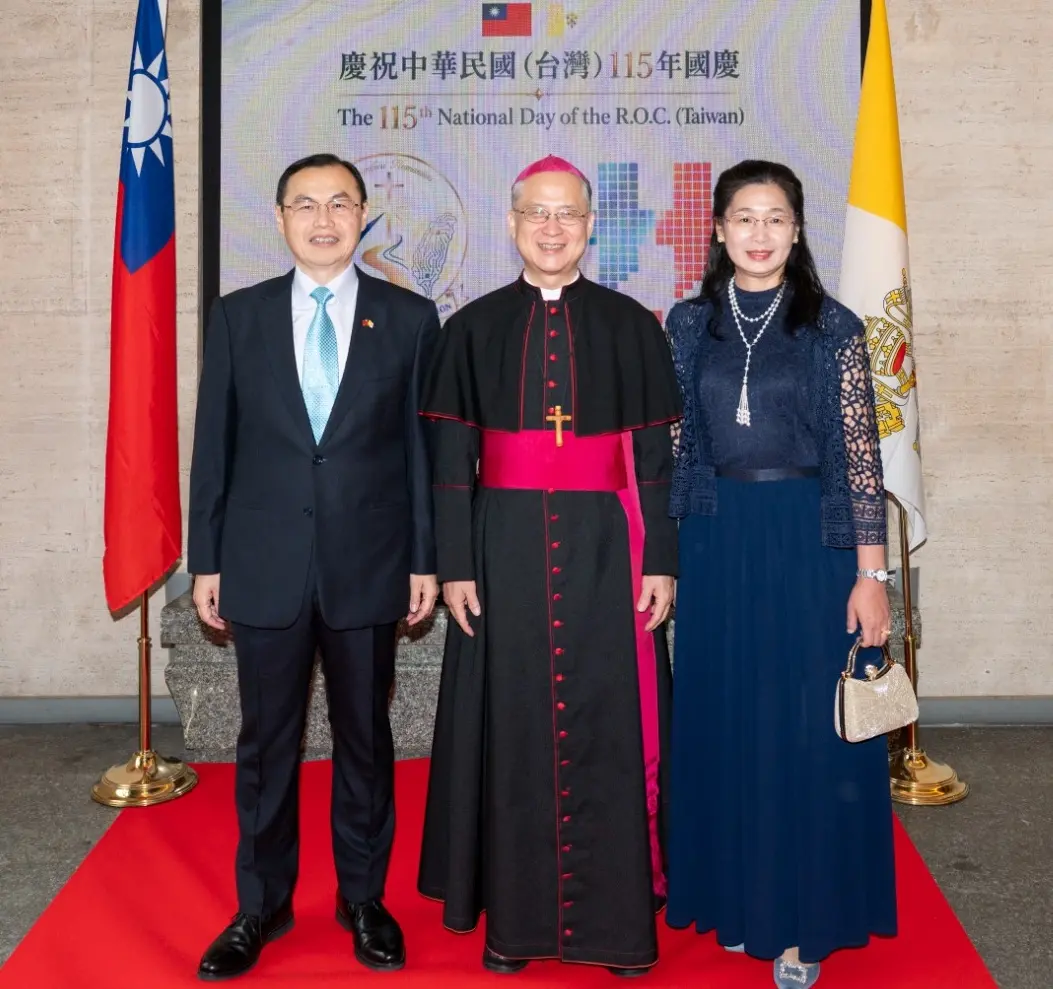
The Secretary of State Cardinal Pietro Parolin illustrated the thoughts of John Paul II, Benedict XVI and Francis on Matteo Ricci and China, showing the continuity and specificity of each. Hong Kong Cardinal Stephen Chow illustrated the path of the Catholic Church in China, also dwelling on the current situation and hoping for a deepening of the ongoing dialogue.
Jesuit Father Federico Lombardi - who is the draftsman of the positio for the beatification - said that Ricci, a champion of dialogue and encounter, embodied the model of inculturation, made his own centuries later by Father General Pedro Arrupe, whose diocesan phase for beatification has just ended.
The current Provost General of the Society of Jesus, Arturo Sosa, insisted on the holiness of life of Matteo Ricci and his religious inspiration, stating that even today Ricci is a reference point and a concrete model for the Jesuit mission.
The Gregorian University, the ancient Roman College where Ricci did his philosophical, humanistic and scientific studies, organised the conference with the Historical Archives of the Society of Jesus and with the patronage of Georgetown University (USA). It was not an occasion to announce anything new. Rather, it was an initiative that gathered and involved above all the world of Jesuits linked to the missionary history in China, including the directors of the Ricci Institutes in Macau, Paris and Taipei.
The academic sessions were led by Jesuit scholar Nicolas Standaert from the University of Leuven (Belgium), who has been leading Christian studies on China from innovative perspectives for decades. Scholars from various parts of the world included the young Valentina Yang and the director of the Li Madou Study Centre in Macerata, Fr Giovanni Battista Sun.
Other scholars included Elisa Giunipero from the Catholic University of Milan and Anthony Clark from the University of Withworth (USA). The main theme was to grasp the value of Ricci's mission in the dimension of the relationship with the Chinese reality and its interlocutors and friends.
The mission is always a reality ‘in the midst of’ (in between), and must also and above all be seen from the point of view of the other, that is, of the reception and the relationship to which the mission gives rise.
I would like to conclude this reflection on an interesting day of study and interaction between scholars from all over the world with a remark. We must not forget the modest numerical size of Matteo Ricci's mission and place it in the right proportion: at the death of the humanist missionary (1610) there were a total of 16 Jesuit missionaries in China and small communities of no more than 3000 believers, among whom the high scholars were no more numerous than the fingers of one hand. A very modest reality, a totally insignificant percentage, in an immense country of some 150-200 million inhabitants, even then the most populous in the world.
The mission has always been a grain sown in an immense field. The number of missionaries, their training, and their qualities are always radically inadequate to the vastness of the enterprise: now, as in the past, and (one must believe) also in the future.
The mission in China is eloquent evidence that the significance of a Christian experience cannot be measured in terms of accounting results, but by its evangelical quality. And after more than 400 years, the Christian experience of a handful of foreign missionaries and a few Chinese Catholics is still a light that continues to illuminate the present, a precious mine from which we continue to draw for new meaning and direction.