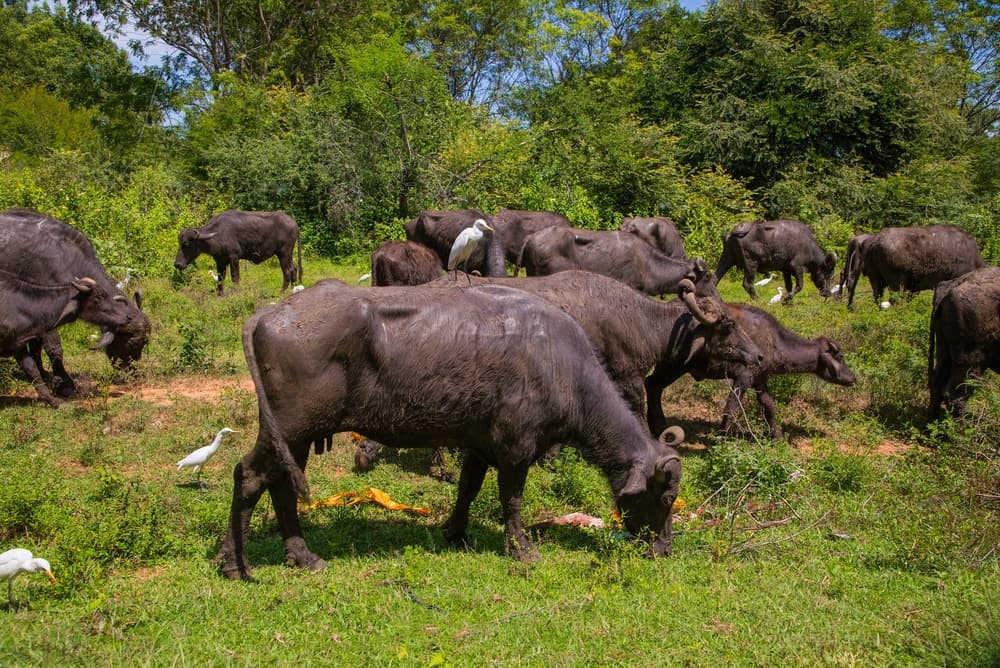
Colombo (AsiaNews) – Monks and livestock farmers in Sri Lanka have recently joined forces in the battle to defend grazing rights in Wattamadu, a town in the Eastern Province.
The Venerable Senapathiye Ananda, president of the Northern and Eastern Sinhalese Organisation, Buddhist monks, members of the Wattamadu Dairy Farmers’ Association and officials from the Alayadivembu Agricultural Cooperative for Livestock and Dairy Production in Ampara District have lodged a complaint.
The complaint is addressed to the Ampara District Office of the Sri Lankan Human Rights Commission and was lodged on 27 June, denouncing what is described as a “conspiracy” aimed at depriving them of their grazing rights.
In 1974, the grazing land was allocated to dairy farmers by the government of the time via a decree published in the Official Gazette. Covering an area of 4,000 acres, it is the only grazing land in the Wattamadu area of Akkaraipattu, in the Ampara district.
If the ban is enforced, the organisers of the protest explain, the rights of around 300 Sinhalese, Tamil and Muslim livestock farmers would be violated.
The area falls under the jurisdiction of the Thirukkovil Divisional Secretariat, where cattle farmers and rice farmers are in conflict over access to grazing land. It also constitutes a vital habitat for 250–300 wild elephants, preventing them from wandering into the surrounding villages.
In 1972, the Land Registry demarcated and marked the boundaries of the pastures in the area, whilst two years later Wattamadu was declared a ‘designated grazing area’, covering an area of 3,850 acres, through boundary markers, maps and written ordinances.
The main problem for dairy farmers is that some outside farmers have appropriated entire traditional pastures. For centuries, these pastures have served as vital feeding and grazing grounds for dairy cattle.
However, due to political interference by previous governments, the land has been forcibly expropriated, often in breach of the court’s own orders.
After filing the complaint with the Ampara District Office, Ven. Senapathiye Ananda recalled that “the Wattamadu pasture, allocated to dairy farmers, has, following the period of terrorist conflict, become the target of attempts by an organised group to seize it by force and drive out the farmers. “If the pasture, which is home to over 30,000 head of dairy cattle, were to be lost,” the religious leader continued, “the livelihoods of some 300 farming families would also be put at risk, including the lives of the cattle, which would be deprived of food and care.”
When interviewed by AsiaNews, Wijepala Jayasinghe, Arul Ravichandrarajah and Ajaz Mohammed explained that “in 2015, rice farmers claiming ownership of the pastures had submitted 525 land permits, claiming they had been issued by the Thirukkovil Divisional Secretariat.
However, the Deputy Land Commissioner of Ampara had confirmed that these permits were forged and legally invalid.
Instead of taking action against those who allegedly attempted to fraudulently appropriate state-owned land, the herders claim that attempts are currently being made to allocate the land in question to them.”
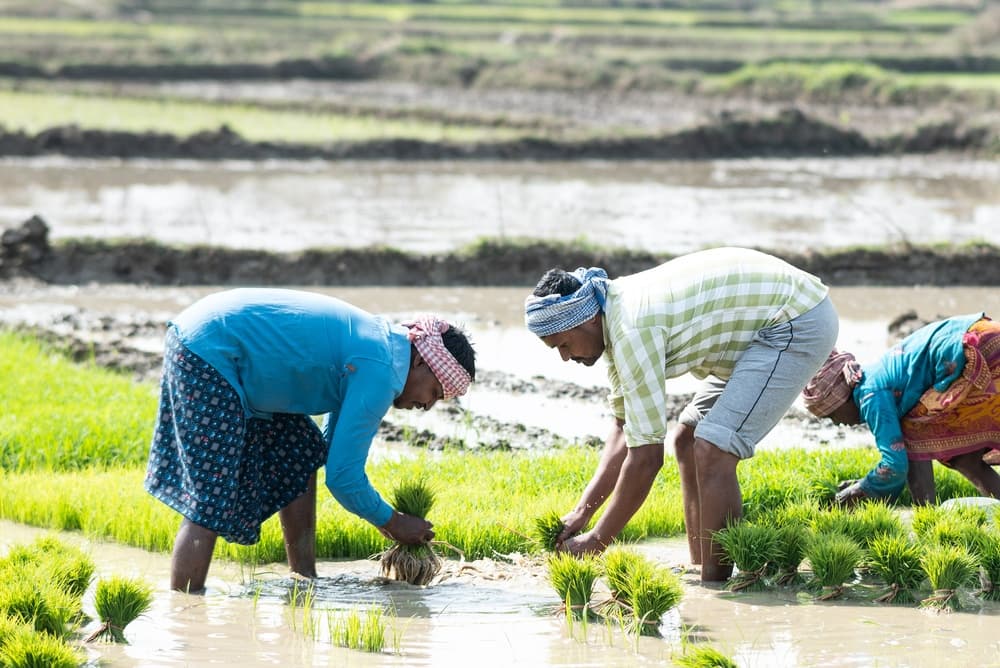
“As the District Secretary has granted unauthorised rice farmers permission to cultivate sections of land, this has led to conflicts between livestock farmers and rice farmers, with the livestock farmers and the clergy – they conclude – organising protests to prevent the pastures from being turned into rice fields.”
According to senior officials at the National Livestock Development Board (NLDB), “pastures provide habitat, shelter and food for dairy cattle and wild elephants.
If this land were taken away from dairy farmers and distributed amongst rice farmers, these wild elephants too,” they warn, “would lose their habitat. And this would lead to conflict between humans and elephants, as the elephants might start entering villages, causing serious destruction’.
The statement concludes, “If dairy farmers were to lose the pastures allocated to them, they would have no alternative but to graze their cattle in state-owned forests. Although the land was surveyed and published in the Official Gazette in the 1970s, access to these areas was temporarily restricted during the civil war. And although it was designated as pasture, it was never formally transferred to the Ministry of Livestock”.