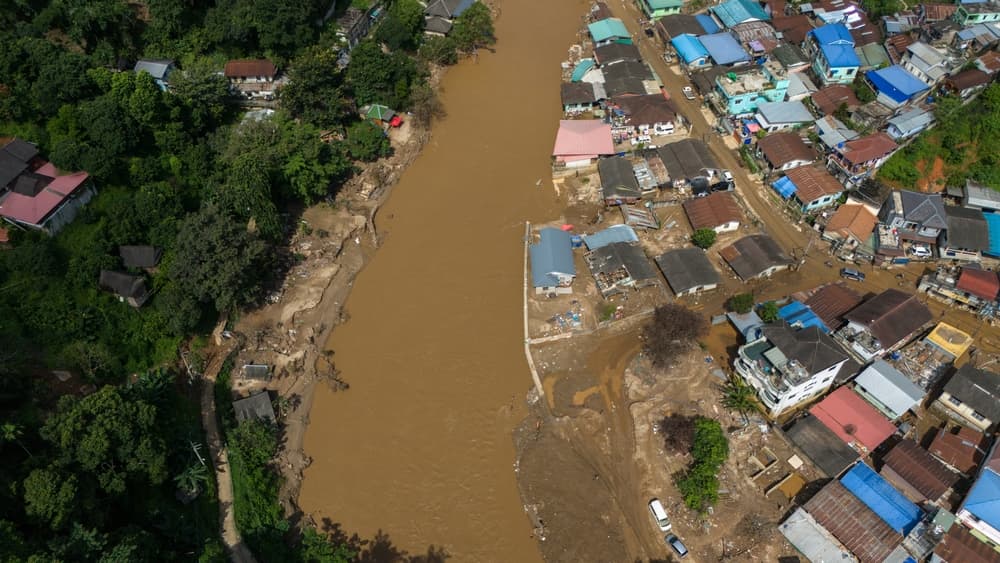
Bangkok (AsiaNews) – Dozens of Thai activists rallied outside the Chinese embassy in Bangkok, calling on Beijing to take action against river pollution in northern Thailand, where high levels of arsenic and other heavy metals have been detected in recent months.
The toxic substances originate from Shan State, northeastern Myanmar, where gold and rare earth mining has expanded rapidly in recent years in areas controlled by armed ethnic groups backed by China, coinciding with the civil war that broke out in 2021 in that country.
The protests reflect growing public concern in Thailand, but also the difficulty of finding a partner capable of addressing the problem. Beijing has rejected the accusations, arguing that the issue must be addressed directly by Thailand and Myanmar.
The reality on the ground, however, confirms that Beijing's intervention is the only factor that could truly bring about change. Most of the mines are located in territories controlled by the United Wa State Army (UWSA), one of Myanmar's most powerful ethnic military groups.
The UWSA effectively controls its own autonomous territory along the border with China, which has financed and supported the group over the decades to protect its interests.
In the wake of the 2021 coup, Myanmar’s military grip over the border regions collapsed. Today, vast areas in Shan and Kachin States are run by armed groups that form the opposition to the military regime, many of which maintain close economic ties with Chinese companies.
Several reports have confirmed that the increased demand for rare earths has expanded mining activity in these mineral-rich areas, often without environmental controls.
The problem has long had a transboundary dimension. The Kok, Sai, Ruak, and Mekong rivers flow through Myanmar before entering northern Thailand, where they supply drinking water and irrigate vast agricultural areas in the provinces of Chiang Rai and Chiang Mai.
Thai authorities have detected arsenic concentrations exceeding safety limits, while health tests have also identified traces of the heavy metal in some residents of communities along the Kok River. Pollution is already devastating multiple sectors: fishing, agriculture, and local tourism.
The issue has reached Thailand’s Parliament. The chair of the Senate Committee on Human Rights, Norasate Prachyakorn, criticised the government for failing to respond within the required 60 days to requests for clarification sent by independent United Nations experts on mining pollution in Shan State.
The same questions were also sent to the Chinese government and Myanmar’s military junta.
The senator has called on the government to start negotiations with both China and Myanmar, describing the contamination of waterways as a “rising threat to public health”.
But the mining areas from which the pollution originates are not controlled by the military junta, but by the UWSA. Therefore, normal diplomatic negotiations between Bangkok and Naypyidaw risk having limited effect on territories where the military regime has virtually no control.
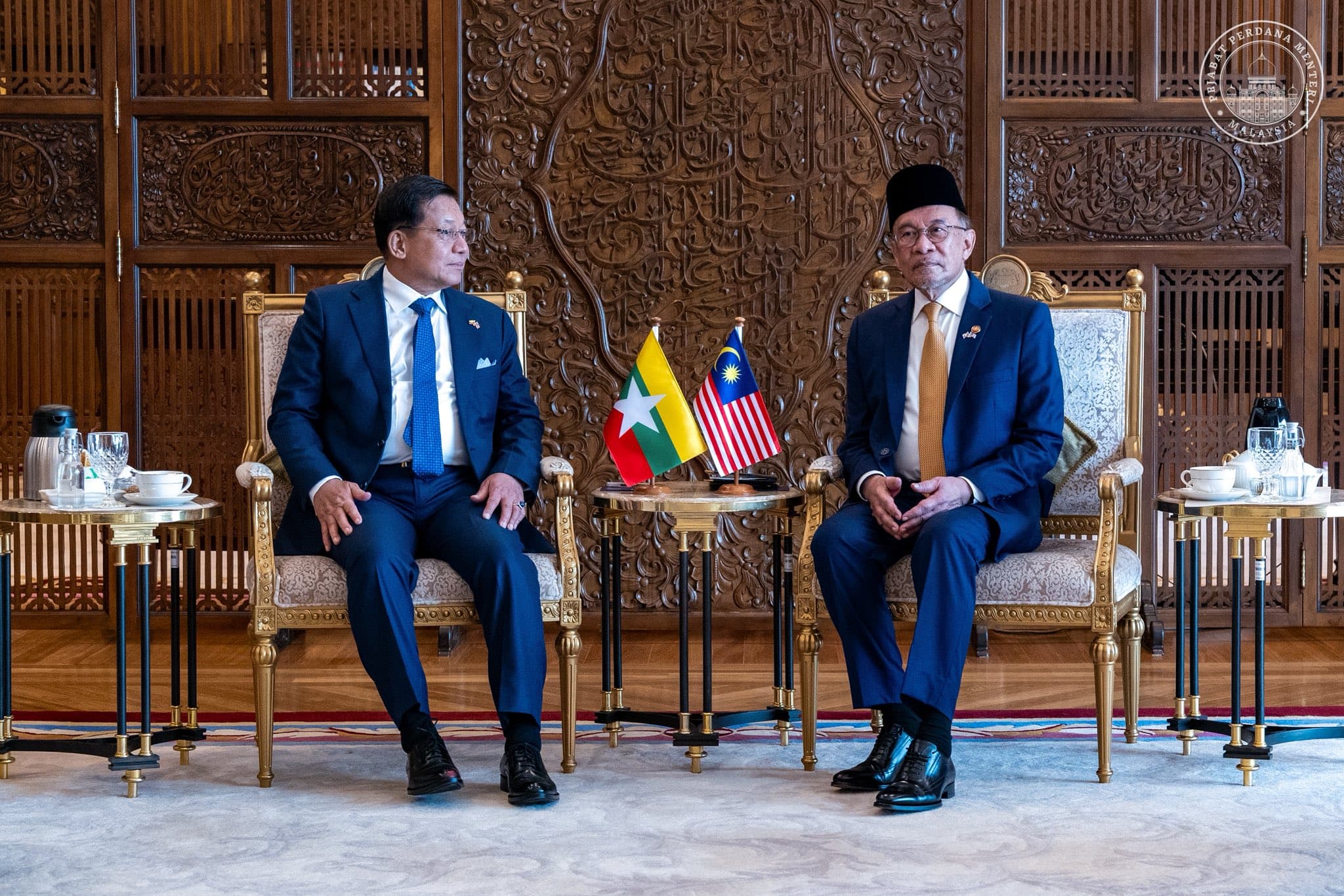
For his part, lawmaker Kannavee Suebsang called on the Thai government not to contribute to the international normalisation of the military junta following General (ret) Min Aung Hlaing's recent visit to Laos, his first to an ASEAN country since he formally assumed the presidency of Myanmar in April.
According to the lawmaker, any diplomatic initiative involving only the junta is doomed to fail, because large portions of the country are currently administered by armed ethnic organisations or the People's Defence Forces (PDFs), militias formed after the 2021 coup and loyal to the National Unity Government-in-exile.
Thailand shares more than 2,400 kilometres of border with Myanmar, hosts more than 80,000 Myanmar refugees, and directly suffers the economic, environmental, and humanitarian consequences of the conflict.
According to Kannavee, a lasting solution requires an inclusive peace process that involves, in addition to the junta, ethnic organisations, democratic forces, and civil society.