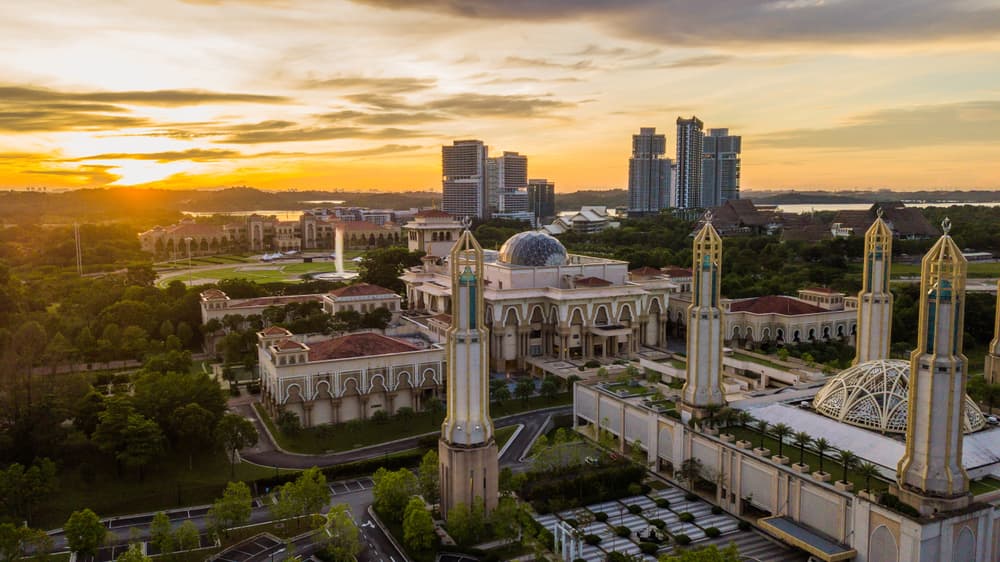
Kuala Lumpur (AsiaNews) – Voters in Johor head to the polls tomorrow to choose representatives for the state's 56-seat Legislative Assembly in an election widely seen as extending far beyond state politics.
Few observers believe the contest is simply about who will govern Malaysia's southernmost state. Instead, it is widely viewed as the most important political test since the formation of Prime Minister Anwar Ibrahim's Unity Government in 2022.
The outcome will be closely watched by political parties, investors, religious communities and civil society groups for clues about Malaysia's direction ahead of the next general election – which must be held by February 2028.
Johor occupies a unique place in Malaysia's political history. It is the birthplace of the United Malays National Organisation (UMNO), the party that dominated national politics for more than six decades after independence.
Once considered UMNO's safest bastion, Johor has evolved into one of Malaysia's most competitive political battlegrounds, reflecting the country's rapidly changing electoral landscape.
A crucial test for Anwar
Johor's transformation began with the watershed 2018 general election, when the Anwar-led Pakatan Harapan made historic gains that contributed to the first change of federal government since independence. Although the dominant Barisan Nasional later regained ground, the era of unquestioned dominance has ended.
Today, Johor serves as a political bellwether whose electoral mood often mirrors wider national trends. For Anwar Ibrahim, the election is about far more than the number of seats won. His Unity Government has restored a measure of stability after years of political upheaval, but questions remain over its durability and its ability to satisfy voters with diverse political expectations.
Although the contest centres on state issues, many voters will inevitably judge candidates through a national lens. Inflation, rising living costs, wages, employment opportunities and public confidence in government all influence voting behaviour.
A convincing performance by parties aligned with the Unity Government would reinforce perceptions of political stability and strengthen investor confidence. A weaker showing, however, would embolden the opposition and intensify debate over the coalition's prospects heading into the next general election.
The PAS and political Islam
Another closely watched aspect of the election is the performance of Parti Islam Se-Malaysia (PAS), Malaysia's largest Islamist party.
As part of the Perikatan Nasional coalition, PAS is contesting 11 seats. Traditionally strongest in Kelantan, Terengganu, Kedah and Perlis, the party has steadily expanded its presence beyond its northern heartlands and is now a major force in national politics.
Muslim supporters credit PAS with promoting Islamic values, moral leadership and clean governance, an image that has appealed to many conservative Malay Muslim voters, particularly after years of corruption scandals involving established parties.
Its growing influence, however, has also raised concerns among non-Muslim communities and moderate Muslims. Critics fear that aspects of the party's agenda could deepen religious polarisation and complicate Malaysia's delicate balance between Islam's constitutional position and the rights of religious minorities.
Johor presents an important test of PAS's national ambitions. Unlike its traditional strongholds, the state is economically dynamic, highly urbanised and home to substantial Chinese, Indian, Christian, Buddhist, Hindu and Sikh communities alongside its Malay majority.
Impact on the country
While ideological debates attract headlines, many voters remain focused on everyday concerns. The rising cost of living, housing affordability, wages and employment opportunities continue to dominate conversations across Johor.
The state's strategic location next to Singapore also places it at the centre of ambitious development plans, particularly the Johor-Singapore Special Economic Zone.
Many voters, however, will judge these promises by a simpler standard: whether economic growth translates into better incomes, affordable housing and improved opportunities for ordinary Malaysians rather than primarily benefiting large corporations.
Malaysia's electoral landscape has been transformed by automatic voter registration and the lowering of the voting age to 18 under the Undi18 reforms.
Many younger voters have little attachment to traditional party loyalties. Instead, they are more likely to assess candidates based on integrity, competence, employment prospects and practical solutions to everyday problems.
Political parties increasingly recognise that social media campaigns alone are insufficient. Younger Malaysians expect credible policies that address their economic future. And Johor will offer another indication of how successfully parties are adapting to this new political reality.
Ultimately, Johor's election represents more than a contest between political coalitions. It reflects competing visions of Malaysia's future. One emphasises moderation, coalition building and cooperation across ethnic and religious communities. Another places greater emphasis on Islamic governance and Malay Muslim political identity.
For Christians and other non-Muslim minorities, the outcome will also be watched for signs of how public discourse on religion, governance and national identity may evolve in the years ahead. The election is therefore not simply about politics, but also about the character of Malaysia's plural society.
In a nation defined by its ethnic and religious diversity, the election will serve as a reminder that democracy is measured not only by who wins power, but by the ability of Malaysians to safeguard an inclusive future while respecting the country's rich pluralism.