

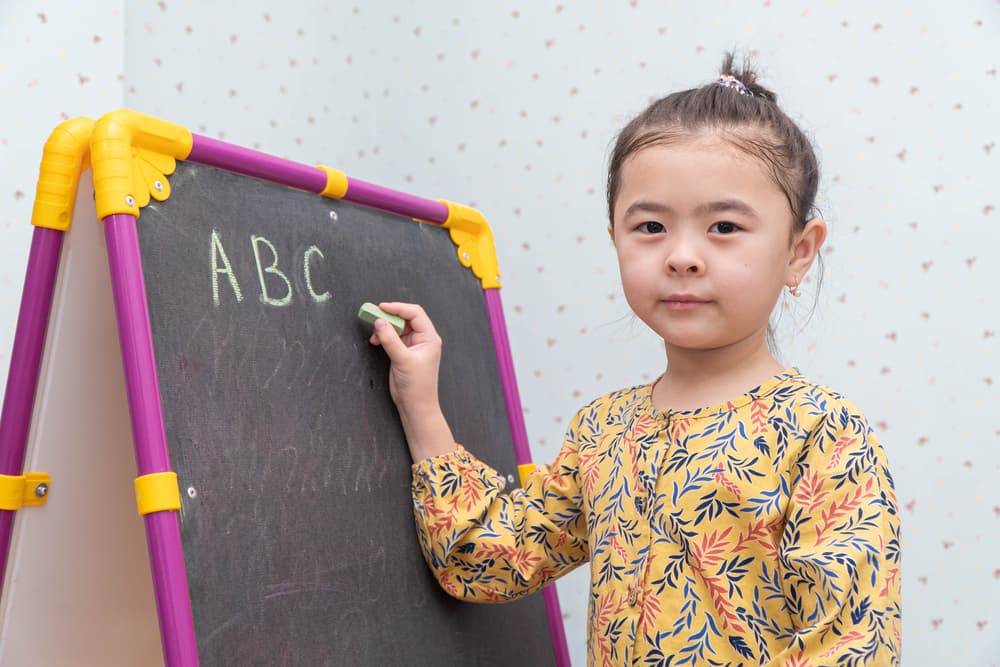
Tashkent (AsiaNews) – The Tashkent Academy of Sciences has explained the need to change four letters of the Uzbek alphabet, basing the system on the Latin alphabet with various diacritical marks. Vice-President Bakhrom Abdukhalimov stated that the current letters o', g', ch and sh create spelling and technical problems, including during the digitisation of the language.
The bill, approved unanimously by MPs, proposes a transition to the ‘one sound, one letter’ principle, replacing the Uzbek alphabet with the Latin alphabet during a session of the Legislative Chamber of the Olij Mažlis on 7 July, and has therefore been sent to the Senate.
Abdukhalimov noted that the objectives for improving the alphabet and spelling rules had been set out in the presidential decrees of 21 October 2019 and 20 October 2020.
Furthermore, on 5 June 2023, during a meeting with constituents in Tashkent, President Šavkat Mirziyoyev had spoken of the need to complete the project to improve the alphabet, following discussions with intellectuals and the general public.
“Today we find ourselves at a decisive stage in a matter that has been debated for many years,” stated the vice-president of the Academy of Sciences.
As he pointed out, over the last 10 years, a great deal of scientific research has been carried out in this field; the views and suggestions of the public have been studied; and scientific conferences, seminars and debates have been held at the Tashkent State University of Uzbek Language and Literature and the Institute of Uzbek Language, Literature and Folklore of the Academy of Sciences.
“These discussions were attended by linguists, writers, MPs, teachers, IT specialists, representatives of the publishing industry, bloggers and the general public.
Their suggestions and views were carefully considered,” said Abdukhalimov, noting that following the workshops held on 22 September and 18 December 2023, the specialists concluded that the problems mainly concern four letters of the current alphabet, namely o', g', ch and sh.
According to the speaker, the current letters “o” and “g”, written with an apostrophe, require several IT-related steps, and in practice more than ten different variants of these characters are used, which hinders the development of a unified standard.
“As these characters do not exist as independent letters in the international Unicode standards, they create serious technical problems in computing, electronic payment systems, machine translation, electronic dictionaries and the digitisation of the Uzbek language,” he noted.
He also pointed out that the letter combinations “ch” and “sh” are widely used in the Uzbek language, citing as examples the words shoshilinch, xushchaqchaq and achchiqtosh, where the constant use of these combinations creates difficulties in writing and reading, or words such as Is’hoq and As’hobiddin, which are often misspelt as Ishoq and Ashobiddin.
Exceptions must be made for the words mo'tabar, mo'tadil and mo'jiza, to prevent the apostrophe of the letter ‘o’ from being placed next to the hard sign.
Experts believe that, in order to realise the ‘one sound, one letter’ principle, it would be advisable to replace the four problematic letters of the current alphabet: Ş instead of Sh, Ç instead of Ch, Ö instead of Oʻ and Ğ instead of Gʻ.
Consequently, the new alphabet should consist of 28 letters and an apostrophe; according to Abdukhalimov, this will be consistent with the experience of related peoples and with the principles of the Common Turkic Alphabet.
As he notes, “the letters proposed to represent sh, ch, g’ and o’ are used successfully in several languages, including Turkish, Azerbaijani, Turkmen, Gagauz, Crimean Tatar, German, Swedish, Finnish and Hungarian… today these letters are used by almost 300 million people”.
From an IT perspective, the letters “have been thoroughly tested and comply with international standards”.
Following the adoption of the law, new spelling rules will be drawn up, existing regulations will be brought into line with the law, and the government will adopt a specific programme of measures for its gradual implementation, without the need for excessive expenditure.
Bakhrom Abdukhalimov concluded by stating that “today we are not simply making a decision concerning the alteration of individual letters, but rather the future development of the Uzbek language, its harmonious development in step with digital technologies, and the creation of a modern and practical writing system for our people, in keeping with our national characteristics”.





.jpg&w=3840&q=75)







