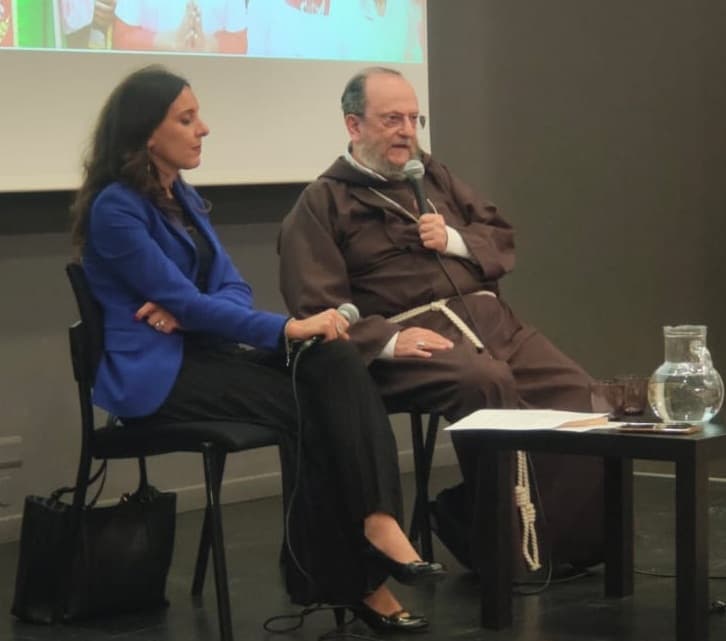
Manama (AsiaNews) - A Church that is ‘growing’ despite diversity and critical issues, with different characteristics in its various souls: in Bahrain, Kuwait and Qatar there is a certain ‘freedom of worship’, albeit with differences and ‘restrictions’ depending on the country. In Saudi Arabia, it is not possible to profess any faith other than Islam, but the hope is that ‘there may be changes in the future’. Thus, the Apostolic Vicar of Northern Arabia, Msgr. Aldo Berardi, priest of the Order of the Holy Trinity and the Slaves, of which he was Vicar General, describes the territory he has been shepherding and guiding for almost three years (appointed in January 2023). We met him at the vicariate headquarters during a reportage that AsiaNews carried out in the Gulf countries, at the end of a Mass celebrated in the Cathedral of Our Lady of Arabia in Awali, Bahrain, in the presence of over 160 pilgrims from Italy. The interview with Msgr. Berardi is the first in a series of articles that will be published in the coming weeks and will also touch on current issues, starting with the bloody conflict in the Gaza Strip and its repercussions in the region.
Below is the first part of Msgr. Berardi's interview with AsiaNews:
Your Excellency, how is the Church of the Vicariate of Northern Arabia doing?
It is growing! It is a Church that is progressing in numbers, and we hope that it will also grow in spirituality and vocations. We depend a lot on political and economic circumstances, but at the grassroots level, things are going well. Celebrations are well attended, as are catechism classes and the sacraments. Depending on the country, there are difficulties at the local level, but the main challenge is unity, bringing together faithful with different languages, traditions and rites.
Taking a closer look at the communities from Kuwait to Bahrain, devotion emerges strongly...
Devotion is very high: the faithful are devoted to Our Lady, the saints and the feasts. There is also a liturgical aspect that we want to develop and, for this reason, we will soon welcome two professors from the [college of] Sant'Anselmo in Rome, to ensure that the Roman rite is experienced with ever greater beauty. Each community [Filipinos, Indians, Maronites, etc.] brings elements peculiar to the tradition of their own country, and the risk is to become a “devotional” Church. That is why, in our meetings with priests, we try to promote a Church rooted in the Gospel. We must be very delicate; we must not take away, but promote a deeper Christian life.
There is also the aspect of inculturation. How can a Church of Arabia be born (or reborn)?
Yes, we have this concern! That is why we celebrated the Jubilee of St Areta [and companions] and are developing the historical aspect, to remind ourselves that we are not just guests for a few years of work and then leave. We are rooted in this history and in its past; we are part of a long tradition. The question is: are we a Church of passage, of migrants, knowing that everyone leaves after a certain time, or, on the contrary, are we rooted in the reality of the country? In this perspective, it is important to deepen our connection with history and culture, and that is what we are trying to do. This is a concern for me, because we must not only pray for the king and the emir, as we do every Sunday, but also love the country, even though the local community is not very open and it is difficult to obtain citizenship. Only small groups in Kuwait and Bahrain have it and must act as spokespersons.
Monsignor Berardi, I would like to ask you for an adjective or a characteristic to describe each of the four nations that make up the vicariate.
In Bahrain, Kuwait and Qatar, there is a certain freedom of worship, albeit with differences and restrictions depending on the country. In Bahrain, there is a peaceful, open Church. In Kuwait, there is a Church in suffering, but a dialogue is underway on the upcoming laws on non-Muslim worship, and the authorities have agreed to an ecumenical meeting of all the Churches of the Gulf in January 2026. The Church in Qatar is controlled, but there is freedom within it. Finally, there is Saudi Arabia, where there is no freedom, but we hope for changes in the future for Christians whose faith is very deep and does not need walls, because it is the faithful themselves who are the Church.
Not only for the Church, but for all Gulf societies, these have been two very complicated years, especially because of the war in Gaza. How has this been experienced in the vicariate?
All Gulf countries, with the exception of Kuwait and Qatar, which never wanted to have relations, were on the road to a diplomatic and economic agreement with Israel, especially Saudi Arabia, which was on the verge of signing. Then the conflict [in the Strip] stopped everything, indirectly involving other countries such as Bahrain and the United Arab Emirates [UAE, part of the Vicariate of Southern Arabia]. The war effectively froze the situation.
E How did the population react?
In this sense, the people are different from their governments. The people are more supportive, more pragmatic, and have rebelled against the treatment of the Palestinians. Certainly, the authorities have condemned what happened, but always with moderation and caution, leaving open the possibility of dialogue.
What impact did this have on the faithful, especially those who speak Arabic?
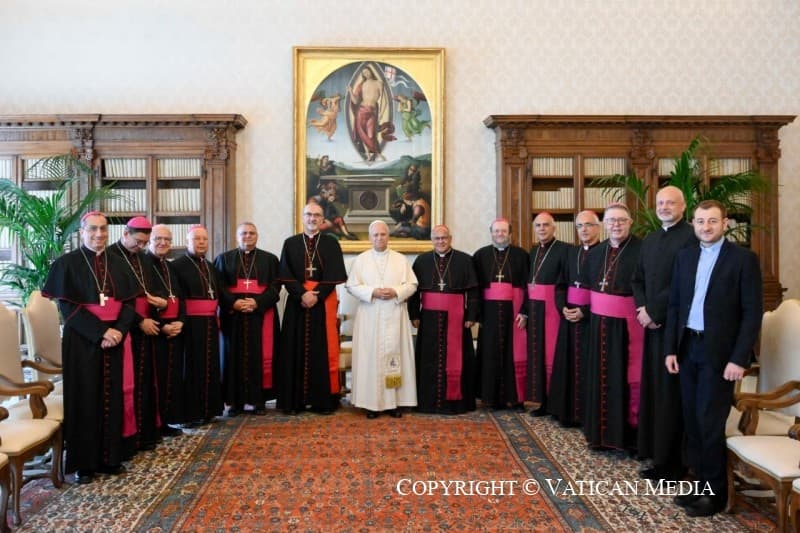
Great participation and suffering: Masses, especially those in Arabic, are always oriented towards peace. We also promoted moments of prayer for peace, insisting on this point, following in the footsteps of Pope Francis and Pope Leo XIV. We are part of the Latin bishops of the Arab regions, so we receive reports and testimonies from parishes and individuals... it has certainly been a difficult time for everyone! There is great collaboration with the Latin Patriarch of Jerusalem [Cardinal Pierbattista Pizzaballa], also due to the presence of Latin rite priests who speak Arabic, and we have received constant updates on the situation.
How did the Gulf media report on the war?
The mass media provided a view of the situation, net of censorship and different sensitivities, even in relations with the East and the West. Then there is the reality of the facts, which we know through the parishes and the people. It was certainly a difficult time for everyone, which also affected the narrative and relations with the Holy Land in relation to the conflict.
What were the critical issues?
For example, different sensitivities emerged between those who asked to pray for the Holy Land and those who called for prayers only for the Palestinians. Others recalled the suffering endured by the Israelis [due to the Hamas attack on 7 October and the hostage crisis, some of whom had been held captive in the Strip for two years]. For this reason, we decided to pray for the Holy Land as a whole, although among the Arab groups there has always been a particular focus on the Palestinian population of Gaza.
Has the conflict fuelled polarisation here too?
We must remember that there are Hebrew-speaking Catholic Christians, so what do we do? The situation is difficult because, depending on the decisions made, there is a risk of dissatisfying one side. [As the Church of Arabia], over the past two years we have always condemned excesses, while safeguarding our neutrality and closely following all developments.
Last March, you also welcomed Patriarch Pizzaballa on a visit to the vicariate...
Yes, he came to us at our invitation and visited, among other places, an organisation [King Hamad Global Centre for Coexistence and Tolerance in Bahrain, ed.] that works to promote interreligious dialogue and tolerance. The Patriarch also celebrated Mass in the cathedral and gave a speech in which he recalled the need to build bridges between communities. There are also opportunities for discussion during meetings of the Episcopal Conference or other types of contact, where we exchange information, particularly about priests of Arab origin from the Latin Patriarchate of Jerusalem.
In recent years, have you also promoted activities or initiatives in favour of the people of Gaza?
Of course! One example among many: the children of our parishes sent postcards to their peers in Gaza, which I myself delivered to Cardinal Pizzaballa at the recent meeting of the Episcopal Conference in Jordan. These are small but important signs of communion.
GATEWAY TO THE EAST IS THE ASIANEWS NEWSLETTER DEDICATED TO THE MIDDLE EAST. WOULD YOU LIKE TO RECEIVE IT EVERY TUESDAY? TO SUBSCRIBE, CLICK HERE.