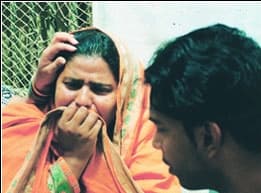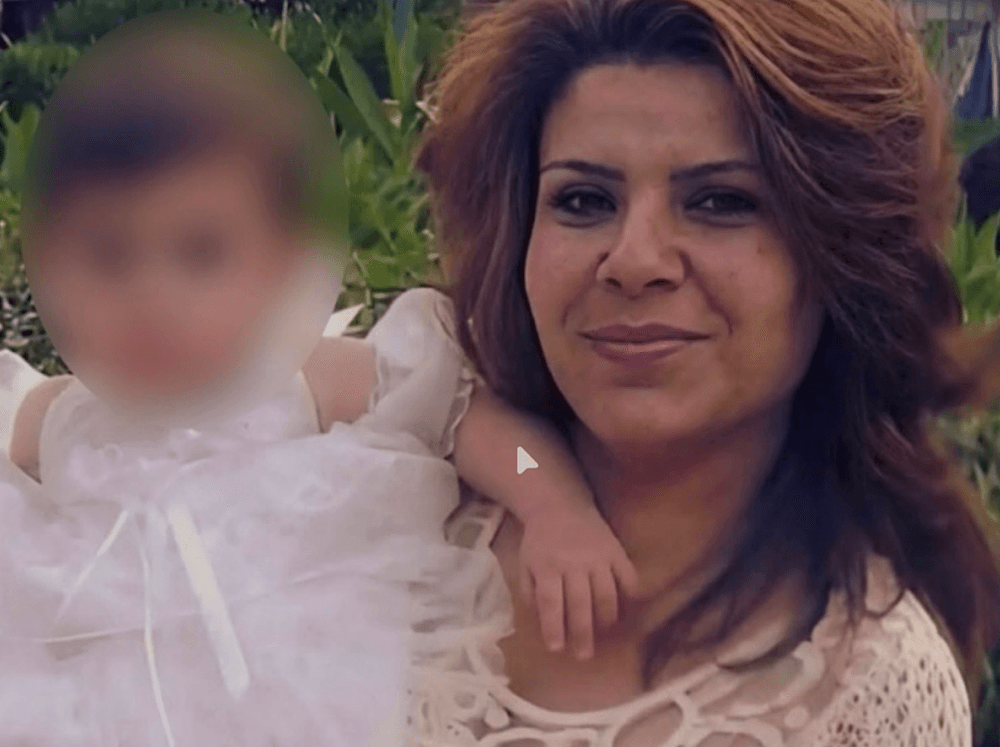
Damascus (AsiaNews) – Attacks and violence against Christians in Syria and across the Middle East are rising. A new murder has been blamed on an Islamist group, that of Iman Matanius Jrousi (pictured), a 47-year-old mother of three, originally from the town of Ain al-Rahib, in the Wadi al-Nasara region.
The Christian teacher died on Monday evening, from bullets fired by a terrorist group attacking the Akrama neighbourhood in Homs, where she had moved for work.
This is a new violent episode in the "new" Syria of President Ahmed al-Sharaa and the Hay'at Tahrir al-Sham (HTS) militia against a member of a religious minority, amid growing security threats and repeated attacks on civilians.
As the long trail of blood continues to flow, from the war years under dictator Bashar al-Assad to the struggles the country still faces to rebuild itself, more than 80 per cent of Syria’s Christians have been forced to flee, as former apostolic nuncio, Cardinal Mario Zenari, recently told AsiaNews.
Christian activists and organisations report a country gripped by "chaos”, where "targeted killings and disturbing disappearances" are on the rise, under the guise (and banner) of growing Islamic extremism.
Added to this are incidents of sectarian "intimidation" and attacks on shops and businesses owned by Christians and other religious minorities this month, a sign of an increasingly violent trend.
According to the Chrétiens d'Orient NGO, "a climate of growing fear" has been created, against which the authorities in Damascus appear powerless (if not complicit).
Three days before the assassination of the Christian teacher on 20 February, some young radicals raised the flag of the al-Nusra Front shouting “Allah Akhbar” and repeating the Shahada, the Islamic profession of faith at a roundabout in Saidnaya, a village near Damascus.
In response, some Christians went to the site to remove it and place the Syrian national flag.
A situation of high tensions quickly developed between the two sides, with the intervention of the mayor of the predominantly Christian village, who tried to avert a violent outburst by calling on the security forces.
Local sources report that the latter refused to remove the banner linked to the Islamic extremist group, further contributing to an already high level of tensions. The dispute was resolved only after Al-Tal District (Islamist) officials ordered the removal of the al-Nusra flag.
As a result, a “climate of defiance" and overt threats persist in the area, with groups of radicalised youths ready to “raise the (al-Nusra) flag again”.
On Monday, a white banner bearing the Muslim profession of faith was also raised in the main square of Bloudan, a predominantly Christian village not far from the capital.
In January, the al-Nusra flag was also seen in Maaloula, the last (historic) Christian village in Syria where residents speak Aramaic.
More recently, restaurants and businesses have also been forced to close in Al-Amrican (American) District, the predominantly Christian area of Latakia, on the Mediterranean coast, under the pretext of "selling alcohol" during Ramadan, Islam’s holy month of fasting and prayer.
The presence of militias affiliated with the HTS-led General Security Force have also reportedly "raided shops and restaurants, arresting numerous customers and committing physical violence and verbal abuse" against those inside. A witness reported that the raid was related to “the distribution and consumption of alcohol.”
A Christian-owned shop in the Sulaymaniyah neighbourhood of Aleppo was attacked and damaged twice this month for selling alcoholic beverages.
The violence includes kidnappings and mysterious disappearances. Since the evening of 18 February, there has been no news of Amar Joseph Samean, who was driving his car from the Kashkoul monastery, where he works, to his grandfather's house in Al-Zablatani.
On 21 February, Nashed Kassouha, a jewellery dealer from the town of al-Qusayr, escaped an assassination attempt when two men on a motorcycle pulled up alongside his vehicle and opened fire before fleeing.
The area bordering Lebanon, which has seen major military and security changes in recent years, has also reported the largest loss of Christians since the start of Syria’s civil war in 2011.
Families who remain describe a situation of constant terror, extortion, kidnappings, and death threats. Security forces have also reportedly abducted several young people, subjecting them to torture and intimidation to force them to emigrate.
The violence does no just affect only Christians. In February, at least 10 people from the Alawite community (to which former dictator Assad belongs) were killed in Homs.