Milan (AsiaNews) - Islamic oppression and confessional nationalism. These are the two threats that weigh heavily on the Christian community in Turkey, a tiny minority equal to 0.3% of the total (just under 260,000 out of over 84 million inhabitants) that is also ‘the most persecuted’, especially in the last year when attacks have increased.
This is what emerges from the World Watch List 2025 report published by Open Doors, which reports on social and institutional ‘pressures’ and ‘government restrictions’ in the face of a growing predominance of the Muslim majority.
The study ranks Ankara among the 50 nations in the world (it is ranked 45th) where Christians face the most obstacles in the daily practice of worship. It also reveals a ‘worrying mix’ of cultural, legal and social challenges that end up marginalising the Christian population, as well as unresolved cases of violence that await justice in vain.
“Vulnerable” community
In Turkey, or rather Türkiye as it is now identified in accordance with the dictates of President Recep Tayyip Erdogan, Christians face discrimination on a daily basis because of their faith, whether in job applications, legal procedures or when re-entering the country. According to Open Doors, the situation is particularly critical for converts from Islam who are subject to threats, arrests (even arbitrary ones), detentions, loss of jobs, denial of the right to inheritance and even expulsion from the family unit.
Under the current government, violence against women, including murders, is also on the rise. The Churches struggle with legal and bureaucratic obstacles to prevent the practice of the faith, while a policy of nationalism increasingly considers “being Muslim” a “necessary” element for a Turkish citizen “loyal” to the homeland.
All this ends up exerting considerable social pressure on Christians, despite their millenary presence in the country. Official propaganda, however, has ended up portraying religion as a ‘negative western influence’, a position that is in many cases also shared by moderate Muslims and secular Turks who are ‘proud’ of their national identity.
In an even more critical condition are those who convert from Islam, who become the “victims” of strong pressure from their families of origin and the social environment in which they live to “change their minds” and return to embrace Islam.
Of course, there is no explicit punishment for the crime of apostasy as is the case elsewhere and the practice “is not illegal” but, at the same time, it is considered a “source of shame”.
There is also no lack of threats and pressure towards “historic” Christian groups, such as the Armenian, Assyrian and Chaldean Churches, particularly in the Kurdish-majority south-eastern region, where there have been a number of news episodes - including the murder of an elderly couple - that are still unresolved.
In addition to this, there has been an increase in attacks on church buildings, two murders and a ban on entry for some members of the Protestant community; and migrants, refugees or asylum seekers from Iran, Afghanistan and Syria forced to leave the country and subjected to abuse and discrimination.
Targeted attacks and impunity
Unsolved murders, threats of deportation, targeted attacks: in the past few weeks, at least three different incidents have emerged that testify to the framework of hostility. The first concerns an Iranian pastor who fled his country and is now under threat of deportation after 10 years of life and ministry in Turkey.
Mojtaba Ahmadi faces unclear irregular immigration charges, despite his efforts to obtain refugee status. If he returned to Iran, he would risk further imprisonment, torture or even execution.
According to Joel Richardson of Global Catalytic Ministries, Ankara regularly brings false charges to conceal religious persecution. High-profile cases include those of Andrew Brunson and Jeremiah Mattix.
'We are seeing a generalised phenomenon where Turkey pressurises, arrests or removes ministries and pastors,“ Richardson explains, with false accusations of posing a 'threat” to national security. In this way, there is no possibility of “holding the government responsible for religious persecution” as part of a broader strategy to “revive Ottoman supremacy over the Middle East”.
In recent days, there has been news of the dismissal - in haste - of an investigation in connection with the recruitment of a member of the Turkish ultra-nationalist movement by the intelligence services to kill members of the Protestant community in the south-eastern province of Malatya.
The affair emerged when the would-be assassin changed his mind and denounced: Tolgahan Aban, a figure from the far-right galaxy, was allegedly contacted by the services to eliminate Vedat Serin, a pastor and representative of an association linked to the Churches of Kurtuluş.
The facts date back to September 2022, but emerged later, and paint a picture in which the plan to eliminate “Christian missionaries” is evident.
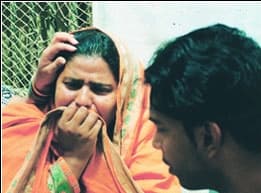
Finally, there is the unsolved mystery five years after the disappearance of an elderly Christian couple - Shamouni, 65, and Hormuz Diril, 71 - from the village of Mir, Şırnak province.
They lost trace of them on 8 January 2020: their last contact was the day before when their son Fr Ramzi Diril, a Chaldean priest in Iraq, spoke to them on the phone.
A few weeks later, on 21 March, the mutilated corpse of the woman surfaced near a river, while no trace of her husband was ever found. To this day, the perpetrators and motive of a heinous murder are still unknown, with the Turkish authorities - again - dismissing the case too hastily.
Hyper-nationalism
The growing confessional persecution in Turkey is linked to the strengthening of the nationalist ideology promoted by the government and President Erdogan, which is also reflected in the country's schools.
Proof of this is the signing of an official protocol that allows an extreme right-wing group to send its representatives to schools, in order to convey a clearly neo-Ottoman agenda that is supposed to reach millions of students.
An in-depth report on the subject by the Middle East Forum (Mef) shows how, on the last day of 2024, the Ministry of Education signed a protocol with the Ülkü Ocakları Foundation for Education and Culture (Ülkü Ocakları Eğitim ve Kültür Vakfı).
A faction representing the youth wing of the Nationalist Movement Party (Mhp), a far-right faction allied to Erdogan's Justice and Development Party (Akp) and political arm of the “Grey Wolves”.
The group, whose members aspire to a pan-Turkish state in the former Ottoman territories, is linked to various forms of organised crime, including drug trafficking and murder, and is banned in several European countries.
For activists and critics, the educational programmes, attended by more than one million students, risk becoming a breeding ground of ideology for Ülkü Ocakları - a group driven solely by its own political agenda, rooted in discrimination and marginalisation.
The protocol bears the signature of President Ahmet Yiğit Yıldırım and the head of the Directorate-General for Lifelong Learning of the Ministry of Education Cengiz Mete.
The group's foundation is authorised to organise general, vocational and technical courses within the framework of public education programmes and aimed mainly at young adults. However, classes will also be attended by minors, prisoners and foreigners.
The group's lack of real expertise in offering technical and vocational courses leads critics to think that the sole purpose is to guarantee Erdogan's ally access to a broad swathe of the younger generation to be indoctrinated in an “ultra-nationalist” key.
A scheme that, moreover, violates both the Constitution and the Basic Law on Education, which forbids political propaganda in public and educational institutions, but neither the president nor his ally and Mhp leader Devlet Bahçeli seem to care about this.
Finally, the youth branch of Ülkü Ocakları, the armed wing of the Mhp, is linked to violence, murders, drug trafficking and other criminal activities.
And even the Turkish intelligence agency, the MIT, has used it to recruit armed men for clandestine operations both in Turkey and abroad.
GATEWAY TO THE EAST IS THE ASIANEWS NEWSLETTER DEDICATED TO THE MIDDLE EAST. WOULD YOU LIKE TO RECEIVE IT EVERY TUESDAY? TO SUBSCRIBE, CLICK HERE.