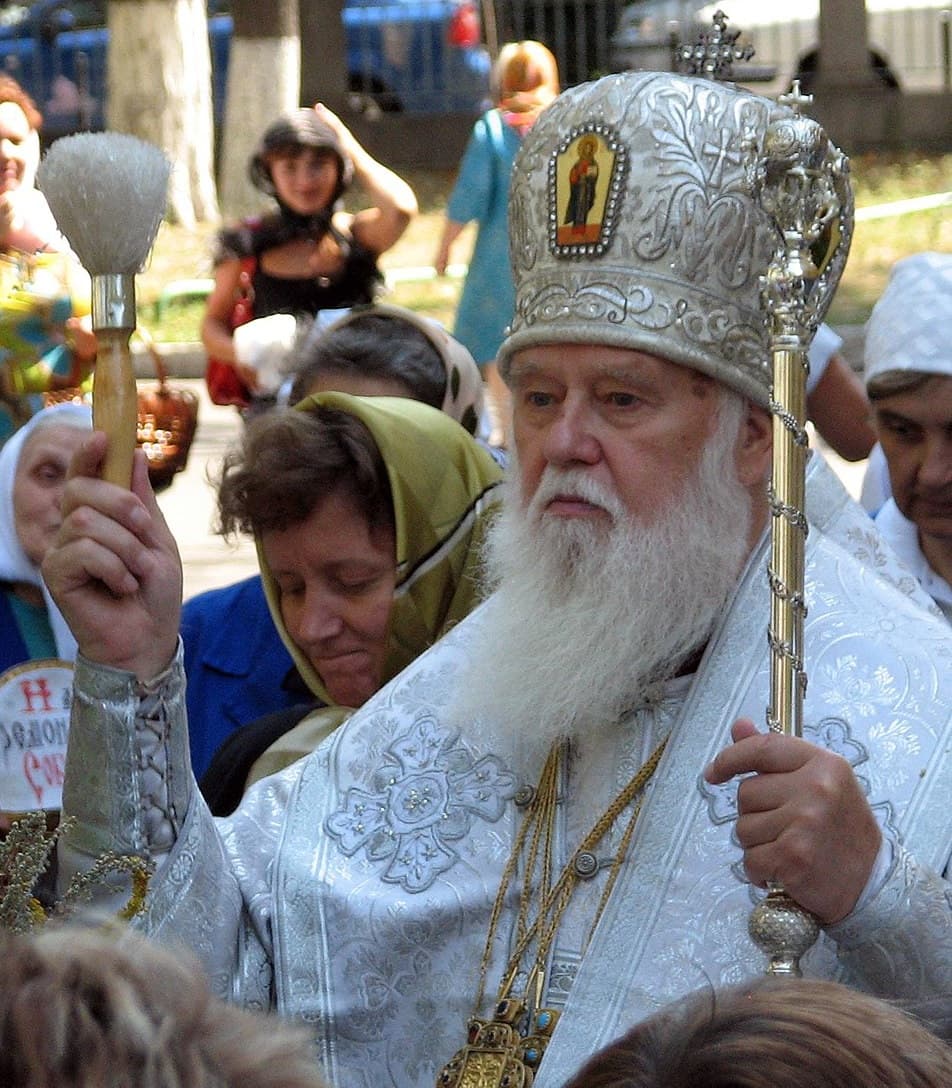
Kiev (AsiaNews) - On 20 March, Filaret, Patriarch Emeritus of the Ukrainian Orthodox Church, returned to the Father’s house at the age of 98, after 77 years of monastic life and 65 years of episcopal ministry, with condolences from Metropolitan Epifanyj of Kiev (Dumenko), his long-time secretary, who emphasised how Filaret had “occupied a special place in the contemporary history of the Church and of the whole of Ukraine”, beginning the separation from Moscow in 1992.
Born Mikhail Denisenko on 23 January 1929 in the Ukrainian village of Blagodatnoe in what was then known as the Stalinsky Okrug, the “Stalin Province”, he himself assumed the title of “Patriarch of Kiev and All Rus-Ukraine” on 20 October 1995, after being excommunicated by Patriarch Alexy II of Moscow (Ridiger) for having sought autocephaly for the Ukrainian Church immediately following the collapse of the USSR.
He had held the office of Metropolitan of Kiev since 1966, as “patriarchal exarch of all Ukraine”, and for two months, May–June 1990, he had also been the regent (lieutenant) of the Moscow Patriarchate, following the death of Patriarch Pimen (Izvekov). According to various accounts, he had obtained a guarantee from the Soviet KGB, which still controlled ecclesiastical affairs, that he would be elected Patriarch of the entire Russian Orthodox Church.
Instead, Alexy, then Metropolitan of Leningrad, was elected in his place, reportedly through the intervention of Metropolitan Kirill (Gundjaev), the current Patriarch of Moscow, who at the time held the post of chairman of the Patriarchate’s Council for External Affairs and was the most influential figure in relations with the political sphere.
Kirill had been consecrated bishop in 1976 at the age of just 29, and among the celebrants was Filaret himself, who in turn had become a bishop at the age of 33 in 1962, as auxiliary bishop of Leningrad. The relationship between the two patriarchs remained rather conflictual, representing two different conceptions of the post-Soviet Orthodox Church.
Following the refusal to grant autonomy, he was the first to break with Moscow in 1992, taking a large part of the clergy with him, and remained until 2018 an autonomous figure within the Orthodox landscape as a ‘self-proclaimed’ patriarch and closely linked to the autonomist movements across Ukraine, which had become an independent state after the end of the USSR and had since been torn between dependence on Russia and the desire to establish itself as a country integrated into Western Europe.
In 1997, he was stripped of his clerical status by a definitive anathema from the Moscow Patriarchate, until in 2018 the Synod of the Ecumenical Patriarchate of Constantinople accepted his appeal, reinstating him to the episcopal rank, but without confirming his patriarchal title, referring to him merely as the ‘former Metropolitan of Kiev and Galicia’ now in retirement, as he was already approaching the age of 90 at the time.
However, he did not welcome this decision, and when his secretary Epifanyj was finally appointed by Patriarch Bartholomew II (Archontonis) as Metropolitan of Kiev of the Orthodox Church of Ukraine (OCU), he was redesignated “Patriarch Emeritus”, the title by which he is commemorated today; but he rejected this decision too, remaining separated even from the national Church, in an isolation comforted only by the solidarity of a few priests and a handful of faithful who remained by his side until the end.
Filaret has been described as “the most Soviet of metropolitans”, due to his active participation in the activities of the Council for Religious Affairs, which, on behalf of the CPSU, managed matters concerning the Orthodox Church and other religious associations in the Soviet Union, and it was partly for this reason that he was expected to rise to the patriarchal throne in Moscow.
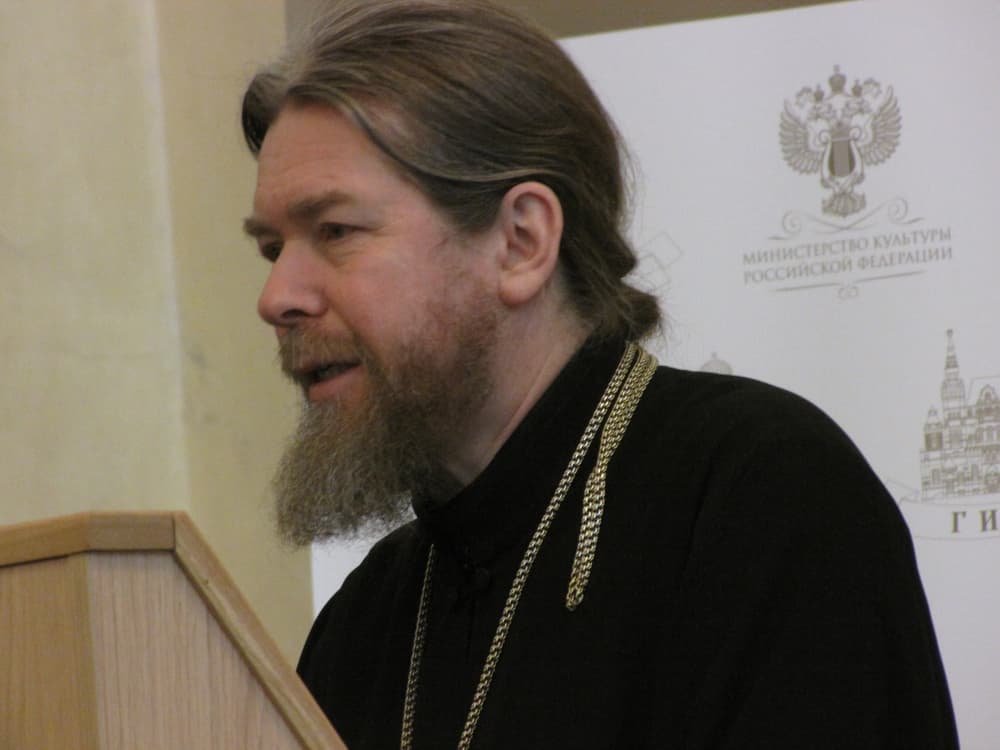
During the turbulent negotiations between Kyiv, Moscow and Constantinople during the Ukrainian presidency of Pavlo Poroshenko (2015–2019), many in Russia too advised Patriarch Kirill to grant autocephaly directly to the Kyiv Church, which had been dependent on the Russians since the late 17th century, first and foremost the then auxiliary bishop of Moscow, Tikhon (Shevkunov), ‘Putin’s spiritual father’, who wished to avoid a rift with the Ukrainians and suggested that Filaret should make a request to this effect to Moscow.
Kirill rejected the appeal, due to the invincible hostility he harboured towards his episcopal consecrator, thinking thereby to nullify his influence over the Ukrainians. This was not to be, and a schism ensued that was not only religious but also ideological and political, eventually escalating into an endless military conflict, which Filaret now observes from above, confident of a victory to be celebrated on an apocalyptic scale, as a perennial reflection of the aspirations of the Russian and Ukrainian worlds.