Moscow (AsiaNews) – Nearly eight years after its founding, the Russian Patriarchal Exarchate of South-East Asia has become a diverse ecclesiastical structure. In an interview with TASS, Metropolitan Sergij (Čašin) of Singapore described this period as both “difficult and stimulating,” noting it was established after relations with the Patriarchate of Constantinople broke down over Ukrainian autocephaly. Since then, Moscow has sought to serve Orthodox believers worldwide, beginning with Russian-speaking communities and expanding to all Orthodox Christians, including those in Asia.
The region to which the exarch is dedicated is vast, stretching from Korea to Indonesia, and there are not many priests. The majority of the inhabitants of these countries are Buddhists, Muslims and followers of various other religions, whilst Orthodox Christians form small minorities; as the Metropolitan explains, “the Church is perceived as an alien element when it behaves as such, when it presents itself with pretensions, with a manifest sense of superiority, with the desire to immediately change something in the way of life that has developed over the centuries”.
The point of contact with representatives of other religions is almost never theology, as theological discussions “require a specific foundation and the right moment”, but rather a focus on people in need: helping the sick, supporting families in difficulty, and caring for those whom society chooses to ignore, because “the language of compassion needs no translation”. At the same time, Sergij states, “respect for the faith of others does not mean watering down one’s own; we do not adapt Orthodox doctrine to the surrounding context, nor do we seek theological compromises; Orthodoxy remains Orthodox, with a living biblical tradition of communion with God, expressed in the sacraments and in the Church’s rich patristic heritage”.
The territory of the Exarchate is not a homogeneous space, but a mosaic of very different cultural worlds, each of which requires its own language of presence. In Thailand, within a Buddhist context, Orthodoxy is perceived primarily through imagery and atmosphere: people enter the church and pause, drawn by the iconography, the gold, the scent of incense and the silence of prayer, “a language that is intuitively understood here”. Buddhist culture is deeply attuned to sacred space, inner contemplation and silence, and in a sense, Orthodox worship draws upon this sensibility. The dialogue on faith “here does not begin with dogma, but with the beauty and silence of an Orthodox church”, the Exarch assures us.
The situation is completely different in the Philippines, where “Christianity is the air we breathe”, largely shaped by centuries of Catholic influence, with its distinctive emotionality, its Baroque piety, its intense physicality and its deep popular devotion. When a Filipino encounters Orthodoxy, they immediately recognise familiar elements: the cross, the Virgin Mary, the veneration of the saints, the sacraments; yet at the same time they sense something different: greater austerity, a greater sense of antiquity, a different depth of silence.
The qualitative difference, the Metropolitan comments, is that “in a non-Christian environment, the Church bears witness above all through its very presence, through beauty, silence and works”, whilst in Christian environments it bears witness to the fullness of Tradition, preserving intact what others have lost. He concludes that “these are different tasks, requiring different languages, but the fundamental principle is the same in both: not to impose oneself, but to open the door”.
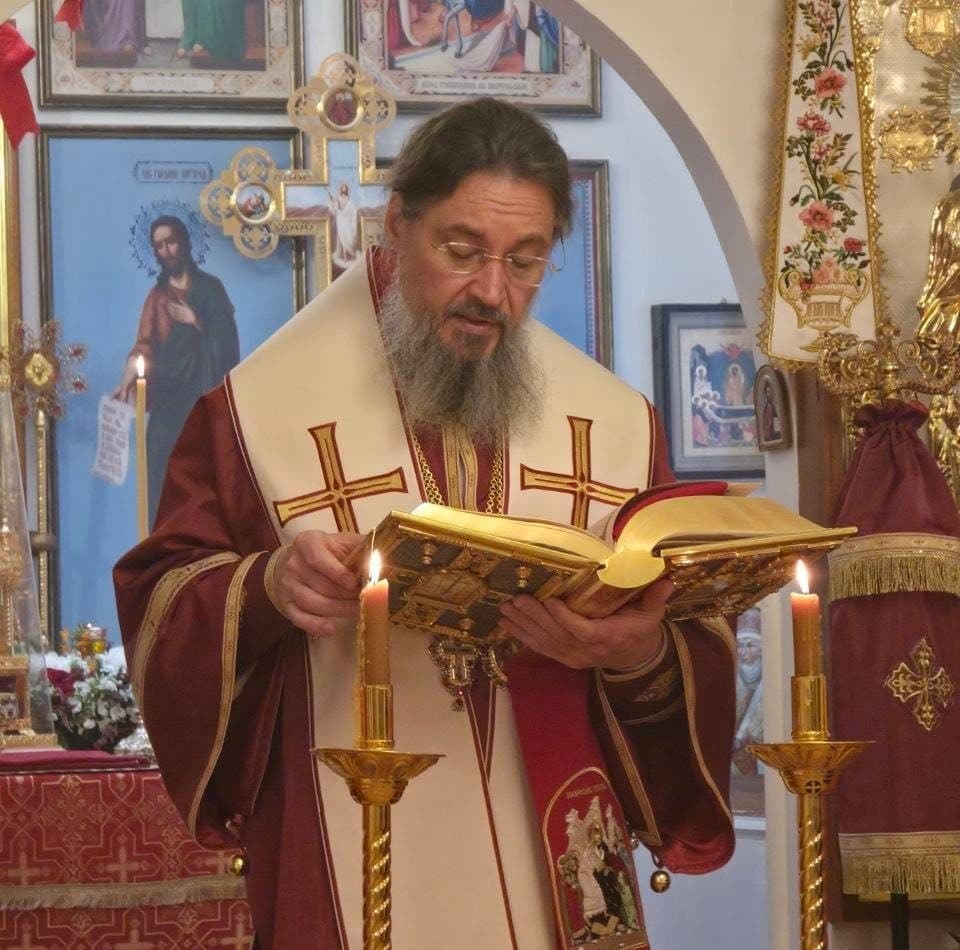
Photo: Meta profile Russian Orthodox Church in Singapore