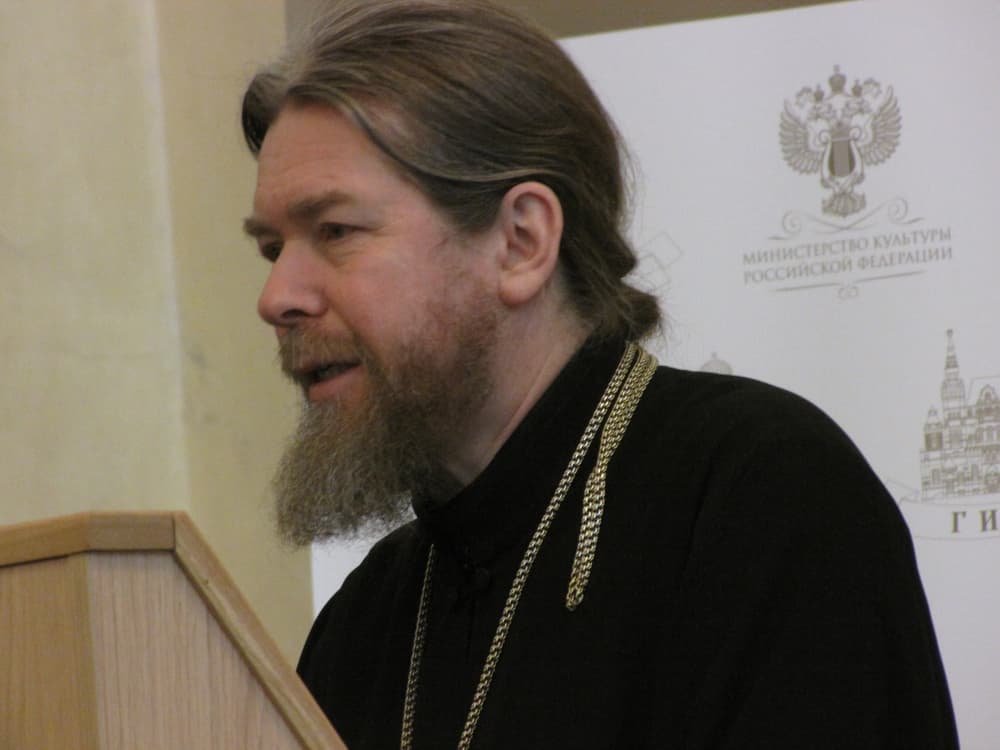
Brussels (AsiaNews) - The hieromonk Afanasij (Bukin) is one of the many Russian priests opposed to the aggression against Ukraine, and in February 2023 he left the mission of the Russian Orthodox Church in Jerusalem, explaining his choice in an open letter.
By decree of Patriarch Kirill, he was suspended and then reduced to the lay state. Today he lives in Belgium and is preparing a thesis at the University of Leuven, and he told Radio Svoboda about his experience and his reflections on the tragedy that Russian Orthodoxy is experiencing.
Father Afanasij, who was born in 1988 in St Petersburg, stayed in Jerusalem for four years. He had a good knowledge of modern Greek, which was much needed to welcome the many Orthodox pilgrims, often also acting as interpreter for Patriarch Theophilos III.
During Covid, he was mainly responsible for the mission website and publishing initiatives, as well as liturgical service shifts. Now he is trying to delve into the ecclesiological perspectives of East and West, from St John Chrysostom to St Augustine, also to understand how it was possible for the leadership of the Russian Orthodox Church to slip into ‘extreme neo-conservatism, to the cult of militarism and neo-imperialism’.
In his opinion, the Moscow Patriarchate took ‘one step backwards and two steps forwards’ in the post-Soviet period, accompanying the trends in the Russian state. After a few openings, with dialogue with the other Churches that seemed ‘extremely interesting, and stimulated intellectual creativity’, it turned to total closure, to the great disappointment of those who had devoted themselves to external relations, such as Father Afanasij himself.
It seemed as if a new translation of the Bible into current Russian could finally be achieved (the last one was done 200 years ago, without the chrism of officialdom), integrating the great developments of Russian theology abroad in the Soviet period, but suddenly ‘a conservative barrier was raised again, denouncing any opening dangerous to our spiritual health’.
What amazes the hieromonac most is that ‘the experience of atheist persecution has not in the least affected the position of the hierarchs of our Church’, even in those who have personally suffered such forms of repression, and have now ‘passed without batting an eyelid to the cult of Stalin’.
According to Father Afanasij, most Russian Orthodox priests ‘are heirs of the Soviet mentality rather than of the true Orthodox tradition’, so it is paradoxical that a priest who has just remembered the martyrs in the liturgy, five minutes later says that ‘we need Stalin’, as he happened to hear.
The hieromonac had not joined the three hundred priests who had signed the anti-war letter in 2022, ‘among them were several of my fellow students, braver than me, who tried to remain neutral for the good of all, they told me to wait’; but after a year, he could no longer refrain from taking a stand.
Many other brothers supported him, saying ‘at least you can do it, we have families’, and even several of the signatories of the pacifist letter had to adapt and keep quiet, as they could not leave Russia. Others advised Father Afanasij to ‘ask the patriarch for forgiveness, saying that being abroad would plagiarise me’.
There are currently more than twenty Russian priests expelled for not agreeing to pray the prayer for war and victory for Russia, and some of them have left the country.
Father Afanasij understands that not everyone has the chance to make a new life abroad, at the risk of ‘ending up in the middle of nowhere’. He himself went to Belgium without really knowing what to do, found help from the Catholic bi-ritualist monks of Chevetogne, and does not feel like judging or giving advice to others, just remembering that ‘conscience must be educated and trained, learning to live repentance without condemning anyone, but starting with oneself’.