Moscow (AsiaNews) - The Orthodox Patriarchate of Moscow has decided to systematically counter the various forms of neo-paganism that are spreading increasingly in Russia, especially those aspects that refer to pre-Christian Russian antiquity, whose followers call themselves the rodnovery, or ‘native believers’.
Also very popular are forms of devotion to the militant Scandinavian polytheism called Asatru (As = God, Tru = faith), which dates back to the representations of Germanic tribes at the time of the migrations before and during Roman rule, then transmitted by Icelandic manuscripts from the time when Kievan Rus' was formed, with the ‘call of the Varangians’ beginning in the 9th century.
According to the Orthodox, this problem is considered one of the most important in the Church's missionary activity today, even more so than competition from the traditional religions of migrant workers, such as Islam and Buddhism.
Patriarch Kirill himself has repeatedly referred to the issues of neo-paganism and the difficulties of interfaith dialogue. A working group has therefore been formed, bringing together representatives of various patriarchal bodies, with the aim of “preventing neo-paganism”.
The first meeting of this commission, made up of members from 12 synodal departments, was held in early October, with a summary report published on the patriarchate's information website.
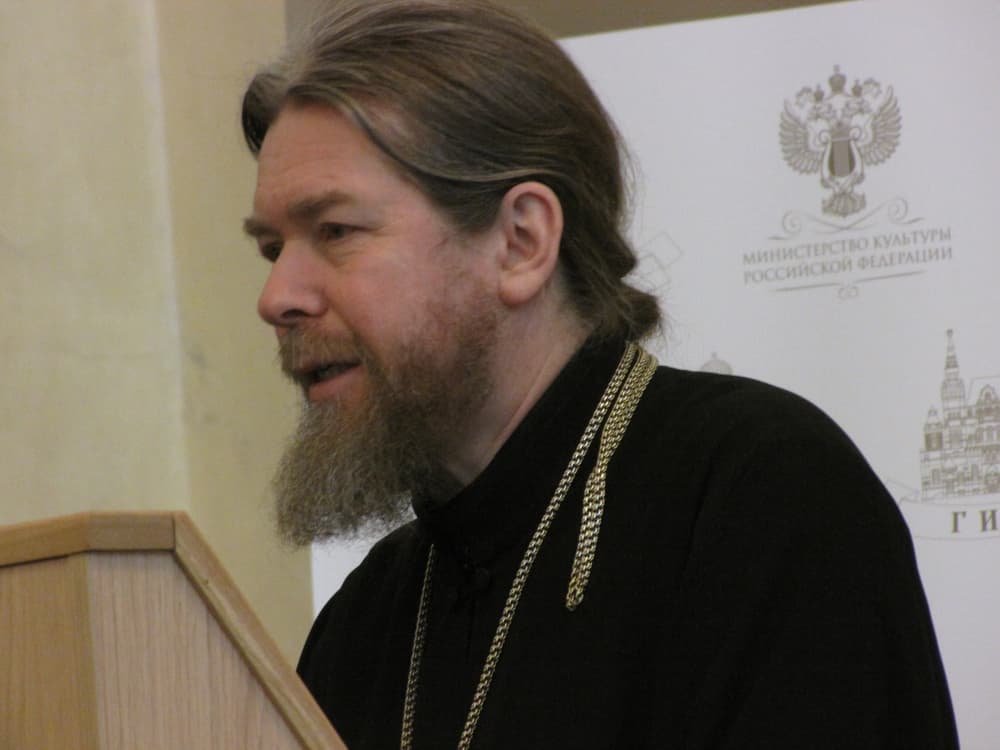
The report states that the president of the commission is the head of the synodal department for missions, the Russian-French archbishop Savva (Tutunov), a rising star in Patriarch Kirill's team.
Among the commission's “primary tasks” are “the preparation of scientific and methodological materials, the organisation of training and education programmes, and the development of measures to counter the destructive influence of neo-pagan doctrines”.
The novelty lies precisely in the systematic approach, even though the challenge of neo-paganism has been discussed for some time, with missionary activities already underway by the synodal department, which also includes a secretariat for ‘apologetic mission.’
It deals with combating sects, pseudo-orthodox teachings, destructive subcultures and various cults, collecting and analysing information on ‘various forms of religious confusion’ and developing methods of apologetic response.
The new body, which involves other sectors of the patriarchate, was personally requested by Patriarch Kirill, who announced it at the ecclesiastical council on 10 April, stating that “today we are witnessing attempts to distort our past, replacing authentic spiritual tradition with artificially constructed surrogates”.
The Patriarch expressed his concern that ‘neo-paganism is often presented to young people as a kind of alternative to Orthodoxy, presenting it as a more historical, natural and authentically national form, when in fact we are faced with an eclectic mixture of fantasies and elements from other cultures, and truly destructive ideas’.
In this ‘pseudo-culture’, among other things, ‘a special relationship with the use of force is formed’, as happens in closed ethnic groups, where force is considered a decisive factor in preserving one's identity, which has real effects on the lives of the majority of people.
Kirill recalls the link between ethnic diasporas and ‘brutal polytheism, to which followers of radical Islamism are often connected’, which also requires the intervention of law enforcement agencies.
However, Roman Shizensky, the leading specialist at the Centre for Ethnic and Religious Studies at St Petersburg's Lgu University, is rather sceptical about the possibility of “achieving significant change through the work of the new commission”, believing that “a genuine mobilisation of ecclesiastical institutions in missionary work that is not limited to ideological assessments” is necessary to prevent the Orthodox Church itself from being considered merely a “state cult” for which more effective alternatives must be sought, including in the “defence of the Fatherland with the true cult of force”.