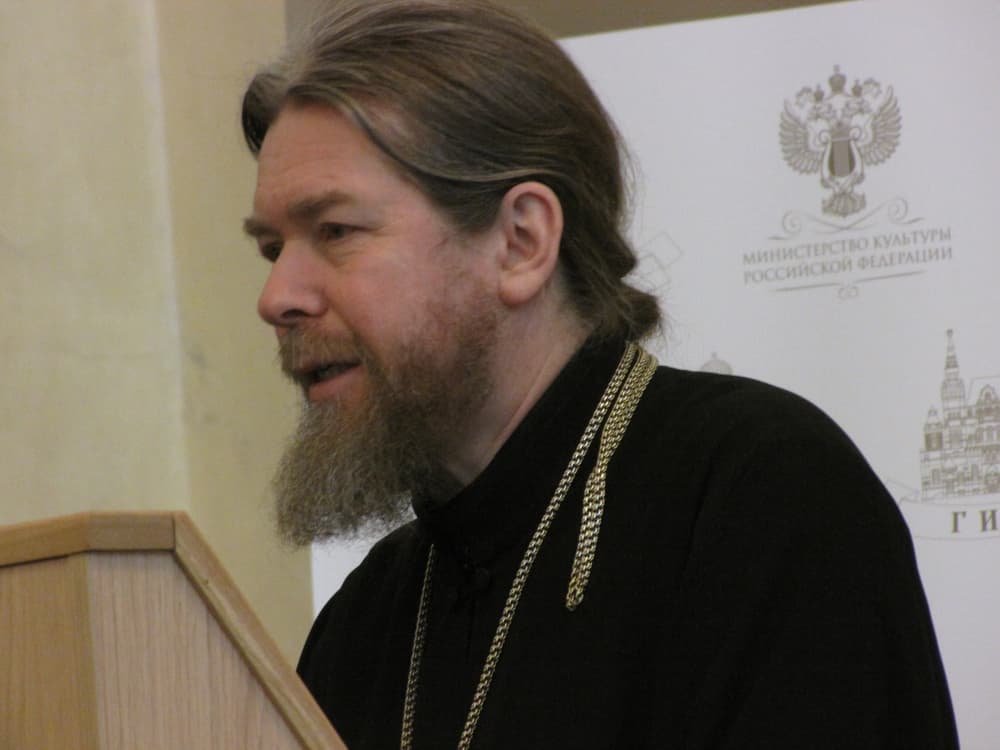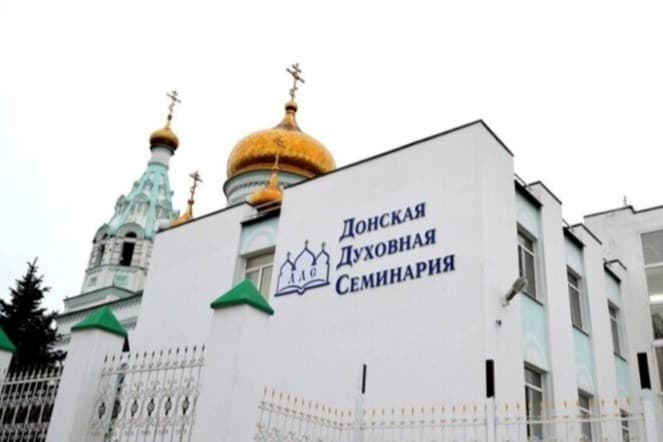
Moscow (AsiaNews) - An interview has appeared on the website of the Synodal Department for Charity and Social Service of the Moscow Patriarchate with the rector of the Donskoy Seminary in the city of Novocherkassk in the Rostov region, Protopriest Timofey Fetisov, who outlined the launch of a master’s programme at the seminary on “Social Service of the Russian Orthodox Church”, following a decision by the Synod of Bishops last March.
As Father Timofey explains, “every educational direction arises as a response to the various needs of society”, but social service in this case “is not simply a response to the need for charity and compassion; it is an organic expression of the very nature of the Church”. Indeed, the term Diakonía is used to denote “active love” within the Christian worldview, and as the “natural continuation of prayer”.
The Orthodox tradition focuses more on the liturgy than on social activities, but “if the liturgy unites people around Christ, social service transfers this communion into the world, truly becoming a common endeavour”, comments the rector, thus defining the soteriological significance of diakonia as “liturgy after the liturgy”.
The scope of this service is immense, and for some time there has been a felt need to train workers with a high level of academic and professional expertise. All priests, deacons and the most active members of Orthodox communities must be able to navigate the field of social care, and now some may become specialists in this field with the utmost effectiveness and awareness.
This is a new direction in Russian Orthodox theological studies, and the new programme seeks to develop an “innovative” pathway, employing scientific as well as spiritual methodologies.
This is not the first time that Donskoy Theological Seminary has taken on the responsibility of opening up new avenues for reflection and research, such as the other programme launched last year in collaboration with the Synodal Department for Cooperation with the Armed Forces and Law Enforcement Agencies, featuring a course on ‘pastoral-military service’ which has been enthusiastically enrolled in by over 100 people.
In this instance too, Rector Fetisov led the methodology, alongside Professor of Sociology Svetlana Zemljakova and Vice-Rector Oleg Mališev, described as “a true professional in this field”, with the support of the Metropolitan of Rostov, Merkurij (Ivanov), chairman of the charity and social service sector, and other members of the patriarchal department, such as Archpriest Mikhail Potokin and Archpriest Maksim Kozlov, coordinator of study programmes at Russian Orthodox institutions.
Together, these figures submitted a request to Patriarch Kirill of Moscow (Gundjaev), who wholeheartedly supported the new degree programmes, also involving the director of the Patriarchate’s humanitarian missions, Deacon Igor Kulikov, who helped to design the courses and bring together the necessary specialists.
A full body of ecclesiastical and lay lecturers has thus been formed from the Rostov-on-Don area, Moscow and other regions. Also participating are the Patriarchal Commission for Family Affairs, the Protection of Motherhood and Childhood, led by the priest Feodor Lukyanov, and the Coordination Centre for the Fight against Alcoholism and Drug Addiction, headed by Deacon Ioann Klimenko, as well as numerous charitable associations and institutions of the Russian Orthodox Church.
The training in social service also includes hospital chaplains and those dedicated to the rehabilitation of participants in military operations, with courses on ‘theology of social service’ and ‘Fundamentals of the Psychology of Extreme Situations’, guidelines for the activities of ‘parish psychologists’, and the legal framework for various support activities for the most vulnerable social groups.
All the faithful, clergy and laity alike, are free to enrol after passing an entrance examination, and will then be able to work within the various institutions and organisations of the Church and society to “put the sobornost of the spirit into practice in all situations of life”, concludes Father Fetisov.