Moscow (AsiaNews) - Many priests of the Moscow Patriarchate are now exasperated by the patriotic and warmongering rhetoric, which is also obligatory in the recitation of prayers in Church "for the victory of Holy Russia", and are desperately looking for an escape route.
Patriarch Kirill's ex-collaborator. Sergej Čapnin, now a researcher in the USA at Fordham University, continually receives requests from many of them, who ask to continue their service in one of the other national Orthodox Churches, and do not know how to organize the transition.
Some priests have managed to leave without attracting attention, having themselves relieved of all duties and perhaps moving to other countries, but since 2011 this solution has also become increasingly complicated, with a patriarchal directive that allows them to leave za štat, without duties ecclesiastics, only for health reasons, with related supporting documentation.
In all other cases, after a short sabbatical period, one is forced to return to the ranks, or is suspended from the ministry, or even reduced to lay status, a measure applied several times especially in this phase of the war, to avoid "strategic retreats". from clerical-patriotic commitment.
As Čapnin explains, "the patriarchal punitive machine became particularly effective during the war years against priests who think differently, and especially against those who express pacifist sentiments."
Not only the central ecclesiastical courts are activated, but also the diocesan commissions, which act as investigative terminals even before disciplinary ones, directly involving the ordinaries of the various eparchies. The sentences never include the "crime of pacifism", but generically mention acts of disobedience.
Priests who are even only "unenthusiastic" about the war propaganda are first given benevolent admonitions, and then move on to threats not only of punishments or suspensions, but also of cancellation of priestly privileges with respect to mobilization in the army, with the risk of being sent to front directly from the Ministry of Defense. At the end of 2022, Patriarch Kirill had signed an agreement with the military to avoid the conscription of clergymen "as long as they carry out their priestly functions".
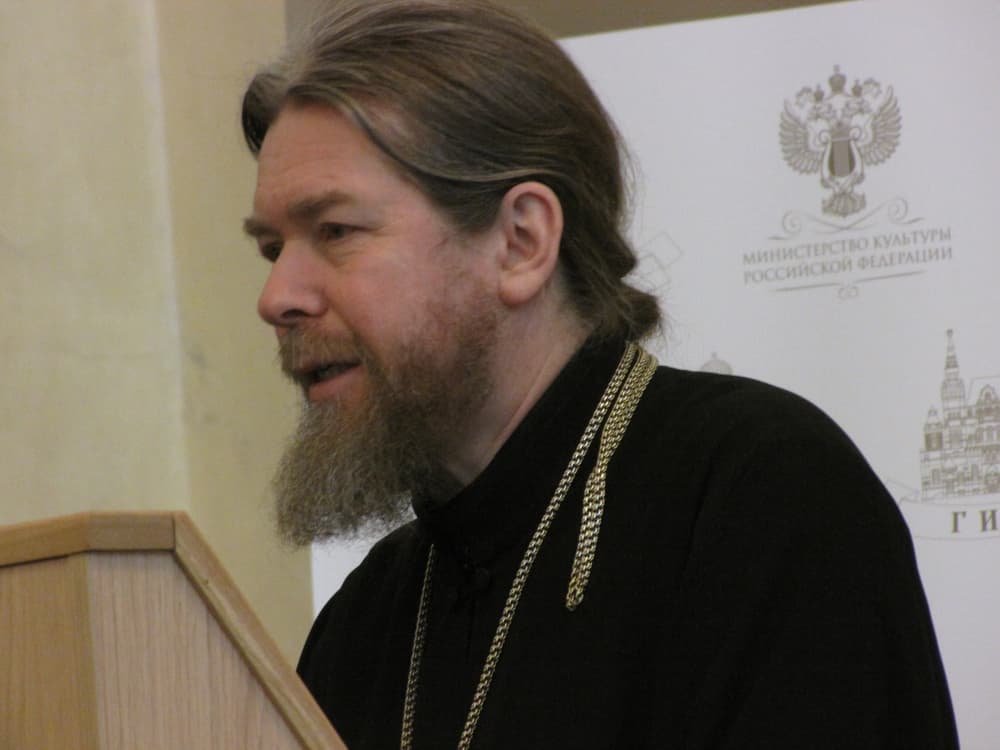
Apostolic Rule n.25 then applies to priests reduced to the lay state, which justifies the maximum measure for clerics who are guilty of "immoral actions, violation of the oath and theft". The failure to fulfill priestly promises is linked to the refusal to recite the prayer for Victory in church, as in recent days the accusation was issued against the well-known Moscow priest Father Aleksej Uminsky (in the photo), heir of the ecumenical and liberal community of the "spiritual father of dissent" in the Soviet years, Father Aleksandr Men, murdered by unknown assailants in 1990.
The other local Orthodox Churches, including those closest historically to the patriarchate of Moscow such as those of Bulgaria, Serbia, Czechia and Poland, or the patriarchate of Antioch, are very reluctant to welcome priests fleeing from Russia, both due to the complexity of ecclesiastical bureaucracy, and above all for fear of hostile reactions from Kirill and the Russian state apparatus.
In the United States there are fairly liberal Orthodox jurisdictions, but Russian priests are not allowed to officially enter the country to carry out their mission; some, as Čapnin recalls, were even advised to enter as illegal immigrants from Mexico, and some priests have already tried this dangerous adventure. In general, priests who go abroad should receive a permit document from the Patriarchate of Moscow, a pass which it obviously has no intention of granting to the "non-aligned".
As Kirill's ex-secretary explains, only the "hope in salvific Chalcedon" remains, addressing directly the ecumenical patriarchate of Constantinople, which from the canonical norms of the ancient Council of Chalcedon of the year 451 has the right to restore to the ministry the priests suspended by bishops as the ecclesiastical "supreme instance". The Patriarchate of Moscow obviously does not recognize this right, and tries to counter it by infinitely lengthening the times of canonical trials, leaving priests in an "ecclesiastical purgatory" from which it is very difficult to escape.