Bangkok (AsiaNews/Agencies) - She Zhijiang, head of a series of criminal activities in Southeast Asia, was extradited from Thailand to China on Wednesday. She, who also holds Cambodian nationality, had been in Thai custody since 2022, but had been followed by the Chinese authorities for over a decade. She was escorted out of Bangkok's Suvarnabhumi Airport by Thai police before being flown out at around 4:30 p.m.
She Zhijiang, 43, faces criminal charges in China related to the operation of online gambling. He and his company, Yatai, had already been targeted by US and British sanctions.
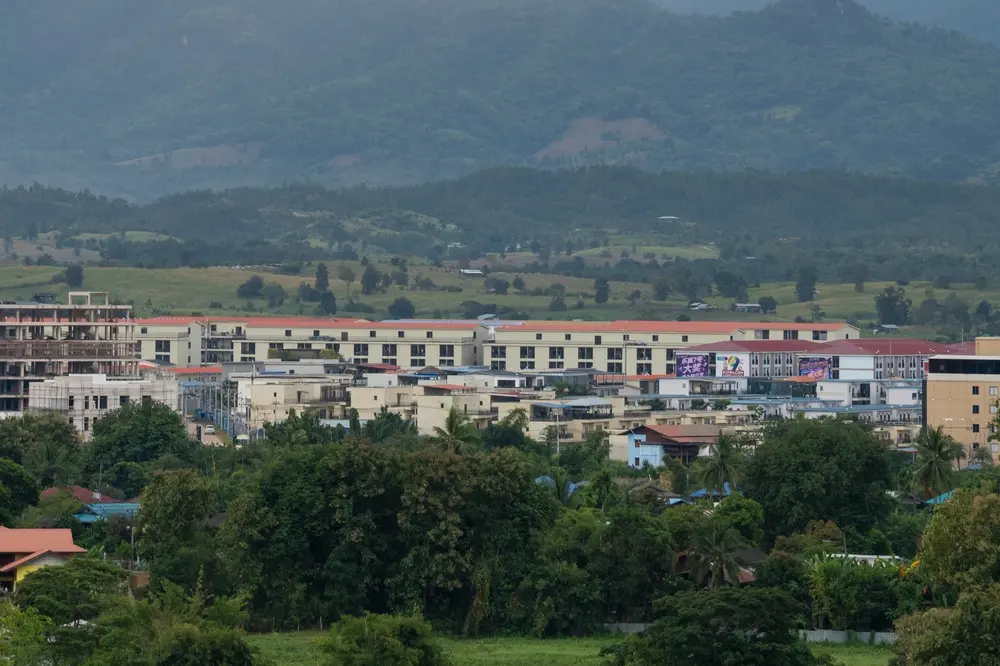
The racketeer is accused of turning a village on the border between Myanmar and Thailand into Shwe Kokko, a huge centre for online scams located just across the border in Myanmar. Shwe Kokko is one of the most notorious centres thriving in Southeast Asia, hotbeds of activity also linked to drug trafficking that have developed more easily with the outbreak of the Burmese civil war since 2021. These locations are known to host centres for internet-based crimes where workers, some of whom are victims of trafficking, steal from foreigners through romance and business scams. According to 2023 data, $37 billion was stolen from citizens in Asia alone through these centres.
She Zhijiang has denied all charges, claiming to be simply an “urban developer”. His lawyer has expressed concern that once in China, She “will be denied due process, tortured and eventually disappear”.
The presence of scam centres in Myanmar and Cambodia has fuelled a serious internal crisis in Thailand, which borders both countries. A recent report by the Global Anti-Scam Alliance (Gasa) revealed alarming data: six out of ten Thais have been victims of scams in the last year. Total financial losses rose to 110 billion baht in a single year, the highest level ever recorded. On average, Thais lost 12,956 baht per person to scams in 2024.
The presence of online scam centres is undermining Thailand's status as a safe and welcoming destination, eroding the confidence of international travellers, particularly those from other Asian regions. The Tourism Authority of Thailand has warned that in 2025, the number of foreign tourists could decline by 6% to 33.4 million, with a 5% drop in tourism revenue, representing a loss of over one trillion baht. The most worrying decline has been among Chinese tourists, whose arrivals have fallen by 35%.
She Zhijiang's extradition also comes at a time of growing international pressure on scam centres in Southeast Asia. The United States recently sanctioned the Democratic Karen Benevolent Army (DKBA) and four of its leaders for their involvement in cyber fraud activities, and established the Scam Centre Strike Force to tackle fraudulent operations in Myanmar, Cambodia and Laos.
She Zhijiang's extradition could provide Chinese authorities with crucial information about Shwe Kokko's activities. She had worked closely with Colonel Saw Chit Thu, the leader of the Karen Border Guard Force (BGF), which operates the huge KK Park complex in the Myawaddy area, recently dismantled by the Burmese army in an operation that has been described as a facade.
International attention is now shifting to other key figures such as Saw Chit Thu. In addition, recent US sanctions have also implicated two companies and a Thai citizen accused of facilitating the centres, which are in turn linked to, if not directly run by, Chinese criminal networks.