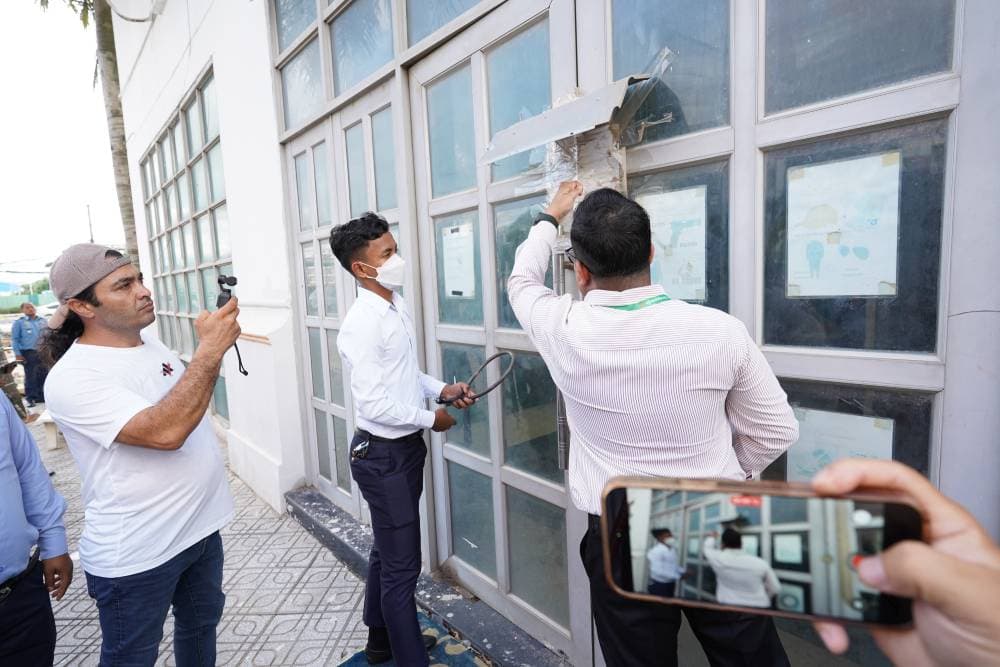
Vienna (AsiaNews) – Online scam centres in Southeast Asia are increasingly expanding outside Asia, this according to a report released yesterday by the United Nations Office on Drugs and Crime (UNODC).
Titled Inflection Point: Global Implications of Scam Centres, Underground Banking and Illicit Online Marketplaces in Southeast Asia, the study notes that organised crime groups behind so-called scam centres are moving their operations (so far centred in Cambodia, Laos, Myanmar and the Philippines) to other parts of the world in response to China’s recent crackdown.
“This reflects both a natural expansion as the industry grows and seeks new ways and places to do business, but also a hedging strategy against future risks should disruption continue and intensify in the region," said Benedikt Hofmann, UNODC Acting Regional Representative for Southeast Asia and the Pacific.
This form of illegal trafficking, mostly run by Chinese criminal gangs but involving hundreds of thousands of people of different nationalities, lured by deception and forced to work in conditions of modern slavery, is spreading “like cancer,” Hofmann laments.
“Authorities treat it in one area, but the roots never disappear; they simply migrate,” he added. “This has resulted in a situation in which the region has essentially become an interconnected ecosystem, driven by sophisticated syndicates freely exploiting vulnerabilities, jeopardizing state sovereignty, and distorting and corrupting policy-making processes and other government systems and institutions."
Those working at scam centres try in various ways to establish relationships with people through messages on social media to extort money.
Given some vulnerabilities in Africa, the report notes that the discovery of a scam centre in Zambia led to the arrest of 77 suspects last year, including 22 Chinese nationals who were later sentenced to 11 years in prison for running the operation.
Scores of Chinese citizens involved in cybercrimes have also been arrested in Angola and Namibia, but also people from Cuba and Singapore. Almost a thousand people were arrested In Nigeria between the end of 2024 and early 2025, mostly from East Asia and Southeast Asia, who, according to the investigations, had trained Nigerian "colleagues".
Looking at the information gathered from police reports and anti-trafficking groups, people from over 50 countries are involved, with those from China leading the pack.
According to the UNODC report, losses reached about US$ 37 billion in East and Southeast Asian countries, while in the United States alone losses amounted to more than US$ 5.6 billion, US$ 4.4 billion from scam centres in Southeast Asia alone.
“The regional cyberfraud industry... has outpaced other transnational crimes, given that it is easily scalable and able to reach millions of potential victims online, with no need to move or traffic illicit goods across borders,” said John Wojcik, one of the report's authors.
The criminal ecosystem is becoming increasingly complex. Scams are becoming more and more sophisticated thanks to the use of artificial intelligence, deepfakes, blockchain, and encrypted platforms that make it harder to track transactions.
The growth of online scam centres in recent years has attracted new players providing a range of "services" (money laundering, illicit banking, and human trafficking), creating a global industry that generates just under US$ 40 billion in annual profits.
IT infrastructures such as Huione Guarantee, recently rebranded Haowang18, are at the heart of the system. This marketplace platform (similar to Amazon or eBay) is accessible only through private channels and links, mainly via Telegram, which operates in Mandarin Chinese, but is headquartered in Phnom Penh, Cambodia.
"It has grown to more than 970,000 users and thousands of interconnected sellers," the UNODC report reads. It is like an online black market or dark Amazon, where buying and selling stolen data, software for scams and money laundering services takes place, with payments traceable only within the system, protected from external checks.
“Some expert estimates have found that cryptocurrency wallets used by Huione Guarantee and its vendors have received inflows totaling at least US $24 billion over the past four years, 22 with law enforcement authorities and blockchain researchers reporting clear connections between the marketplace and criminal groups targeting victims around the world,” reads the report by the UN Office on Drugs and Crime.
Online gambling sites are used in a similar way. Betting platforms are run according to a model called "white label", a term that indicates a turnkey service sold to third parties, who then offer it under their own brand.
In the context of illegal gaming, this means that some companies offer real "scam packages" that include software to manage bets, payment systems, customizable interfaces, technical support and even solutions to circumvent anti-money laundering regulations.
The money obtained from various types of illegal trafficking (from fraud to drugs) enters the system through top-ups on gambling accounts. The funds are then "washed" through a complex network of simulated transactions – bets, winnings, games – and finally withdrawn as if they were legitimate proceeds.
In many cases, the platforms also integrate cryptocurrencies and prepaid cards, further complicating tracking by authorities. Some operators go so far as to distribute modified browsers with malware that infect users’ devices, tracking every action, recording credentials, and even capturing screenshots and sensitive data.
In recent years, Southeast Asian governments, such as the Philippines, have tried to fight back, imposing limits or bans on offshore casino operations (also called POGOs). However, the extremely adaptable nature of criminal gangs has allowed them to physically move operations to new areas, fragment them into smaller subnets, or rebrand them as call centres or technology hubs.