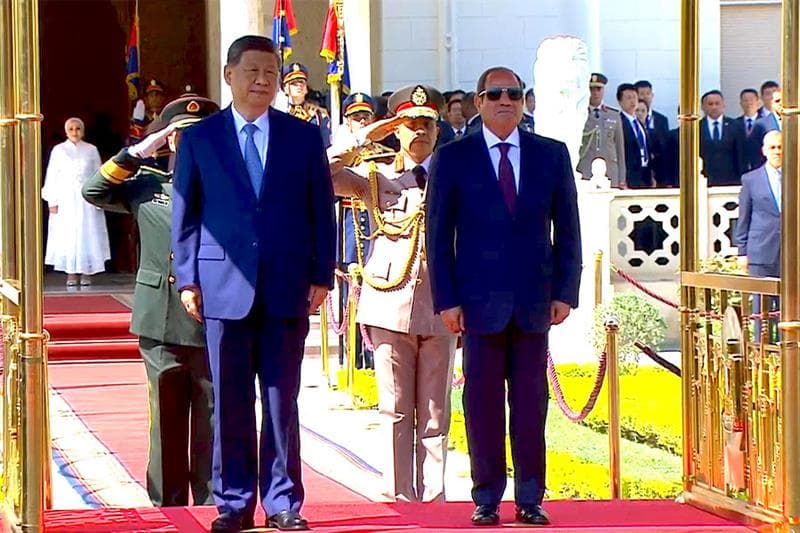
Moscow (AsiaNews) - The conclusion of the third forum of the Belt and Road Initiative in Beijing has sparked many comments in Russia and also several doubts about what actual consequences arise from the meetings of the many heads of state, and above all between that of Xi Jinping with Vladimir Putin , who has finally decided to leave the Moscow "bunker" to show the world Russia's "turn to the East".
Even if in reality it would appear that Putin has failed to bring home new concrete agreements, the two leaders certainly wanted to show everyone that Eurasia is ready to launch the challenge to the West and the USA, attracting many countries (a Over one hundred were represented in Beijing) and areas of geopolitical interest.
The two "old dear friends" reiterated that they feel "unconditional mutual trust", and that they are working to build together "a more just multipolar world".
Many of the participants were from the “global South”, who were asked to look towards Eurasia rather than “the collective West”. This time almost all the representatives of the European Union were missing, especially due to the refusal to sit alongside the invader of Ukraine, except for the most pro-Putinian European leader, the Hungarian Viktor Orban.
Xi Jinping listed the initiatives already completed or underway on the great Silk Road, with over three thousand projects and around one trillion dollars already invested in many countries, promising other generous credits and further expansion of the markets for foreign companies.
He assured that "we do not participate in ideological conflicts or political conflicts", without mentioning the wars in Ukraine and Israel, even if the statement at least sounded like a warning to his "brother" Putin.
However, Xi then comforted him by reiterating China's opposition "to unilateral sanctions, economic oppression and fractured ties".
The leader of Beijing has made it clear that he does not appreciate pressure from Washington in the commercial field, especially in the field of semiconductors, that he wants to play his game freely for the reconquest of Taiwan and that he does not allow interference with respect for human and minority rights , like the Uighurs and many other ethnic groups of the "Chinese world".
China's relationship with the West follows the model of that of Russia, where the repression of all freedom of expression is not too subtle.
In his speech in Beijing, Putin tried to show harmony with China in external relations, both political and economic, praising the successes of the Chinese, because "they concern many of us".
The idea of the Belt and Road is analogous to the Russian proposal of the Eurasian partnership as a “space for collaboration and mutual support between like-minded people”, recalling various initiatives such as the Eaes economic union, which Russia seeks to develop with post-Soviet countries.
China offers Russia a commercial and diplomatic roof, as well as much-needed financial means along with various products and technologies, ensuring some stability for the Russian economy, supplied by Chinese cars and smartphones.
And yet China does not recognize Russia's annexation of Crimea and the other four occupied Ukrainian regions, despite dramatically increasing trade with Moscow, which has grown by over 30% to almost 200 billion dollars.
As Russian sinologist Aleksandr Gabuev explains, "China is Russia's main partner in all dimensions, but the timing of China's economic recovery after the pandemic is slow, and they struggle to make real leaps in quality." In general, Russia's current condition suits China very well, since it "corresponds to all of its interests."
XI Jinping is rooting for a freeze on the Ukrainian front, thus not being forced to support Russia excessively, and the longer Russia remains bogged down in the plains of Ukraine, the more dependent it will become on Beijing's plans.