Tbilisi (AsiaNews) - The alleged poisoning of Metropolitan Šio (Mudžiri), the 54-year-old patriarchal lieutenant of Tbilisi, remains a mystery in Georgia. But the Georgian faithful have once again been forced to witness the outer signs of an ongoing internal struggle within the local Orthodox Church, mirroring Georgian society itself divided between pro-Russian and pro-Western sentiments.
News of the poisoning was released on July 5 by the theologian Levan Taturašvili, based on sources within the patriarchate. Speaking on Mtavari Arkhi channel, he claimed that the metropolitan had suffered an arsenic attack, and that the civil and ecclesiastical authorities had decided to keep the incident secret. The litirgical vessels used in the presbytery of the cathedral of the Most Holy Trinity were immediatley analysed but without communicating the results.
Metropolitan Šio had been feeling ill for a whole week, and suspicious substances were detected in his blood, which it is thought may have been administered to him "in successive stages". The patriarchate's spokesman, protoierej Andrij Džagmaidze, did not rule out poisoning, speaking of an "excessive concentration of heavy metals in the body".
The Rustavi 2 TV channel pointed out that the incident "suspiciously coincides" with the death of one of the church cleaners, who had also been ill for some time. Ultimately a case was opened against unknown persons for premeditated murder.
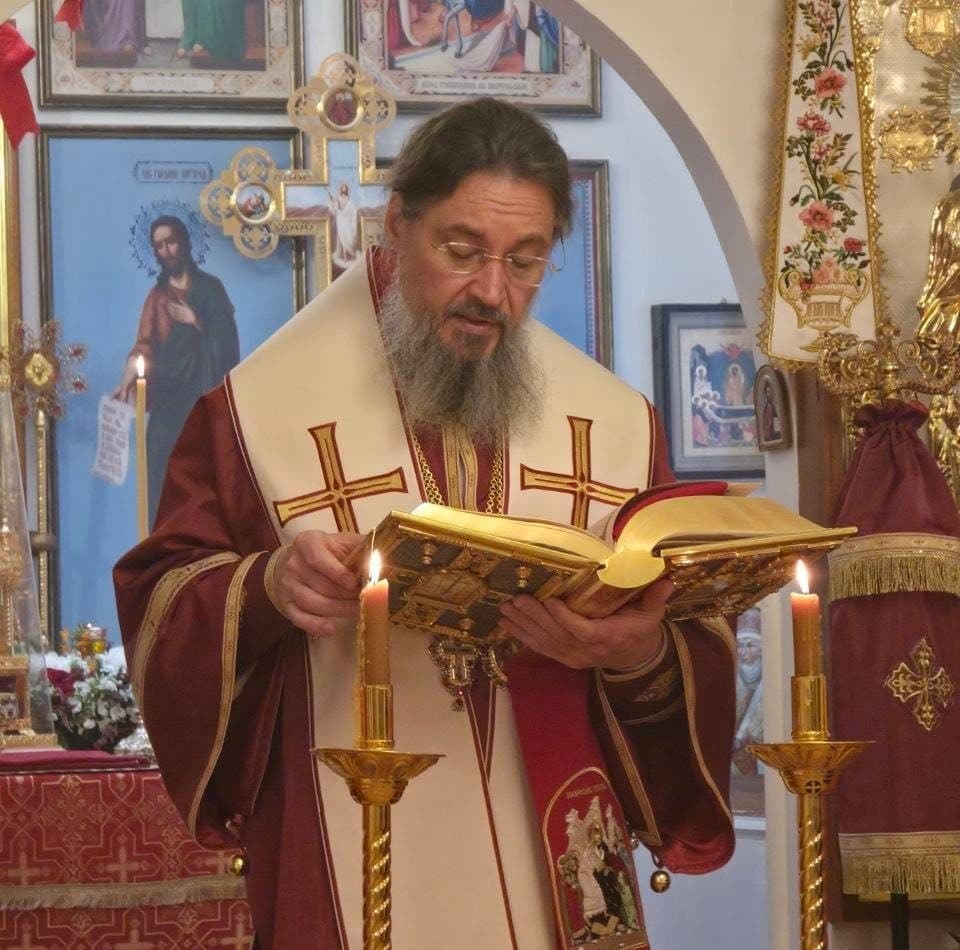
Šio himself appeared in public on July 12, for the Orthodox feast of Saints Peter and Paul, celebrating the solemn liturgy and assuring in the homily that he was well, even if the doctors advised further tests, confiding to journalists that he "wasn't able to understand whether it was an involuntary illness or a deliberate action", hoping that everything would soon become clear.
The entire event has greatly shocked the faithful and all of Georgian society, recalling when in November 2017 Patriarch Ilja II had appointed Šio lieutenant, almost as if he were about to leave his office, or in any case wanted to indicate a successor.
This had brought to light a series of internal conflicts in the Georgian Church, which had also involved political forces and the entire public opinion, and even then there was talk of an attempt to poison the patriarch himself.
Šio's chances of ascending to the patriarchal throne are high, but not guaranteed, due to the continuous swing of the balance that divides forces within the ecclesiastical hierarchy. The Soviet-era precedent is recalled, when the then lieutenant, Metropolitan Kallistrat (Tsintsadze), appointed in 1925, failed to become patriarch two years later.
Other precedents from the last century speak of criminal methods repeatedly used in the internal struggles of the Georgian Orthodox, when even the patriarch Kirion II was found shot. This was before the Soviet assimilation, and the case was never solved, but other priests associated with him died violent, or otherwise suspicious, deaths. According to some research, other bishops had paid the assassins of their own internal adversaries.
Someone also recalls that during these struggles at the beginning of the last century, the young Josif Džugašvili was a seminarian from Tbilisi, and he too dreamed of ascending the patriarchal throne. But he realized this ideal through the revolution and the internal struggles of the communist party, well trained by the ecclesiastical formation, until he reached the peak of "red patriarch" with the battle name of him, the father of the people and commander Stalin.
Georgia has always been a weak country and very dependent on external influences, both in the political and ecclesiastical fields, since ancient times. When at the time of the first Councils Armenia managed to escape its dependence on Constantinople, choosing the Monophysite heresy, the Georgians decided to remain Orthodox also for fear of isolation.
There has always been a "collaborationist" and an "intransigent" party in Georgia, and the current Russian war is calling both soldiers and priests to arms, for military, political and spiritual victory.