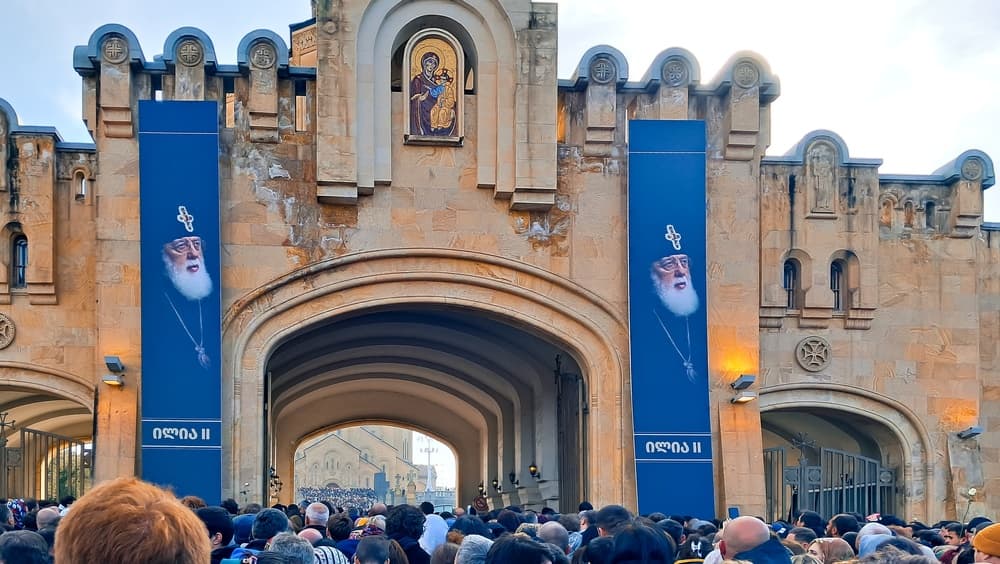
Tbilisi (AsiaNews) – More than three weeks have now passed since the death of the Orthodox Patriarch of Georgia, Ilia II (Gudušauri-Šiolašvili), who passed away on 17 March at the age of 93.
He had been elected to the patriarchal throne of Tbilisi in 1977, at the height of the Soviet era, under the total control of the Moscow Council for Religious Affairs. A completely new era is now beginning for the Georgian Church, given that the 80th patriarch remained in office longer than any of his predecessors in history.
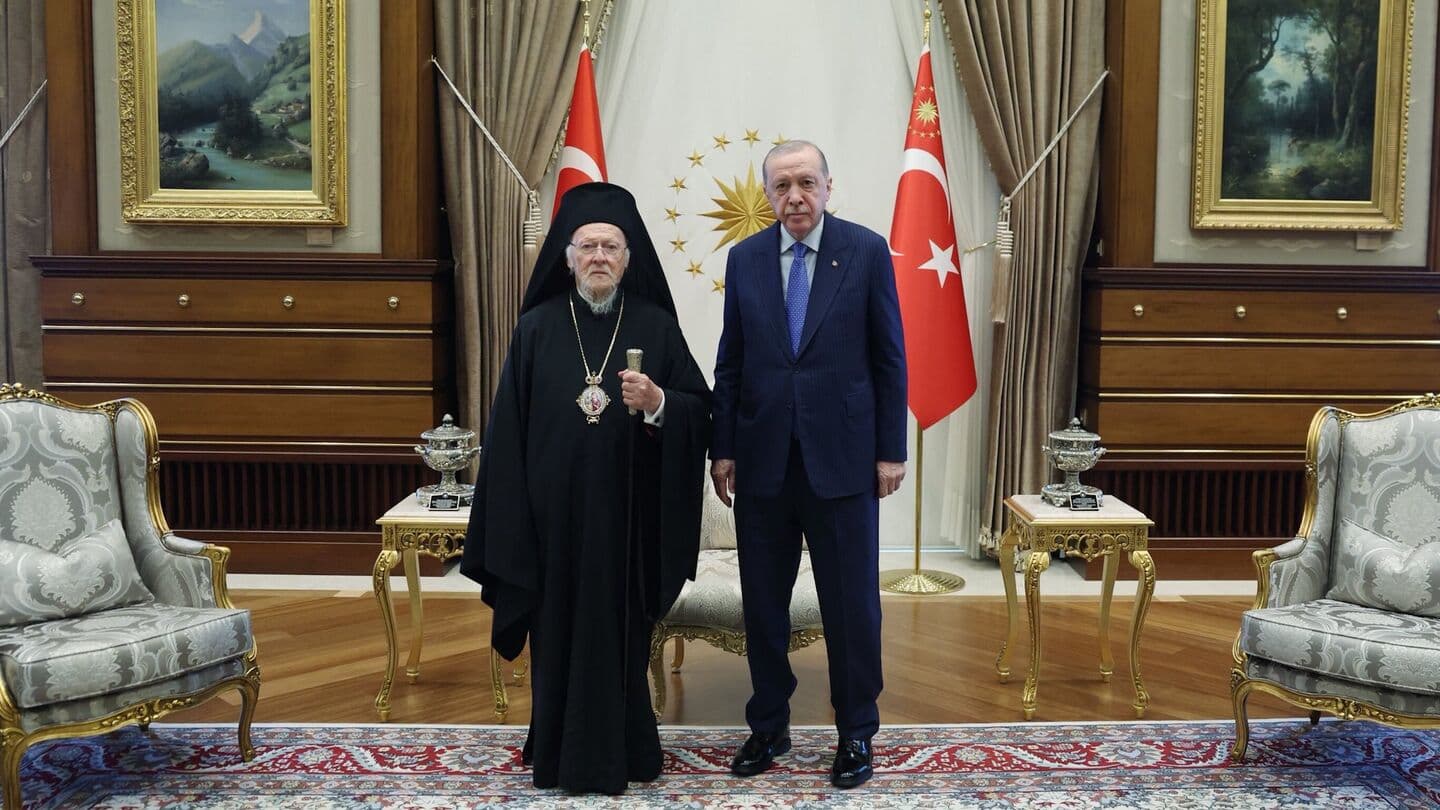
The Ecumenical Patriarch of Constantinople, Bartholomew II (Archontonis), has therefore pre-empted discussions on the method of electing his successor by proposing two candidates whom he considers suitable for the solemn office: the Metropolitan of Western Europe, Avraam (Garmelja), and the Metropolitan of Poti and Khobi (in western Georgia), Grigory (Berbičashvili).
This initiative provoked a furious reaction from the Russians, with a statement from Moscow’s intelligence services claiming that “the Phanariot is merely seeking to install people subservient to him to satisfy his thirst for power”, invoking a rule of the Second Ecumenical Council of the 4th century, according to which “regional bishops must not extend their power beyond the borders of their own region”.
There have been no comments so far from the Georgian ecclesiastical hierarchy regarding the Ecumenical Patriarch’s proposal, nor from politicians in the ruling party or the opposition, out of respect for the forty days of mourning for Ilia II; however, everything will need to be assessed, given the delicate balance between state and church in present-day Georgia, as well as that between Moscow and Constantinople and, more generally, between tradition and renewal.
The Synod tasked with identifying candidates opened on 3 April with 39 bishops, and reaching a decision will not be straightforward. The website Kavkaz.Realii interviewed two authoritative commentators on the matter: Sergei Chapnin, director of the Centre for Orthodox Studies at Fordham University, and Shoto Kintsurashvili, a theologian at Ludwig Maximilian University in Munich.
According to Čapnin, at this stage in history, the Orthodox Churches are experiencing a period of great fragmentation; “I would say they are in crisis”, both in terms of their internal structures and their mutual relations at an international level. The main problem lies in “religious nationalism”, particularly in the post-Soviet space, with the need to rebuild and reclaim their role in various societies, “with few priests and limited theological training”, the expert states.
The Georgian Church was one of the first to adopt a very radical and aggressive stance, withdrawing from the World Council of Churches and isolating itself somewhat from the wider Christian world. Patriarch Ilia II failed to manage this phase, yielding significantly to the most active groups in society and allowing what Čapnin describes as “a rather primitive form of Christian nationalism”. The problem now is how the administration of the Church will be organised, as the late patriarch had concentrated it exclusively in his own hands.
Kintsurašvili recalls the important Georgian council of 1995, which had approved the new statute centralising all functions in the patriarchal office. In 1997, this led to an official schism with all the Churches engaged in ecumenical dialogue, which Ilia II defined as “heresy”.
Since then, Tbilisi’s isolation has fostered a new generation of priests and bishops, with a strongly anti-ecumenical mindset largely fuelled by Russian theological literature, and an ever-stronger bond with the Moscow Patriarchate in the proclamation of Orthodoxy ‘of traditional values’.
Bartholomew II’s move seeks to bring Georgia back into ecclesiastical communion with most of the other autocephalous Orthodox Churches, for which Constantinople remains the fundamental point of reference.