Articles by the author:

Vladimir Rozanskij

  • Uzbek land handed over to the Chinese

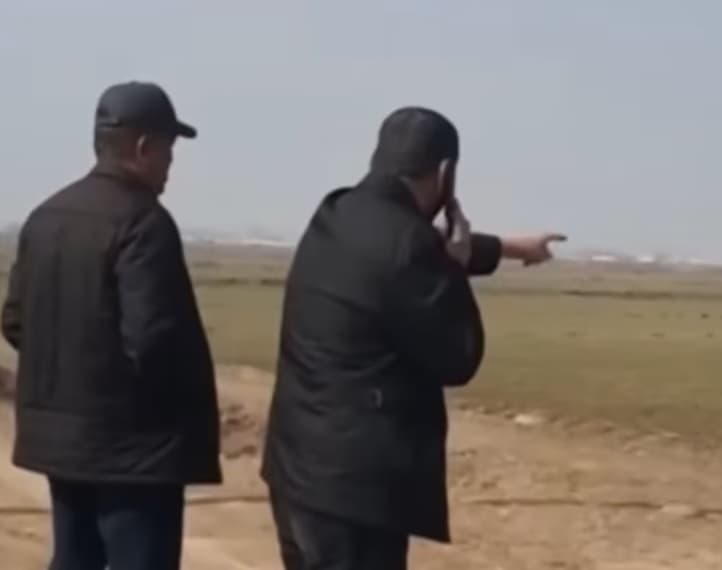
    China is the main foreign investor in Uzbekistan, with large capital inflows for new projects, but the growing Chinese presence is causing great concern among farmers. Data from the Uzbekistan National Institute of Statistics last year counted 17,900 farms with foreign participation, of which almost 7,000 with Chinese capital

  • Changes in Astana's institutions according to Tokaev

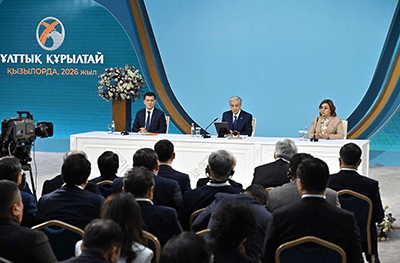
    Speaking at the fifth national assembly in Kyzylorda, the president presented the fundamental parameters of constitutional changes to free the country from the clans that have dominated it for over thirty years. He insisted on the need to prioritise administrative discipline, with technological acceleration at its service.

  • Nesta, from Bishkek to the Youth Council in France

    A 12-year-old Kyrgyz girl who immigrated with her family seven years ago has been elected in Sommières to the body that promotes youth participation in public life. Her parents are proud: "In Central Asia, there is no freedom of expression, even for adults. I hope that one day my daughter will be able to make a significant contribution to life in Kyrgyzstan."

  • The old and new oligarchs of Kazakhstan

    A figure completely unknown to the general public, the young builder Shakhmurat Mutalip, has put himself forward as a buyer for several billion dollars of Kazakhstan's leading mining company, the latest step in his meteoric rise in Astana. The suspicion is that he has inherited the legacy of the power groups that prospered in Tokaev's shadow.

  • The end of “Lenin's light bulbs” in Kyrgyzstan

    In Majluu-Suu, the historic factory that symbolised the electrification of the Soviet Union promoted by Vladimir Ilič is on the verge of closing down for good. Incandescent light bulbs, once exported abroad, have now been replaced by LED bulbs produced in China. The Kyrgyz authorities are seeking to convert the factories, but almost 60% of the city's inhabitants have now emigrated in search of work.

  • The Georgian Dream and freedom of expression

    Prime Minister Kobakhidze declares himself ‘available at any time for discussions with members of the pro-Western opposition’. But these same forces, which do not recognise the legitimacy of his government, remind him of their leaders in prison and the approval of the law against ‘foreign agents’. Meanwhile, Tbilisi is cut off from trade agreements between Azerbaijan and Armenia.

  • Russian threats to Central Asian countries

    According to Dugin and Soloviev, the former Soviet republics ‘have no right to independence’ and must reunite with Russia to avoid becoming slaves to China, America or Europe. Local governments have issued only feeble protests, invoking the ‘spirit of strategic partnership’. The suspicion that the two propagandists are saying ‘what the Russian leadership does not want to express openly, but which in reality corresponds to its plans’

  • Drugs and corruption threaten security in Tashkent

    Report by the head of the Uzbekistan Security Service: drug trafficking is constantly on the rise, especially with regard to the spread of synthetic drugs among young people. In 2025, 1,083 state employees were suspended for corruption and other crimes related to abuse of power. ‘Destructive ideas’ spread through digital networks are also being targeted.

  • Putin's silence on Venezuela and Iran

    As was the case with the collapse of Bashar al-Assad's regime in Syria, Moscow is not going beyond statements of circumstance on what is happening in Venezuela and Iran, two historic allies. The Kremlin's criticism is now directed almost exclusively at Europe and NATO, without involving Washington's responsibilities to any great extent.

  • The unknown sweetness of Tajik honey

    Dushanbe's honey production is highly regarded at international fairs for its taste and purity, and its availability has also grown significantly. However, it still struggles to enter European markets due to shortcomings in certification systems and the logistical organisation supporting exports.

  • The fight against Islamic radicalism in the North Caucasus

    From Kabardino-Balkaria to Chechnya, new attacks by individuals or Islamist groups have been reported in recent months. But there is also controversy over the methods of repression, with the use of torture and the data itself, which some believe has been exaggerated to replicate the sense of insecurity that led to Putin's rise. Meanwhile, it is precisely war and economic instability that fuel radicalism.

  • Central Asian cotton for Russia's war

    The cellulose that remains after cotton ginning is a component used in the production of gunpowder. And from 2022 to today, Uzbekistan, one of the largest producers in the region and in the world, has massively increased its exports to Moscow precisely because of the conflict in Ukraine.

AsiaNews Weekly
News from Asia that matters

Subscribe to the newsletter to receive verified news, analysis and insights from Asian countries every week.

Subscribeto the newsletter
  • P.I.M.E. Centro Missionario
  • Agenzia Fides
  • P.I.M.E. Brasil
  • Radio Mondo
  • Mondo e Missione
  • P.I.M.E. U.S.A.
  • TV 2000