
The Gateway to the East

Every Tuesday our focus is on the Middle East: in-depth pieces and interviews on the region stretching from the Gulf to Turkey, and on relations between Christians and Muslims in Arab-speaking countries

  • As truce between Israel and Hezbollah is negotiated in Washington, the Lebanese call for peace

    While the parties work towards a ceasefire, the pro-Iranian party remains opposed to "direct negotiations" with the Jewish state. Lebanon’s capital is experiencing hours of relative calm, but tensions remain in the south. The Druze House hosts a summit of religious leaders. Among the population, a growing consensus calls for peace with the Israelis and normalisation of relations.

  • Israel: big moves for the post-7 October elections

    The religious parties want to move up the vote to 15 September before Yom Kippur (and distance themselves from Netanyahu). The Bennett-Lapid alliance is failing in the polls, giving former General Eisenkot a chance to emerge as the top opposition leader. But no one seems to have the numbers to form a majority without the support Arab parties that Jewish parties reportedly want to keep at bay.

  • Saudi Arabia's new centre of gravity, from the Persian Gulf to the Red Sea

    The war with Iran has triggered a shift in Riyadh that is not merely geographical. Neom, Yanbu, and Jeddah are no longer just scenic elements of Vision 2030, but strategic infrastructures for survival. Hence, Mohammed bin Salman is trying to avoid all-out war with Iran (which would also jeopardise the Red Sea) in a context where the US is no longer a guarantor of stability.

  • Gaza and the Board of Peace's unfulfilled promises

    The Gaza Strip remains in limbo. While the war is not truly over, timid attempts to restore political normalcy have been made amid unresolved contradictions. Fatah held local elections in Deir el-Balah on 25 April, but Hamas maintains local networks. The Board's only funding came thus far from the United Arab Emirates and Morocco, invested on the future local police force. Meanwhile, 80 per cent of families still depend on water distributed by tankers.

  • Iraq: New president brings new balance between Baghdad and Erbil

    After weeks of deadlock, Nizar Mohammed Saeed Amidi has been appointed President of the Republic. Political scientist Saad Salloum tells AsiaNews: this choice is a sign of “Kurdish fragmentation” and greater centralisation of power. For the Iraqi scholar, “pragmatism, institutional continuity and conflict management” will be the guiding principles of his four-year term.

  • Order of Malta, with Lebanese ‘hostages’ to Iran and Israel war

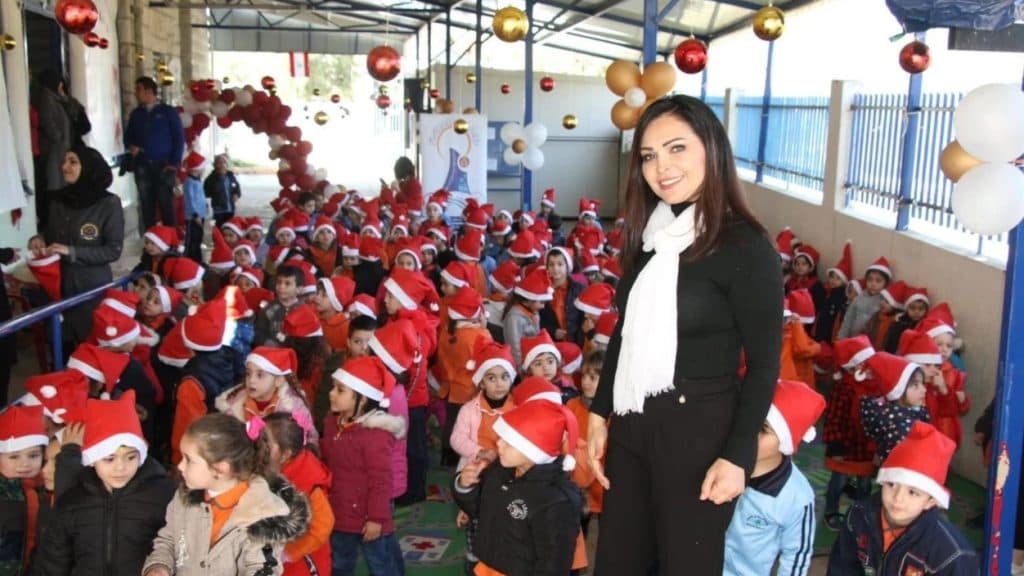
    From Beirut, Oumayma Farah describes a country at risk of being overwhelmed by the conflict. The displacement crisis is a priority, with only a small fraction of people being accommodated in shelters. Schools are being used as makeshift shelters, putting the education of thousands of students at risk. The Order’s mission: “To serve all without distinction of race, colour or religion, but focusing on needs and suffering”.

  • Vicar of Arabia talks about the nuns in Yemen and the joy of Easter with those who suffer

    Bishop Martinelli talks about the festivities in the conflict-stricken Gulf, starting with the testimony of the Missionaries of Charity. As a result of fear, some migrants have left the Emirates temporarily, while marriage and baptism courses are on hold. School and catechism classes have been "online for over a month." Church closures generated “significant media coverage”. A "people of peoples" from over a hundred countries bear witness to the faith.

AsiaNews Weekly
News from Asia that matters

Subscribe to the newsletter to receive verified news, analysis and insights from Asian countries every week.

Subscribeto the newsletter
  • P.I.M.E. Centro Missionario
  • Agenzia Fides
  • P.I.M.E. Brasil
  • Radio Mondo
  • Mondo e Missione
  • P.I.M.E. U.S.A.
  • TV 2000