China

Featured article

Datong also gets a new bishop

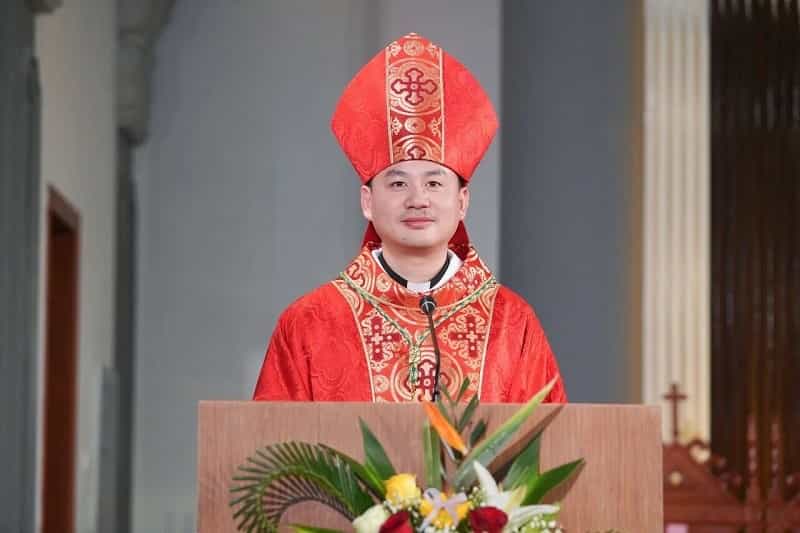
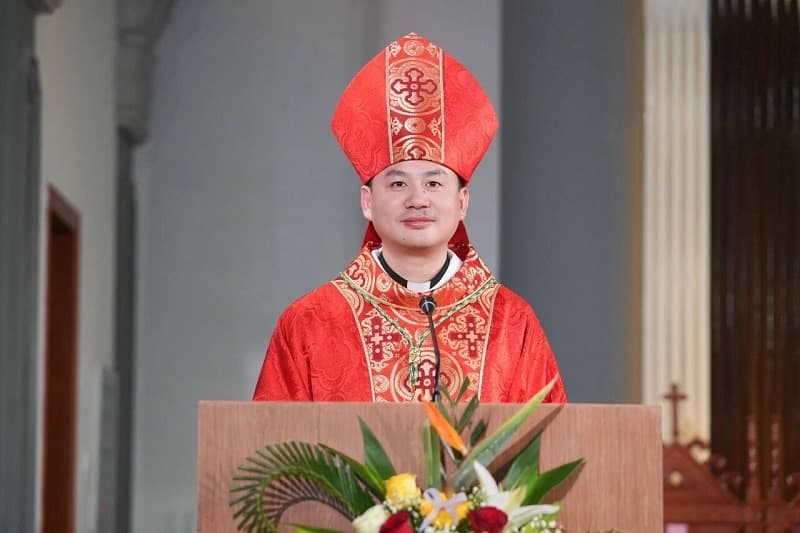
The episcopal ordination of Fr Paul Liu Honggang, 56, took place today, the first in over 20 years for this diocese in Shanxi. The appointment was made under the China-Vatican agreement. After the expulsion of the missionaries, a local priest, Father Guo Yingong, kept the faith alive even during the Cultural Revolution.

  • Beijing mediating between Phnom Penh and Bangkok, while activists campaign for peace

    China’s special envoy Deng Xijun visits Phnom Penh to revive ceasefire efforts. Cambodian opposition leader Sam Rainsy attacks Hun Sen and the Cambodian government for fanning the flames of conflict to mask a "personal conflict" with Thaksin Shinawatra. More than 30 Thai and Cambodian NGOs issue an appeal for a truce, stressing that mostly ordinary people are affected by war.

  • The “long march” of cultural heritage in China

    In just 40 years since joining UNESCO, the People's Republic already ranks first in terms of the number of “intangible cultural heritage” sites, with 60 recognised sites. Hundreds of new museums open every year across the country, and in 2024 alone, 179,000 new operators were hired. Chinese “confidence in culture” is a cornerstone of Xi Jinping's soft power. And with the United States' withdrawal from UNESCO, its influence on global cultural policies is set to grow even further.

  • Chinese high-speed train between Jakarta and Bandung 'total flop'

    The Indonesian consortium that controls 60% of the route inaugurated two years ago recorded losses of over $250 million in 2024. This year, losses are expected to increase further. The project is part of the Belt and Road Initiative, but from the outset it appeared to be economically unsustainable. It is not the only case among the major railway projects in Southeast Asia. Nevertheless, Prabowo is intensifying his embrace of Beijing.

  • Moscow and Beijing caught between history and the present

    The two giants of the Asian continent have always been close, but they have never communicated as intensely and amicably as they have in recent times. China's position continues to strengthen despite all the mistrust surrounding Russian projects. The scenario of a ‘reverse colonisation’ compared to the times when Moscow was the ‘big brother’.

  • Beijing's headache over Afghanistan and Pakistan

    After focusing on the opportunities opened up by the US withdrawal, China now has to contend with the new winds of war between Kabul and Islamabad, which are also affecting the thousands of Chinese working on one of the most important routes of the Belt and Road Initiative. Meanwhile, the Taliban are recruiting contingents from the Uighur diaspora.

  • Medicines: China's new geopolitical lever

    In recent years, Beijing has moved from mass production of generic drugs to investing in advanced biomedical research. Thanks to a growth model very similar to that adopted for electric cars, it now controls 80% of global active ingredients. The Fentanyl case has shown the importance of this card, described as a “nuclear option” in trade wars. But China still needs the West to hold its own in this market.

  • What are Chinese exporting to the world?

    A voice from China comments on three attention-grabbing cases involving fellow Chinese abroad caught up in extremely serious transnational crimes related to fraud, drugs, and human trafficking. “In our textbooks, the Opium War of two centuries ago is presented as a national tragedy,” so why when “we are rich and strong,” are we “installing slot machines in the poorest areas of Africa”?

  • After Gen Z protests, Nepali commission accuses a Chinese company of corruption

    Nepal's anti-corruption commission has indicted 55 former politicians and officials and the state-owned China CAMC Engineering of inflating the costs of Pokhara International Airport, built with a Chinese loan as part of Beijing’s Belt and Road Initiative, but currently without regular international flights. The investigation is testing the new caretaker government, which does not want to jeopardise ties with Beijing.

  • Xinxiang: Bishop Zhang and other Catholics silenced

    Yesterday's episcopal ordination in Henan is opening new wounds rather than healing old ones. The underground bishop whose resignation Rome accepted is still under strict surveillance, unable to attend "his" ceremony, and not even his family can see him. A priest commented: Beijing is violating “the spirit of the Agreement.” “This is not the first time” that the Church “finds herself forced into silence, humiliation”. Ultimately, she “is not sustained by power, but by faith”.

  • Henan gets a new bishop while churches remain off-limits to under 18

    In the Apostolic Prefecture of Xinxiang, the episcopal ordination of Bishop Li Jainlin took place this morning, the second bishop elected during the recent sede vacante. The appointment was approved by Leo XIV in accordance with the Sino-Vatican accord, following the "resignation" of underground bishop Zhang Weizhu (who was arrested several times for refusing to join official bodies). Meanwhile, in Xuchang, the faithful found their church padlocked for allowing minors to enter it.

  • China evacuates staff after Chinese nationals killed along Tajikistan-Afghanistan border

    After two attacks that left five dead and five wounded, the Chinese embassy in Dushanbe ordered evacuations from the border areas. The Tajik government and the Taliban have said they will cooperate with China amid growing fears that fighters from the Turkestan Islamic Party (TIP) are behind the attacks (which have not yet been claimed). Instability threatens regional cooperation and China's Belt and Road Initiative projects.

AsiaNews Weekly
News from Asia that matters

Subscribe to the newsletter to receive verified news, analysis and insights from Asian countries every week.

Subscribeto the newsletter
  • P.I.M.E. Centro Missionario
  • Agenzia Fides
  • P.I.M.E. Brasil
  • Radio Mondo
  • Mondo e Missione
  • P.I.M.E. U.S.A.
  • TV 2000