Russia

Featured article

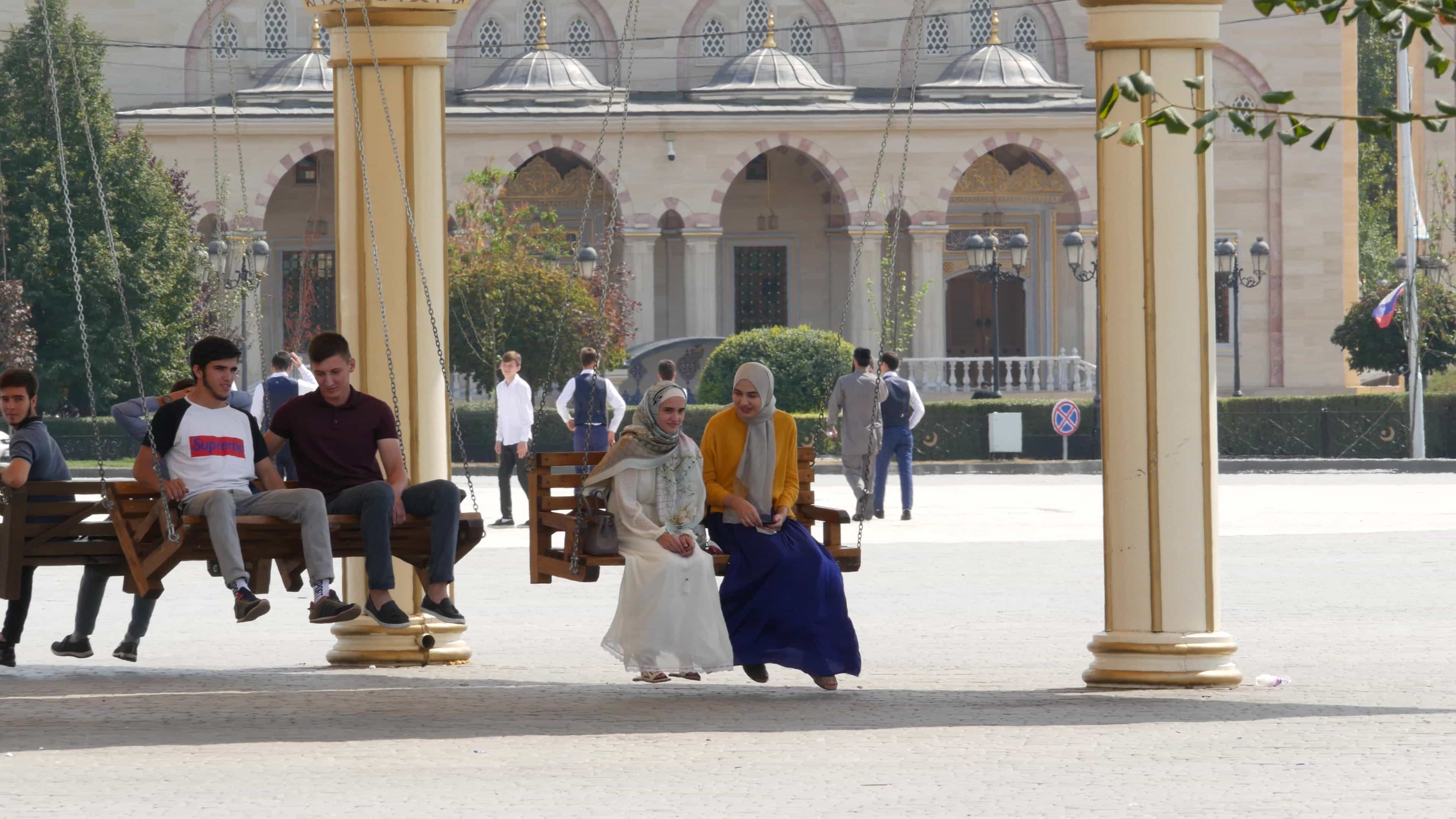
Conflicts and solidarity in post-Soviet North Caucasus

Despite much wrangling over borders or cultural heritage in the face of tragedy, the people of Chechnya, Dagestan, Ingushetia and North Ossetia are coming together to search for the missing or raise funds for the victims of natural disasters. Because their shared history prevails over old grudges.


  • Russia and Syria, together forever

    The Patriarchate of Antioch is the only one of the fifteen autocephalous Orthodox Churches, and the only one of the five ancient patriarchates, that has always and in every situation supported the Russian Church. Moreover, it was precisely the Antiochians who inspired the establishment of the Moscow Patriarchate. And these ancient stories of the late Middle Ages find their relevance today in the face of the Russians' fear of losing their controlling role in the Middle East, after the victory of the Islamists in Damascus.

  • Russian mix of Putin's ‘overheated’ economy

    Even mayonnaise at the holidays this year will be 13.5 per cent more expensive, while the real savings of citizens are shrinking despite growth figures inflated by warlike industrial production. China takes note of the liberation of large market spaces and tries to occupy them while avoiding risks as much as possible.

  • The Russian post-Assad rebus in Syria

    Moscow granted asylum to the leader of the Damascus regime that collapsed in a few days under the offensive of Islamic militias from the north. In Soviet times, Syria was considered the ‘sixteenth republic’ of the Union, but Moscow's relationship with Damascus is much older, also due to ties with the patriarchate of Antioch. The node of the military bases in Tartus and Latakia, over which they will try to negotiate with the country's new leadership.

  • The challenges of the Russian world according to Kirill

    The patriarch has tried to distance himself recently from the country’s political leaders, stressing his superiority in the relationship between Russia’s political and clerical power. At least two issues underscore a gap between Church and State, namely the response to the demographic crisis with monks criticised for being celibate, and the ban on organised prayers in private homes.

  • The in-vitro conceived children of those killed in the war in Ukraine

    Ever since the first mobilisation for the war, the Association of Russian Doctors and Gynaecologists had reported that the demand for the procedure of preserving one's own genetic material had greatly increased. Proekt Veter has collected the stories of the wives of soldiers killed at the front who nonetheless became pregnant with IVF after their death.

  • Moscow's brake on climate change policies

    Clean' energy in Russia remains just over 30%, and entire sectors such as automotive and heating still run exclusively on fossil fuels. Mind you, with the invasion of Ukraine, hopes of seeing Moscow as a major contributor to the Carbon Border Adjustment Mechanism have faded.

  • The unlikely end of Russia's war

    Proposals and ideas about ending the war are multiplying, but for Putin, any negotiations with Trump would only be an intermediate stage in an ongoing process. For Ukraine the situation is becoming increasingly grim, not only due to the uncertainties of Western aid but also to the decreasing participation of Ukrainians in the war effort.

  • President resigns as protests rock Abkhazia

    In the separatist region of Georgia that has been under Moscow's control for 15 years, thousands of people rose up against the government's agreements with Russian oligarchs. Bžanija announced the step back ‘to preserve stability and constitutional order’. These are not unprecedented events for Sukhumi, which is nevertheless destined to remain firmly in the hands of the Kremlin.

  • The Age of the Thug

    Author Viktor Erofeev, from exile in Berlin since 2022, publishes a novel entitled Velikij Gopnik, illustrating how Putinism emerged from Russian subconscious and the backyards of Leningrad to reach levels of extremism towards its very soul, incapable of ‘accepting a normal life’.

  • Russia's minorities ponder Trump's return

    Even the minorities of the former great empire who aspire to independence are questioning what the tycoon's approach to the Ukrainian issue will really be and what consequences this may have for their battles. Intellectual Kharun ar-Rusi: Washington has always been Russocentric even in its support for opposition to Putin

  • Russia's many internal and external enemies

    From aliens to fifth columns in the ‘Novaja Gazeta’ artist Petr Sarukhanov has tried to draw the whole picture of the ‘enemies of holy Russia’, composing a list that seems to be updated non-stop. As Foreign Minister Sergei Lavrov explained, ‘the special military operation has recompacted our society, allowing us to purify it’.

  • Russia and Trump’s America

    It is not at all clear whether "homeland" means the same thing for Trump's followers or Putin's subjects, whether it indicates the nativism of "blood and soil" or rather the "spiritual" union of those who have a shared vision of state, region, or the whole world. For now, the newly elected president of the United States has promised a solution to the Ukraine war by 20 January, the day of his inauguration (coincidentally the Orthodox feast of the Baptism of the Lord).

AsiaNews Weekly
News from Asia that matters

Subscribe to the newsletter to receive verified news, analysis and insights from Asian countries every week.

Subscribeto the newsletter
  • P.I.M.E. Centro Missionario
  • Agenzia Fides
  • P.I.M.E. Brasil
  • Radio Mondo
  • Mondo e Missione
  • P.I.M.E. U.S.A.
  • TV 2000





