

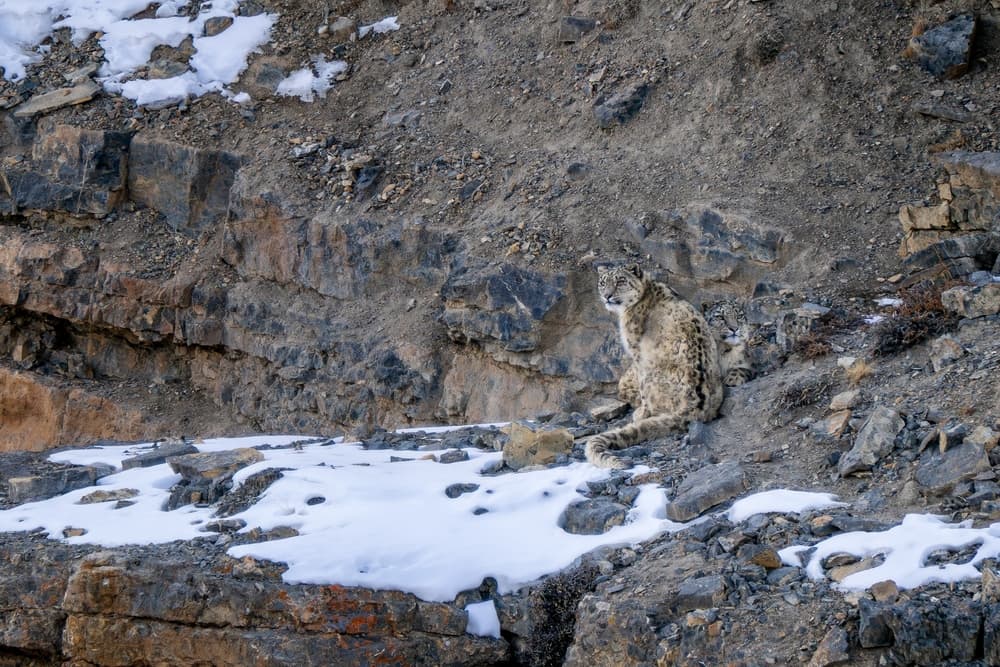
Yerevan (AsiaNews) – Efforts to restore the snow leopard population in Kyrgyzstan are among the examples of successful conservation initiatives recognised by the United Nations. This is stated in the organisation’s report on global progress in ecosystem restoration, presented in Yerevan during the COP-17 Biodiversity Conference. Kyrgyzstan is cited alongside other countries implementing projects for the conservation and restoration of natural ecosystems. Among the most significant achievements are the recovery of mountain gorilla populations in East Africa, jaguars in Brazil and Ganges river dolphins in India.
According to the report, restoration efforts are currently underway in 149 countries worldwide, covering 252 million hectares of ecosystems. This is the largest such initiative ever documented. At the same time, United Nations experts warn that, to achieve the global targets by 2030, the pace of nature restoration must be significantly accelerated, and annual funding increased. According to the report, terrestrial ecosystems are recovering faster than aquatic ones and have already almost reached half of the global target for 2030.
The largest area undergoing restoration is in China: 127.4 million hectares. Significant restoration work is also underway in Mongolia and Kazakhstan. Overall, Asia accounts for 192.2 million hectares of ecosystem restoration, Africa for 36.3 million and Europe for 9.1 million hectares. However, freshwater, marine and coastal ecosystems – which are among those degrading most rapidly – are recovering more slowly. Researchers estimate that restoring just 15 per cent of global priority areas would absorb 30 per cent of the carbon dioxide accumulated in the atmosphere since the start of the Industrial Revolution, and prevent 60 per cent of species extinctions.
However, significantly greater funding is needed to sustain these results in the long term: by 2030, annual investment in ecosystem restoration should increase from $64 billion to $296 billion. According to the report’s authors, such investment could create up to 32 million new jobs globally by 2030. The Executive Secretary of the Conference on Biodiversity, Astrid Schomaker, emphasised that restoring nature is impossible without tackling the causes of its destruction, and urged governments to invest in ecosystem monitoring and to take measures to safeguard the progress made.
In many countries, including India, Mongolia, China and Pakistan, snow leopard watching has now become a popular ecotourism activity. Drawing inspiration from these examples, the Snow Leopard Foundation in Kyrgyzstan, with the support of the UN Development Programme, successfully implemented the project ‘Snow Leopard Tour: The Key to Local Nature Conservation’ in 2023. The project laid the foundations for the development of ethical tourism in the Saryčat-Ertaš Nature Reserve, including training sessions for rangers and residents of neighbouring communities, and the purchase of the necessary equipment, ranging from tents and yurts to solar panels and rucksacks. All of this has made it possible to create comfortable and environmentally friendly conditions for wildlife viewing.














