Beijing (AsiaNews) – Artificial intelligence (AI) could radically transform the work of graphic designers who specialise in Chinese typefaces, the creators of the various typefaces used in writing.
Unlike other languages, Chinese consists of thousands of distinct characters, making the design of a new typeface an exceptionally long and costly endeavour.
While AI has the potential of drastically reducing the time and expense involved in developing new typefaces, it also appropriates the work of human designers and sparks major questions concerning copyright.
Writing for Sixth Tone, type designer and co-founder of the design studio Anchor, Liu Yuli, describes this shift.
In her view, the capabilities of new AI models appear to challenge one of the final bastions of graphic design that had remained firmly in the hands of professionals: typeface design.
The latest systems are already capable of generating documents containing extensive text in various languages, achieving a level of precision that, while falling short of professional standards, may be sufficient for someone creating a poster or a brochure.
Modern typography evolved from the movable-type printing system, popularised in Europe by Johannes Gutenberg, which relies on the production of individual characters that can be reused repeatedly.
Such a model is particularly well suited for languages like Latin that use alphabetic scripts that consist of only a few dozen letters that recur in a text.
Applying this same principle to the Chinese writing system, however, is far more complex.
In Chinese, approximately 3,500 characters are sufficient to cover most of everyday text, a number that, according to various studies, accounts for 99.5 per cent of textual usage.
To ensure that less common characters can still be displayed, companies in the industry typically aim to create typefaces that contain at least 7,000 characters. Some more extensive projects include as many as 27,000 or even 87,000 characters.
This means designers must produce thousands of symbols that, in most cases, appear rarely.
This is also why, for centuries, Chinese printers preferred to carve entire pages onto wooden blocks, avoiding the need to produce and organise thousands of individual movable type characters, as was the practice in the West.
Today, however, the movable type system has become the standard, even in digital design. Consequently, someone wishing to print a slogan consisting of just 20 characters might be forced to buy a licence for a typeface that contains 7,000 characters.
AI can address the issues of cost and productivity. For years, Chinese companies in the sector have been using internal AI tools to accelerate the creation of typefaces.
In the traditional process, a lead designer creates a few hundred graphic symbols to define the style of a new typeface, while the remainder of the work is delegated to a team.
An AI model can learn the graphic traits of those initial examples and apply them to the remaining characters. With human supervision and refinement, this approach significantly boosts productivity.
Meanwhile, the proliferation of open-source tools has enabled independent designers to develop new typefaces.
A case in point is Wang Tingrui, who used AI to create characters inspired by traditional movable-type printing. More recent models, capable of generating high-quality graphic outlines, have made this work even more accessible.
These new technologies could also influence the potential for introducing new characters into the language. Many Chinese characters are, in fact, composed by combining graphic elements that already indicate part of their meaning as well as their pronunciation.
In the 19th century, for instance, Chinese chemists created new characters to translate the names of newly discovered chemical elements by joining a semantic component with a phonetic one, a method that continues to be used today whenever a name must be assigned to new synthetic chemical elements.
Incorporating these characters into the written language has long been a complex task, as traditional typefaces store characters in their entirety rather than as individual components.
Consequently, a newly invented character does not automatically appear in existing typefaces. AI, however, could overcome this limitation by making it possible to generate new characters that match the style of an already available typeface.
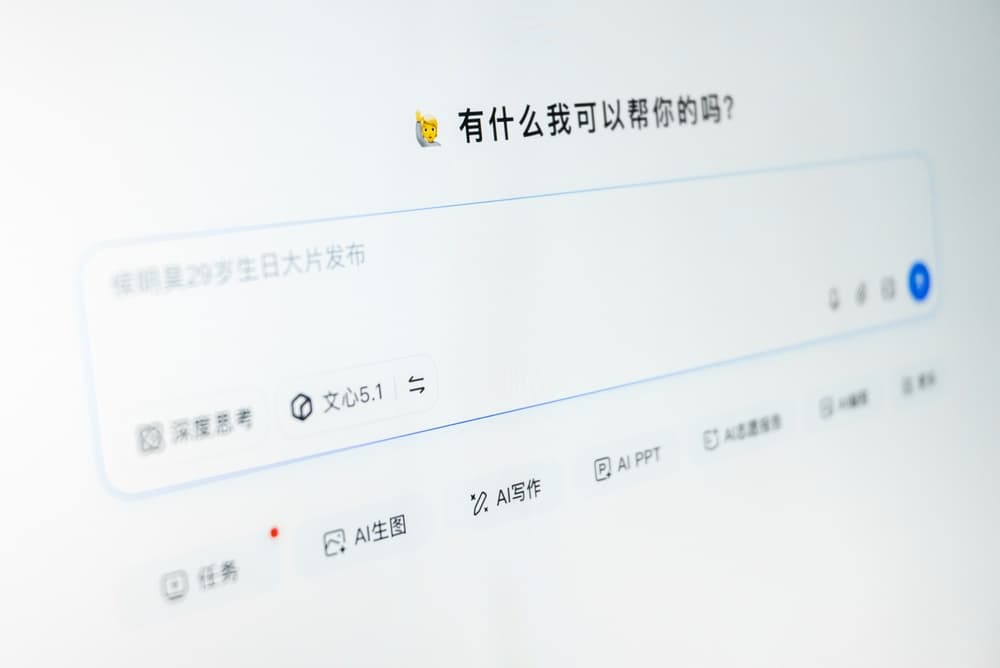
What is more, the most advanced AI models are progressively moving beyond the notion that text must be composed by assembling individual characters; today, they can generate layouts for posters, videos, and images while adhering to a user’s stylistic specifications.
To achieve a specific result, one simply needs to describe the desired style via a text prompt or by providing a hand-drawn sketch.
AI often still generates inconsistent characters, and it remains unclear how copyright will be protected, especially when the output resembles existing typefaces.
However, according to Liu, these obstacles are unlikely to prevent the adoption of these new technologies to accelerate graphic design workflows.
As AI makes the creation of characters, typefaces, and layouts increasingly accessible, graphic designers will no longer hold a monopoly on stylistic creation.
Instead, the author suggests that their contribution could evolve towards pushing boundaries even further through elaborate graphic designs, experimenting with novel and refined aesthetic solutions.