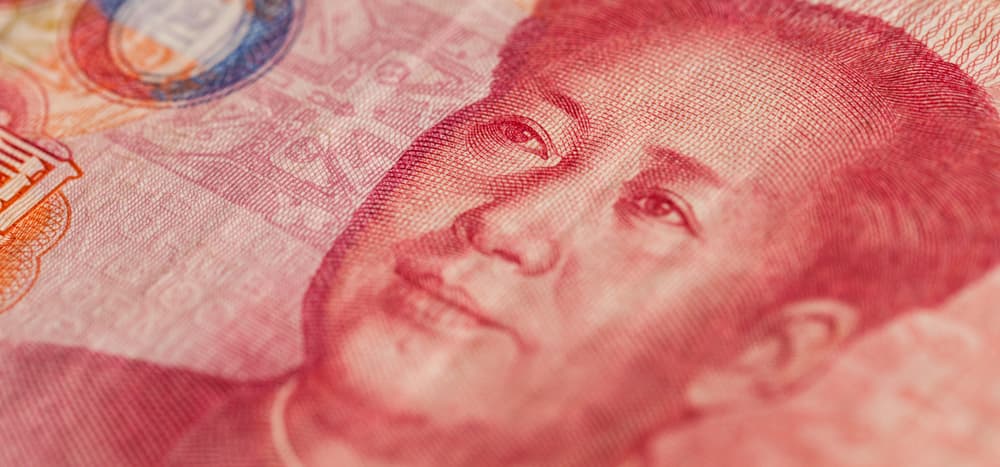
Milan (AsiaNews) – Fifty years ago, on 9 September 1976, Mao Zedong, the ‘Great Helmsman’ of New China, died. He was 82 years old, and on 1 October 1949 he had founded the People’s Republic of China.
1976 was a turning point in the history of contemporary China, marked by a staggering series of extraordinary events. The year began with the death of Premier Zhou Enlai (8 January), the politician who, both at home and abroad, represented China’s institutional and moderate face in contrast to the impetuousness and excesses of Mao’s political campaigns.
In the end, Mao had distanced himself from Zhou too, just as he had done with all his closest associates. But in the spring of ’76, the people wished to remember and honour Zhou during the Qingming Festival, the commemoration of the dead. Mao, who exercised his power through the ‘Gang of Four’, led by his wife Jiang Qing, did not take kindly to the demonstrations in Zhou’s favour; he saw them as a challenge to Mao himself, and suppressed them by force. The episode went down in history as the 5 April Incident, and was, in a sense, a precursor to the far more serious events of 4 June 1989 in Tiananmen Square.
Returning to 1976, following the 5 April Incident, the pragmatic Deng Xiaoping – who had recently been brought back into power by his friend Zhou Enlai – was purged yet again by Mao. The Gang of Four regained full control of the nation, under the protection of the elderly and ailing supreme leader.
On 28 July 1976, the disastrous earthquake struck the city of Tangshan: the death toll, now estimated at 650,000, was very high, partly due to the regime’s (that is, the Gang of Four’s) refusal to accept international aid.
The arrest of the Gang of Four
On 9 September, Mao died, sparking a wave of grief across the country and around the world. In China, Mao was certainly popular, an untouchable icon, beyond good and evil, especially amongst the young people involved in the Cultural Revolution. Mao did not govern through holding official positions – indeed, he no longer held any political office – but through his boundless charisma and the unscrupulous use of his power.
Across the world, in the ‘Non-Aligned Movement’ countries and in Western nations, including Italy, Mao was regarded as a hero of ‘possible’ communism, proof that the Chinese model was an extraordinary alternative to Soviet communism, which was then under fire for its crimes in Hungary and Czechoslovakia.
Mao was the prophet of Chinese communism, which was highly idealised: not only a revolutionary, but also a strategist, an intellectual, a poet and a noble, moral man. In Italy, too, a great many students and teachers professed to be Maoists. Even in Catholic progressive circles, he was regarded as a positive hero, an iconic figure, just as Che Guevara was. I, too, remember that atmosphere well: in the very seminary where I was a student, Mao’s *Little Red Book* was recommended as edifying reading, and the expulsion of missionaries from China was justified on post-colonial grounds.
Less than a month after his death, on 6 October 1976, the Gang of Four was arrested, bringing an end to their excessive power. The arrest showed that, despite the attempts made in the following decades to justify and safeguard Mao’s image, it was not the Gang that exploited Mao, but the other way round. Once he was dead, in fact, the Gang no longer mattered. The date of the Gang’s arrest is also considered the end of the Cultural Revolution (1966–1976), which was subsequently declared a national disaster.
Even Mao’s chosen successor, Hua Guofeng, had a short political career, having been ousted by Deng Xiaoping, Mao’s true heir but also his political counterpart. Deng, in fact, essentially – though never formally – rejected Mao’s policies of continuous revolution and collectivisation, and introduced ‘socialism with Chinese characteristics’, launching the ‘Four Great Modernisations’, which established China as a leading power on the international stage.
The legacy of Mao and Xi Jinping
What remains of Mao and the Cultural Revolution 50 years on? We now know a great deal – much of it far from edifying – about Mao’s private and public life. Among young people in the Western world, Mao is essentially unknown, and the Cultural Revolution even more so; it is a term that evokes a sense of romance only for those over seventy. There is a fascination amongst young people with China today, but Mao has nothing to do with it. It is a fascination of Generation Z: the viral trend of Chinamaxxing centres entirely on the universal impact of social media, in which China plays a fundamental role.
The discussion regarding Chinese society is more complex: how is Mao Zedong viewed within China today? And what about the Cultural Revolution? There are at least two aspects to consider: one purely political, the other social and anthropological.
From a political perspective, today’s China cannot afford to abandon the positive memory of Mao. During the Tiananmen Square protests of 1989, the desecration of Mao’s portrait marked a point of no return, triggering violent repression on the orders of Deng Xiaoping. Although the Cultural Revolution has been condemned as a decade of unrest, the authority of the ruling Communist Party in China is firmly anchored in Mao. He cannot be called into question.
Today’s leader, Xi Jinping, justifies and sustains his absolute power by drawing on the language, slogans and rhetoric of the Cultural Revolution. Xi Jinping regards himself as the third supreme leader after Mao Zedong and Deng Xiaoping. The significance of Jiang Zemin, Deng’s immediate successor, is downplayed; whilst the memory of Hua Guofeng, Mao’s successor, and of Hu Jintao, Jiang’s successor who is still alive, is completely omitted.
Xi Jinping wishes to establish himself as a pivotal leader in the history of New China: Mao was its founder and Deng its reformer. What, then, is Xi’s historical contribution? There remains but one: Xi has set himself the task of reclaiming the island of Taiwan to complete the restoration of Mother China, a sacred and inalienable duty. Xi governs China not with Mao’s communist ideology, but with a nationalist ideology inspired by the instrumental adoption of Confucianism for political ends.
Xi Jinping’s ideological manoeuvre is clear: to abort the realisation of communism as envisaged by Mao, whilst reviving the rhetoric of the primacy of the Communist Party and the Cultural Revolution. The latter was essentially an anti-Confucian revolution. Whilst Mao fought against Confucianism, which he accused of being the cause of China’s backwardness, Xi has made it the ideological core of his nationalism and his programme of Sinicisation. Mao fought against capitalism in his frantic quest for a perfectly egalitarian society; Xi, on the other hand, is expanding the capitalist and neo-colonialist economy ushered in by Deng, whilst bringing it back under the Party’s strict control.
Mao in today’s Chinese collective imagination
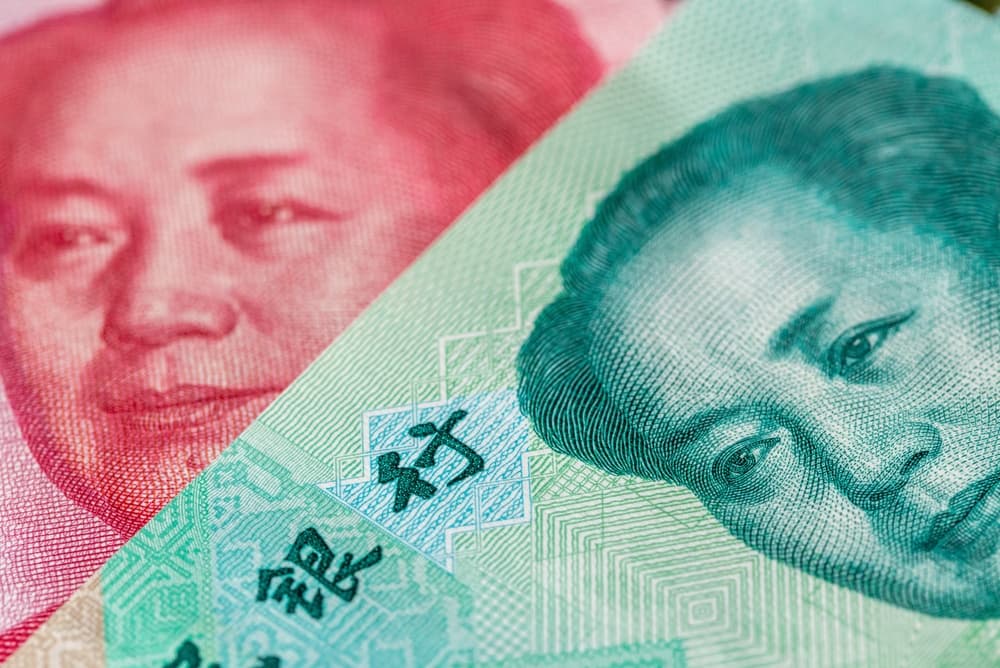
In today’s Chinese society, Mao has not been forgotten. His image, almost like a talisman, can be found in most taxis, and his portrait hangs in many homes, especially in the vast countryside. In today’s collective imagination, Mao is regarded not so much as a political leader, but as a powerful icon, an invincible leader, almost a talisman, capable of conveying energy and strength. In short: for many people, especially among the large section of the population born after his time, Mao is admired and revered not so much as a political revolutionary, but as an idol who embodies strength, power and success.
Even the Cultural Revolution has its nostalgics. For example, those who lived through it as teenagers: the beautiful revolutionary songs and the absolute, rousing slogans are remembered by many with emotion and fondness. It was their youth. And there are always those who think that ‘things were better when they were worse’. Whilst the Cultural Revolution brought about excesses and poverty, everyone was equal. Poor but equal. Not like now, where wealth has restored class divisions and the gap between rich and poor, between the privileged and the rest.
Within the small – less than 1 per cent of the population – yet resilient Catholic community in China, there remains the painful realisation that Mao’s political campaigns, of which the Cultural Revolution was merely the last, caused enormous suffering and loss. There is no family with a long Catholic tradition that does not have someone who has suffered persecution and affliction because of their faith. The memory of Mao cannot be separated from this painful legacy. It is our duty not to let the memory of the martyrs and confessors of the faith of the great Chinese nation fade away.