Seoul (AsiaNews) – Some residents of Seoul do not want a permanent school for children who have fled North Korea or the children of dissidents. During a meeting convened in the Gangseo district to discuss the project, the school’s headteacher said, in tears, that the children – currently numbering 100 pupils – “have nowhere else to go”. At present, they live in small groups across various facilities in the capital and do not form a concentrated community in Gangseo, but some residents fear the creation of a “neighbourhood of defectors” that could pose security risks. In reality, there is no data to support this claim. On the contrary, over the past three years there have been no incidents of violence or crimes committed by the pupils.
Founded in 2004, the school has already moved premises three times in over twenty years and, since March 2023, has been temporarily occupying the building of the former Yeomgang Primary School in Gangseo. The lease is due to expire in February 2027, and in July the Ministry of Unification, the Seoul Metropolitan Office of Education and the Hyundai Motor Group reached an agreement to build a permanent campus on the same site. Hyundai has pledged approximately 6 billion won – equivalent to over 4 million dollars – towards a project with a total cost of 16 billion won.
The decline in arrivals of defectors
The project is expected to allow the school to remain at the same location for at least several decades, but it has reignited conflict with some local residents, despite the continuing decline in the number of North Korean defectors arriving. In the first six months of 2026, there were just 63 arrivals – 59 women and four men – compared with 96 in the same period of 2025. The total number of North Koreans who have arrived in the South for resettlement now stands at around 34,600.
These figures are almost at the levels seen during the pandemic and, according to the Ministry of Unification, are due to the strengthening of surveillance systems along the border between North Korea and China. Following the peak of over 2,900 arrivals recorded in 2009, defections remained above 1,000 per year for much of the following decade. They then fell during the Covid-19 period and, despite a partial recovery, arrivals totalled just 196 in 2023, 236 in 2024 and 224 in 2025.
Recent difficulties in mending relations: from landmines…
The decline in defections coincides with a profound change in the way Pyongyang describes its relations with Seoul. In early September, the full text of the North Korean Workers’ Party Constitution – updated in 2024 and amended again in 2026 – was made public for the first time. The document no longer contains any reference to ‘peaceful reunification’ and confirms the definition of the two Koreas as hostile states.
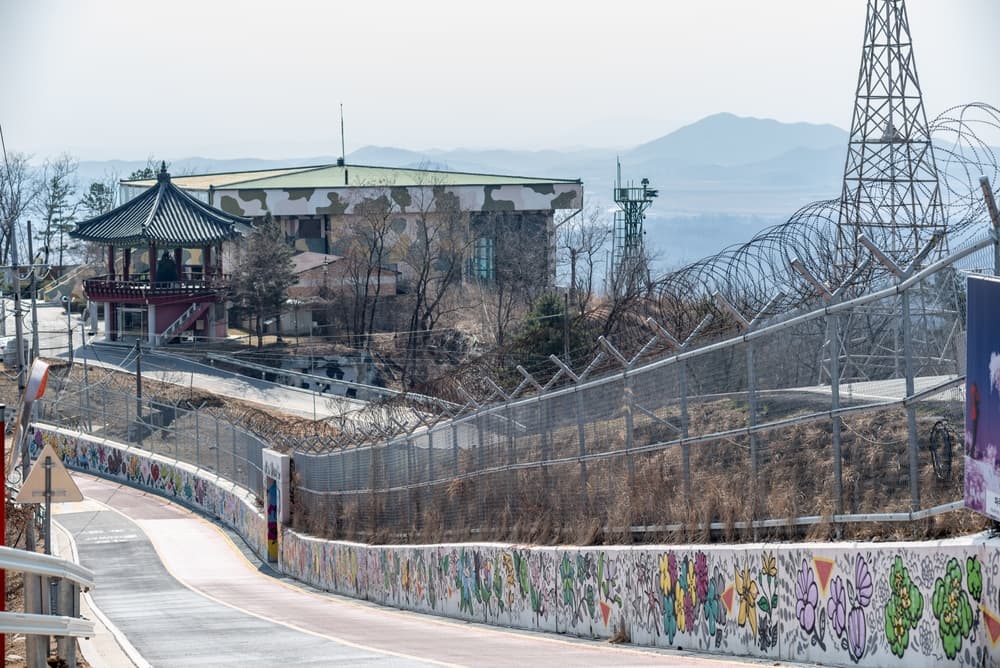
Pyongyang’s stance clashes with the stated policy of the current South Korean government, led by President Lee Jae-myung, who has repeatedly emphasised his desire to reduce tensions and create the conditions for a resumption of dialogue with both North Korea and the United States. Lee has so far always favoured a conciliatory approach towards Pyongyang, but in recent weeks tensions have flared up again following the explosion of several landmines in the demilitarised zone, which injured three South Korean soldiers whilst they were working to open a new patrol route – a situation that is putting the Democratic president under pressure in the face of criticism from conservatives, who favour a tougher military approach.
An investigation carried out by the South Korean army in conjunction with the United Nations Command concluded that the available evidence suggests the explosion was caused by anti-personnel mines laid by North Korea. Some experts have, however, pointed out that the border is not clearly demarcated in many places, and there is also the possibility that the North Korean army placed the mines at the site where they exploded not as a deliberate provocation, but because it believed it was on its own side.
Seoul has described the incident as a violation of the 1953 armistice, whilst Pyongyang has rejected the accusation. Kim Yo-jong, sister of dictator Kim Jong-un, has called the South Korean conclusions a “farce” and warned that North Korean forces will retaliate should Seoul open fire on soldiers engaged in border fortification work. Yesterday, 30 September, the South Korean Joint Chiefs of Staff called on Pyongyang to cease such activities immediately, arguing that they are heightening tensions on the peninsula, but once again Seoul’s demands were rejected by the North.
Today, too, on Armed Forces Day, Lee reiterated that Seoul would continue to seek measures to reduce tensions and called on Pyongyang to resume dialogue.
…to North Korean soldiers in Ukraine
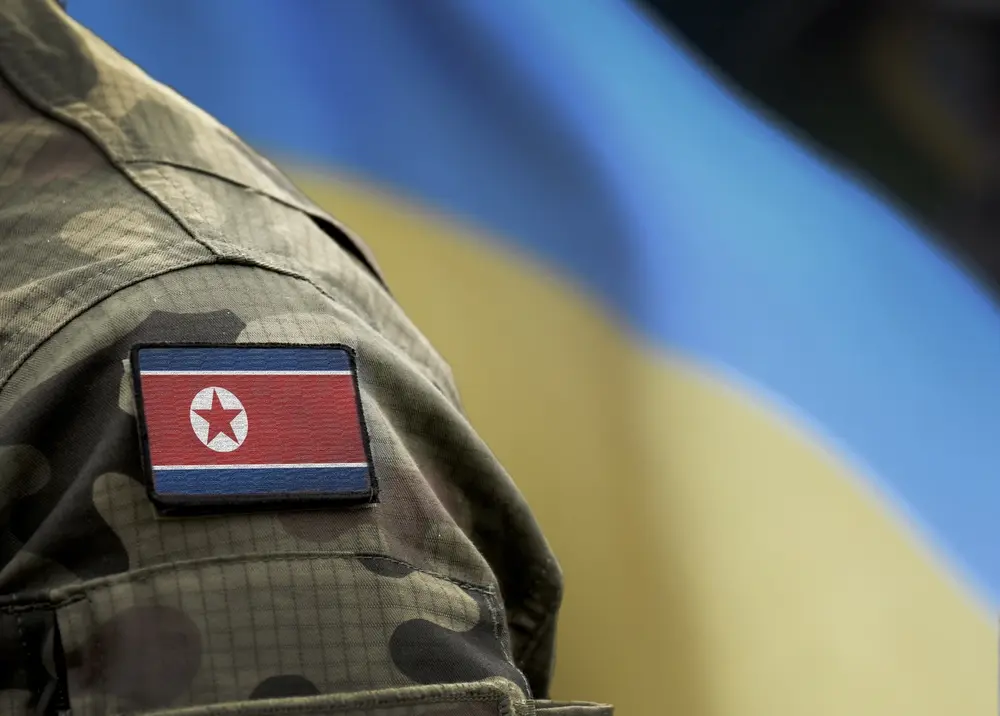
But the rift between the two Koreas now extends beyond the peninsula, into different conflict zones, which nonetheless form part of that “piecemeal Third World War” often referred to by Pope Francis. In mid-September, South Korea received two North Korean soldiers captured by Ukraine in the Russian region of Kursk, where they had been fighting alongside Russian forces. The transfer, announced by Ukrainian President Volodymyr Zelensky at the UN General Assembly, took place after the two soldiers had expressed their wish to be transferred to the South.
The two men are now undergoing the procedures laid down by the South Korean authorities for North Koreans arriving in the country, pending a decision on their possible resettlement. According to a report yesterday, 30 September, by the National Intelligence Service (NIS) to the National Assembly in Seoul, the two arrived in South Korea in mid-September and have no significant health issues. The intelligence service also clarified that it was Ukraine, as early as the initial stages of the negotiations, that had requested the transfer be kept confidential, due to the possible consequences for subsequent prisoner exchange talks. A spokesperson for the Ukrainian presidency denied the existence of such an agreement. Seoul has asked Kyiv for an explanation and an official apology, and the two governments are still in contact regarding the matter.
The NIS went on to report that Zelensky may have made the matter public in the hope of securing military support from South Korea in the war against Russia. According to MP Yoo Yeong-ha, who briefed the press on the findings of the NIS briefing, Ukraine had not made Seoul’s commitment to supply arms to Kyiv a condition of the transfer.