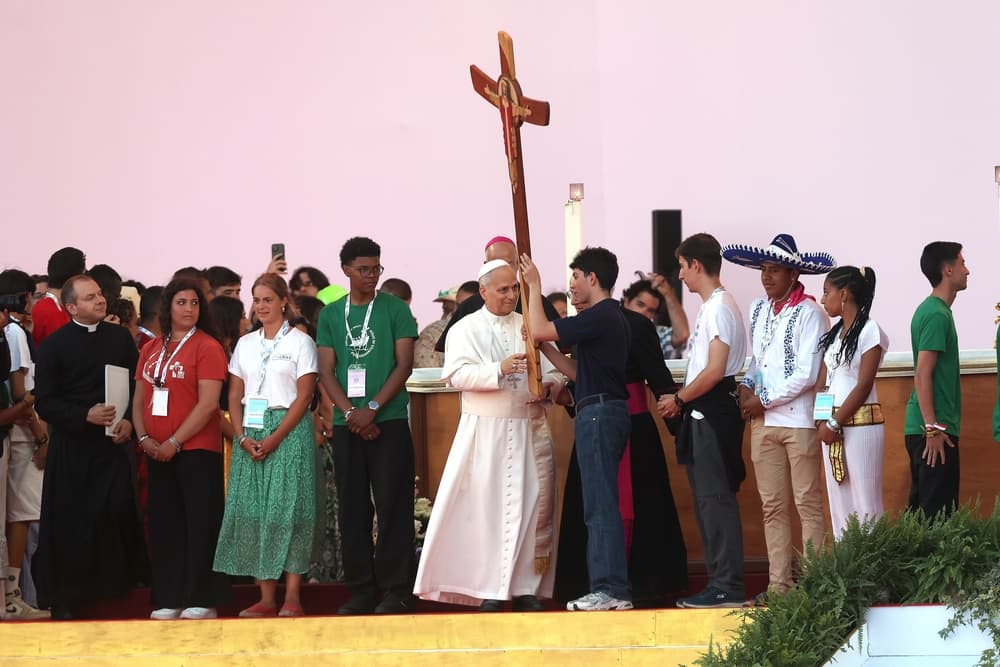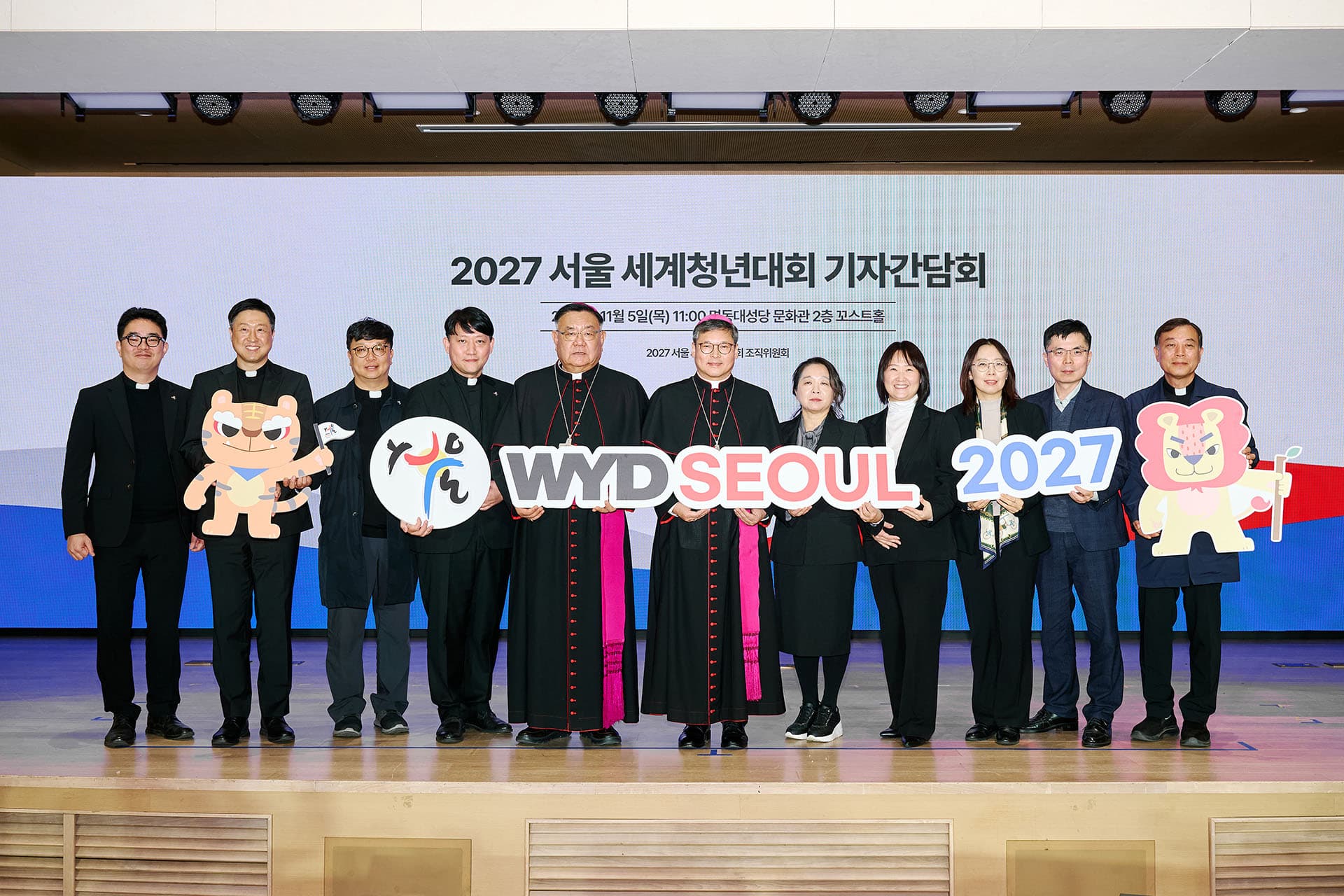
Rome (AsiaNews) – In this “age of disconnection”, there is a need for the “courage to meet one another and the courage to welcome one another”. Encounter and welcome are what hundreds of thousands of young people from all over the world will put into practice next summer in Seoul, where they will gather for the 41st World Youth Day. This was emphasised by the Metropolitan Archbishop of the South Korean capital, Peter Soon-taick Chung, during a recent press conference. “It is not simply a matter of bringing together a large number of people,” he continued, but of offering “the opportunity to meet others, open one’s heart and rediscover one’s intrinsic worth”.
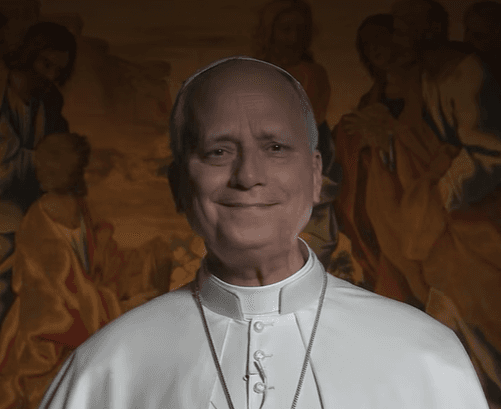
And it is precisely “Take heart, I have overcome the world!” (John 16:33) is the theme chosen by Pope Leo XIV for the 17th major international gathering of Catholic youth, the first to be held in a country where the Catholic community is a minority. The Local Organising Committee (LOC), which held a press conference on Thursday 5 November at the Coste Hall auditorium, next to Myeongdong Cathedral in the Jung-gu district, Seoul, shared a forecast of 500,000 pilgrims who will register – registration has been open since 22 October – and around one million people who will gather for the closing Mass – this latter estimate also includes unregistered attendees.
Closing Mass at Seoul Airport in Seongnam
In the press release issued following the press conference on 5 November, the Organising Committee specified that 400,000 international registrations are expected from around 190 countries, and 100,000 from South Korea. In addition, there will be around 3,000 representatives of the international media – including AsiaNews at the WYD – 13,000 bishops and priests, and 20,000 volunteers. The organisers aim to provide accommodation through parish facilities, host families, school sports halls and auditoriums, universities and public facilities; the Archdiocese of Seoul will host 270,000 people, whilst 230,000 will be accommodated in collaboration with government and educational authorities and with dioceses outside Seoul.
The Committee has also announced the venues that will host the main events of the central week – from 3 to 8 August 2027. Specifically, the Seoul World Cup Stadium will host the opening Mass (200,000 people expected), the welcome ceremony for the Pope (300,000) and the Way of the Cross (500,000). With a capacity of over 60,000, it is the capital’s main football stadium, whose architecture is inspired by the shape of a kite. As its name suggests, it was built for the 2002 Men’s World Cup, during which it hosted several matches.
The vigil and closing Mass will be held at Seoul Airport in Seongnam, which is closer to the city than the busier Seoul-Incheon International Airport.
Collaboration between institutions on accommodation and support
On 5 November, the Metropolitan Archbishop of Seoul, Peter Soon-taick Chung, opened the press conference by outlining the vision and significance of the large gathering, emphasising the central importance of the ‘courage’ to meet other people, in order to ‘build bonds beyond differences’, according to the Local Organising Committee (LOC). Also present were Lee Eun-bok, deputy director of the government support task force, and Park Chan-gu, Deputy Mayor of Seoul responsible for political affairs. Bishop Paul Kyung-Sang Lee, general coordinator of the LOC, was also in attendance and presented the operational plans.
Pilgrims are expected to arrive ahead of the week of major events, from 3 to 8 August 2027. In fact, from 29 July to 2 August, ‘Diocesan Days’ will be held in 15 dioceses across South Korea: opportunities to experience local faith, culture and community life. Naturally, such an incredible influx of people requires a massive coordination effort to ensure the safety of participants. The Committee has announced that measures will be put in place to prevent heat-related issues – August is one of the hottest and rainiest months – including shaded areas, rest facilities and drinking water supply points. Plans also include reducing walking times and waiting times, as well as providing safe, clearly marked pedestrian routes. Furthermore, arrangements are being finalised for catering with restaurants, supermarkets and other businesses near the event venues.
In particular, the Catholic Medical Centre will play a central role in coordinating emergency medical care. Meanwhile, integrated command centres will coordinate on-site operations, bringing together the police, fire service, medical institutions and local authorities. A temporary telecommunications infrastructure to cope with high demand will also be put in place. Furthermore, accessibility measures will include step-free routes, spaces reserved for wheelchair users, additional seating and sensory rest areas.
Ambassador and mascots unveiled
The Local Organising Committee (LOC) also presented the official ambassador for WYD Seoul 2027: the actress Kim Tae-hee, aged 46, one of the most famous faces in South Korean cinema. A practising Catholic and wife of the singer and actor Rain (Jung Ji-hoon), she is also known for her commitment to charitable work in support of disadvantaged communities. In a video message, the actress offered words of encouragement to young people around the world.
The event’s official mascots were also unveiled: they are called Hobi and Cobi. Hobi, a tiger, represents “the hope of young people who dream of a better tomorrow”. Cobi, inspired by a lion, symbolises “the courage to take the first step towards encountering the unknown”, says the Committee. Two promotional videos have also been released, entitled “Don’t Back Down” and “Not That Kind of Competition”, which address the themes of overcoming the fear of failure and recognising human value, beyond competition and results.