North Asia

Featured article

From coal to copper: Mongolia’s new economic era

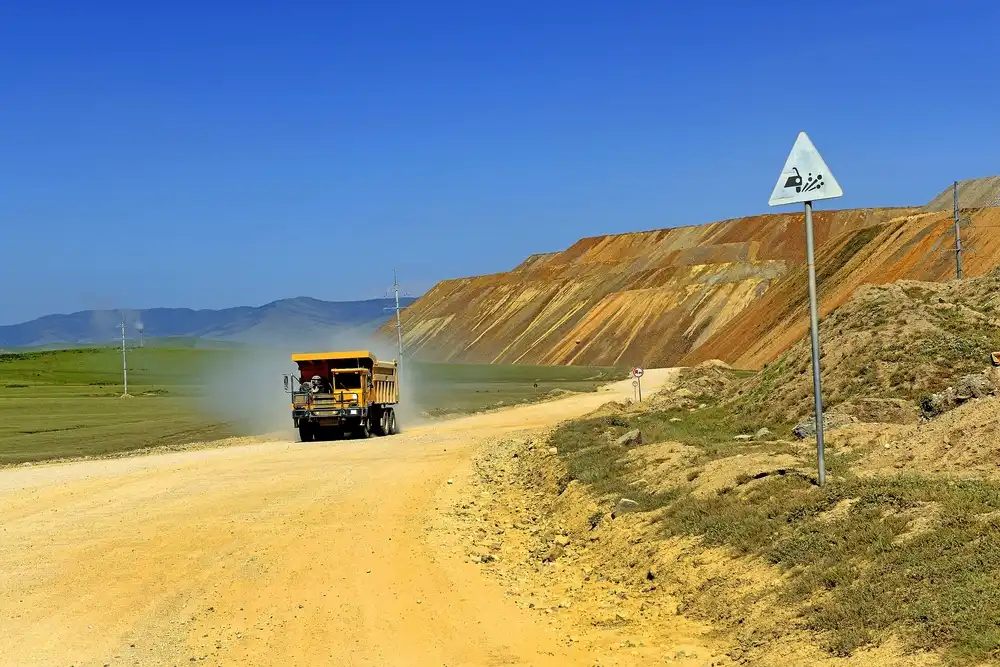
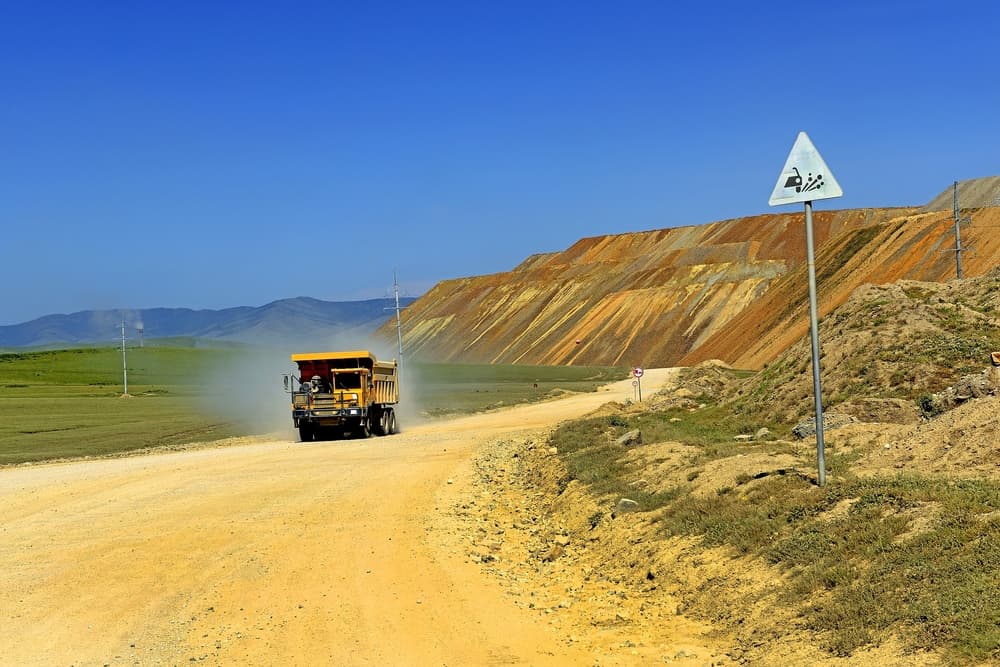
Last year in Ulaanbaatar, for the first time, revenue from copper concentrate exports exceeded that from coal exports. This turning point has been fuelled by the rush towards artificial intelligence and the rise in electric vehicle production. And the government is now searching for new deposits.

  • The Russian nuns of Lesna, free from Moscow

    First established in Poland in 1885, the “new convent” eventually found a home in Normandy in 1950 after a long wandering. Its history and profile attract many Russians abroad, who intend to preserve their tradition without involvement in the war-patriotic initiatives of Patriarch Kirill and other Russian Orthodox hierarchs.

  • Moscow and NATO on the Baltic

    The Estonian authorities have repeatedly stated that ‘Russia remains the greatest threat to our security’ and have announced their intention to open a new military base in Narva, the city divided in half by the river of the same name, one of the most sensitive points. But among the European population there is a growing conviction that ‘NATO defence on the border with Russia is inappropriate’, a view also supported by Donald Trump's administration.

  • Economy and corruption challenge face Mongolia's new prime minister Zandanshatar

    Gomboja Zandanshatar was elected after the resignation of Oyun-Erdene, who was ousted following strong youth protests in Ulan Bator. A former banker who studied in Russia and did research at Stanford, he will face serious economic challenges, including inflation, deficit and unemployment. ‘Budget review inevitable,’ he said. Tax reforms and restrictions on luxury consumption and high incomes have been announced.

  • The birth of the Church and the Russian Federation

    Pentecost and ‘Russia Day’ fell just a few days apart. ‘Where are you, my Church?’ asked Father Andrej Misjuk bitterly, calling for a return to a faith that ‘does not tolerate lies, does not bless those who cannot be blessed, and once again sets out on the path that leads from Jerusalem to the Eternal.’ Meanwhile, in his new ‘Fable,’ Vladimir Sorokin recounts a post-apocalyptic world.

  • Kyrgyz migrants become drug mules to Russia

    In Bishkek, notices are circulating promising earnings of up to $1,000 a week, twice the average monthly salary of a Kyrgyz worker, for “jobs” that are actually recruitment for drug couriers. Drug trafficking charges in Russia can carry a sentence of 20 years to life imprisonment. Many prisoners are sent directly to the front lines in Ukraine.

  • Teacher crisis in Russian schools

    Only 42% of graduates from teacher training colleges go on to work in schools, and many teachers are leaving the profession. Disparities in pay between Moscow and the country's suburbs are a major factor, as is the increasingly ideological approach of the entire education system.

  • Child labour: Asia-Pacific leads global decline, but UN goals still distant

    New data from the International Labour Organisation and UNICEF indicate a drop of 22 million child workers in four years. However, 138 million children remain trapped in this scourge, particularly in agriculture and the informal economy. Expert Insaf Nizam, who spoke to AsiaNews, highlighted the role of economic growth, warning of the dangers of inequality and family responsibilities.

  • Religious tourism in Russia

    Following the break with the West, a large percentage of Russian travellers have turned to domestic tourism, where religious destinations and related artistic attractions are becoming increasingly important. In this context, local operators are reviving walking pilgrimage routes, starting with the 70-kilometre route linking Moscow to the Trinity Lavra of St. Sergius.

  • Russia, the Nicene Faith and the need for peace dialogue

    Moscow recently marked the 1,700th anniversary of the first Ecumenical Council when the profession of faith was drafted. Coincidentally, Putin and Pope Leo XIV spoke on the phone, providing an opportunity to renew the dialogue between the Church of Rome and the Russian Orthodox Church. Like in the 4th century AD, after the end of the persecutions, the challenge today for the bishops of the East and West is to show modern emperors a truth greater than any claim to dominion.

  • The Russification of Culture in Crimea

    A traditionally multicultural land, the peninsula seized by Moscow from Kiev in 2014 is now seeing everything that is not Russian systematically targeted. Although even the Moscow-linked authorities recognise three ‘state languages’ on paper - Russian, Ukrainian and Crimean Tatar - education in native languages has almost completely disappeared from schools.

  • Ulaanbaatar: Oyun-Erdene's half-finished reforms

    The prime minister ousted by parliament had promoted a New Recovery Policy to make Mongolia independent from the mining industry interests. Despite economic growth and the reduction of public debt, his government has had to face growing criticism, triggered by the luxury flaunted by his son on social media. Now a new phase of political uncertainty has opened for the country nestled between Russia and China.

AsiaNews Weekly
News from Asia that matters

Subscribe to the newsletter to receive verified news, analysis and insights from Asian countries every week.

Subscribeto the newsletter
  • P.I.M.E. Centro Missionario
  • Agenzia Fides
  • P.I.M.E. Brasil
  • Radio Mondo
  • Mondo e Missione
  • P.I.M.E. U.S.A.
  • TV 2000





