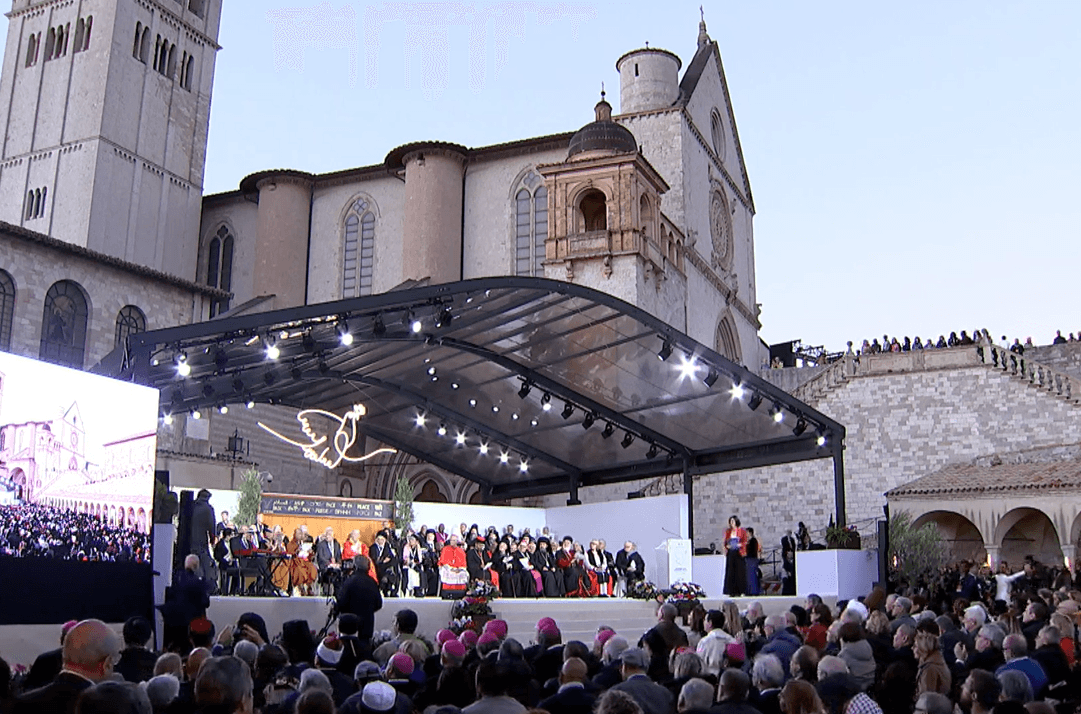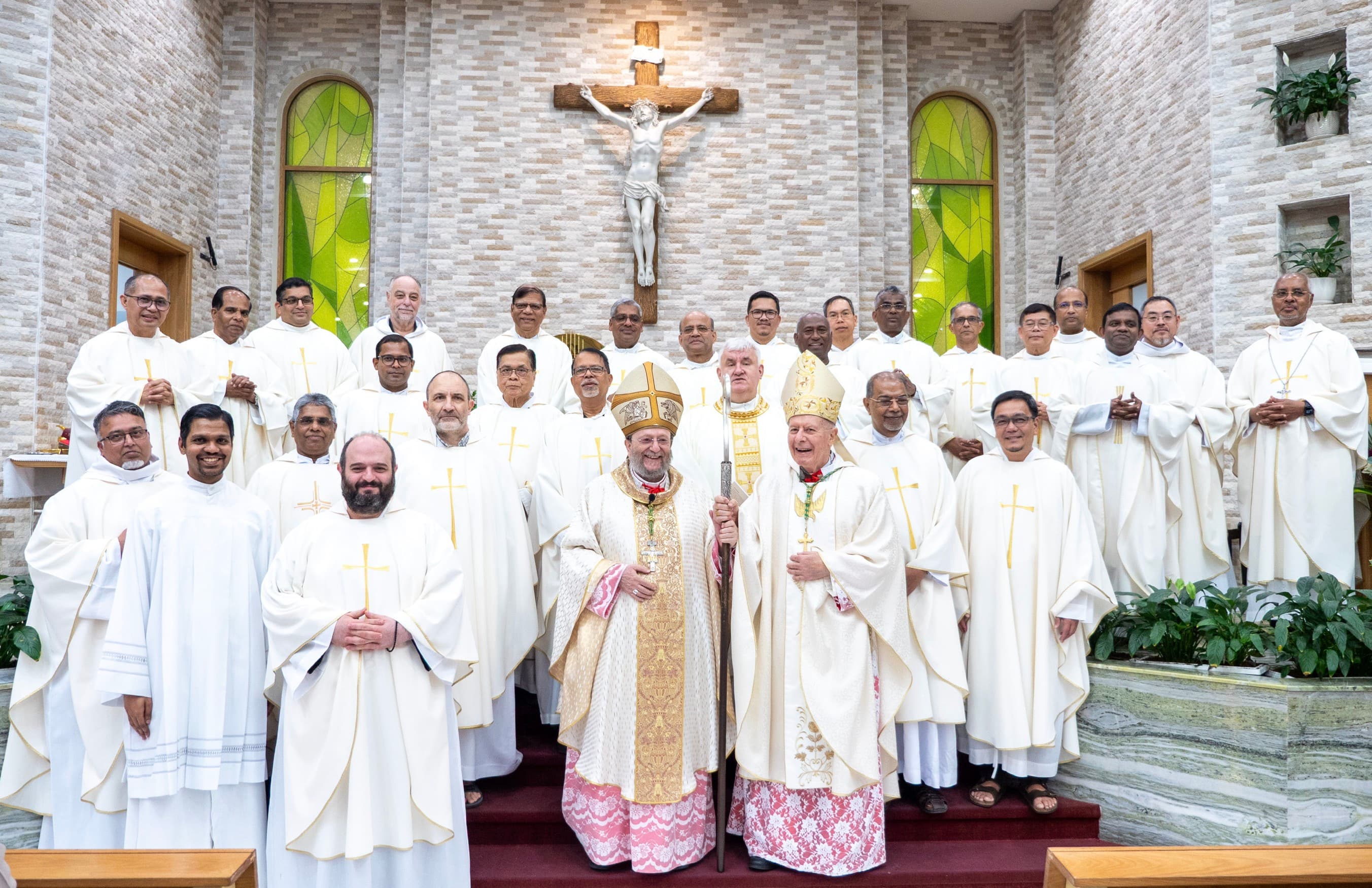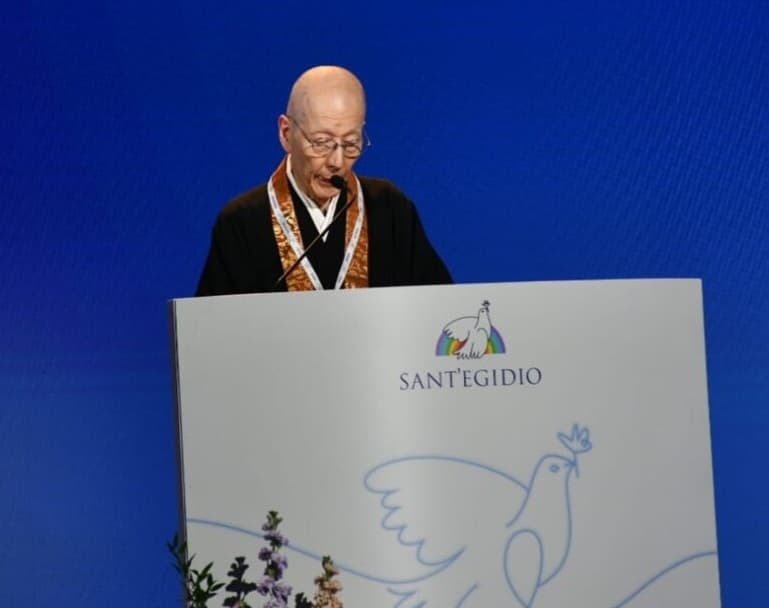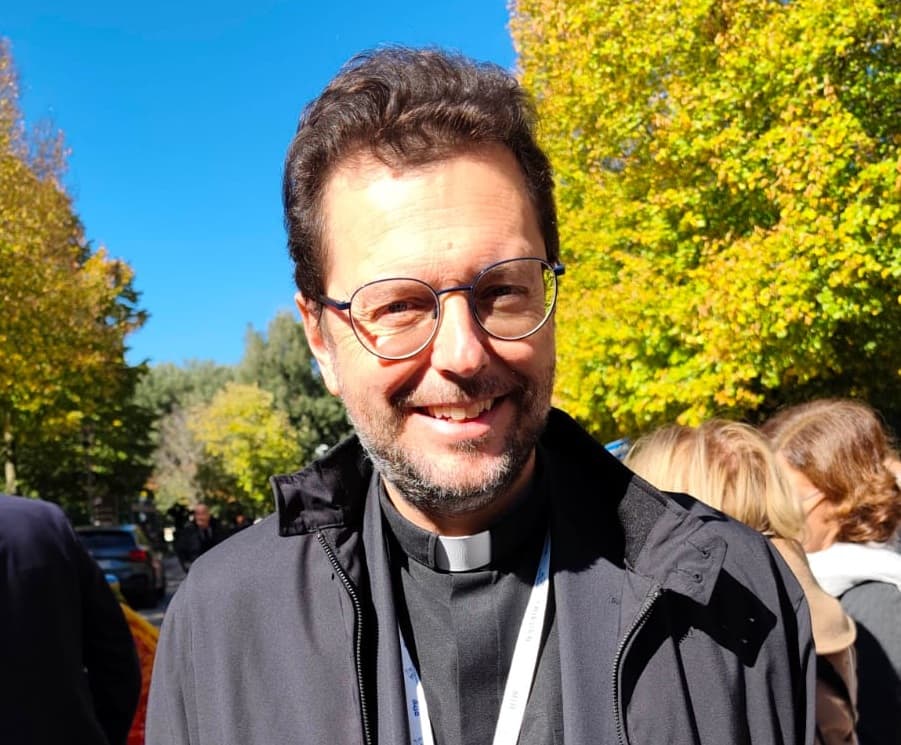
Assisi (AsiaNews) – Following the audience granted on Monday by Pope Leo XIV, Cardinal Giorgio Marengo, Apostolic Prefect of Ulan Bator, took part on 27 October in Assisi in the international meeting organised by the Community of Sant’Egidio at the site where the historic prayer for peace by religious leaders, initiated by John Paul II 40 years ago, took place. The cardinal did not come alone, either to Assisi or to the Vatican.
This was the first point he wished to emphasise in his public address at the panel on the Spirit of Assisi: “I am particularly pleased to be here alongside the abbot of Gandantegchinlen Monastery” – the highest authority in Mongolian Buddhism, he explained. Relationships such as this, Marengo said, “are in themselves a concrete expression of the Spirit of Assisi. We are friends, and this is the deepest and most vital dimension of dialogue”.
A Consolata missionary, the Apostolic Prefect of Ulan Bator and President of the Central Asian Bishops’ Conference, he spoke of both dialogue and mission, recalling the document of the same name published just two years before the historic Assisi meeting by the then Secretariat for Non-Christians – now the Dicastery for Interreligious Dialogue.
“Mission, as we like to recall,” said Marengo, “is to whisper the Gospel into the heart of a culture, a people, a human group. But a people, a culture, a human group are real people, with first and last names, with unique yet relatable stories; and so, in this dynamic of whispering the Gospel, friendship and relationship are what matter most of all, alongside the foundational relationship – that in the Lord Jesus.”
The Centre for the Study of Mongolian Culture
In an interview granted to us on the sidelines of the event, we asked Cardinal Marengo to return to this point, commenting on the recent inauguration of the Centre for the Study of Mongolian Culture within the Ulan Bator Cathedral complex. He stated that this is “an initiative within our Catholic community, for our missionaries, and it stems precisely from this desire to get to know ever better the people to whom we are sent. And within this understanding, clearly, the religious dimension represents, for us, the most important aspect to love and respect’.
Pope Francis’s visit in 2023 remains a key moment for the small Church in Mongolia and for its interfaith relations.
Marengo recalls in particular the moment spent inside the ger, or yurt, the Mongolian tent whose only openings are an entrance and a skylight at the top which allows one, as Francis emphasised on that occasion, to notice how “the sense of time passing comes from above, not from the mere flow of earthly activities” (Pope Francis, Ecumenical and Interreligious Meeting, 3 September 2023).
The legacy of Pope Francis’s visit
We ask Marengo what legacy that moment has left: “Pope Francis made a profound impression through the way he conducted himself, with great humility, without hiding even his human frailty because – as we all recall – he was already ill and suffering. This meant that the Mongolian people as a whole, most of whom are unfamiliar with the Catholic Church, recognised in him a true spiritual leader. A mutual affinity was forged,” he concludes, “from which we are still benefiting today.”