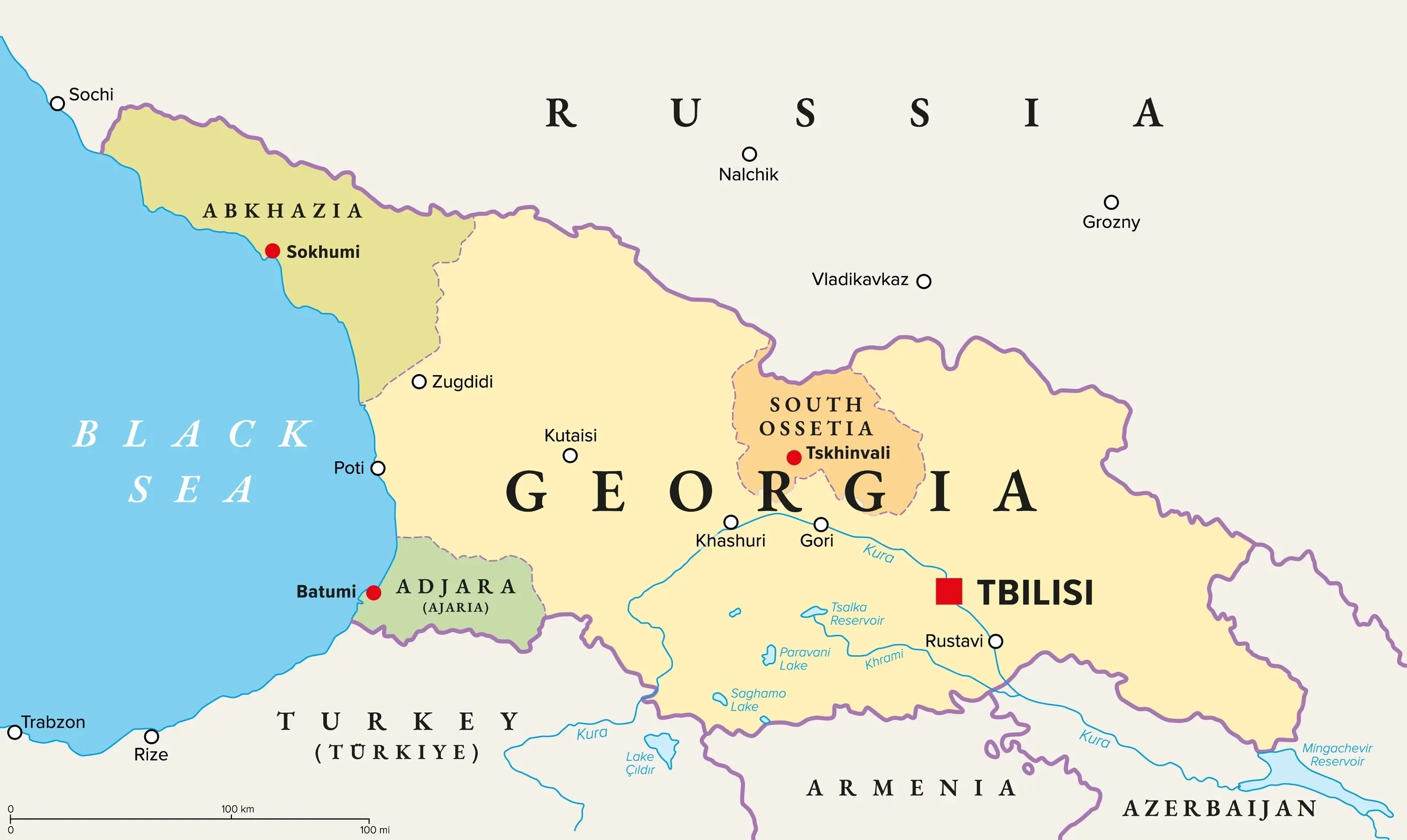
Moscow (AsiaNews) – The recent statement by Sergey Lavrov, Moscow’s Foreign Minister, regarding Russia’s willingness to help Georgia, Abkhazia and South Ossetia establish contacts has sparked a heated debate in Tbilisi.
On the 18th anniversary of the “Five-Day War” between Russia and Georgia over the territories of the breakaway republics, the Russians have proposed to facilitate reconciliation between Tbilisi, Tskhinvali and Sukhumi. “The Russian side is ready to continue providing comprehensive assistance to the parties to advance the negotiation process, build trust and foster inter-state relations in the interests of stability and security in the South Caucasus,” the minister said in a statement.
Although the current Georgian authorities are engaged in pragmatic relations with Moscow and avoid confrontation, Tbilisi regards the proposal for reconciliation with Abkhazia and South Ossetia as unacceptable: the leadership considers these countries to be an integral part of Georgian territory.
For Abkhazia and South Ossetia, by contrast, an equal inter-state dialogue with Georgia and legal guarantees against the use of force represent a highly favourable scenario. This is not the first time that Russia has attempted to mediate between the conflicting parties. A year ago, a similar statement by Lavrov received a more favourable reception from the ruling Georgian Dream party.
The party’s secretary-general and mayor of Tbilisi, Kakha Kaladze, stated at the time that the authorities welcomed Russia’s willingness to facilitate reconciliation, but that a fundamental difference of opinion remained. Prime Minister Irakli Kobakhidze recently stated in no uncertain terms that diplomatic relations with Russia cannot be restored as long as Moscow continues to recognise the independence of Abkhazia and South Ossetia. At the same time, he described a peaceful solution as one of the priorities of Tbilisi’s foreign policy.
Georgia severed diplomatic relations with Russia in 2008, following the Five-Day War, and this conflict remains the main obstacle to the full normalisation of relations between Russia and Georgia. However, the absence of embassies does not mean a complete lack of contact: the two sides maintain limited channels of political interaction, whilst transport and trade links are fully operational. In Sukhumi, presidential adviser Sergei Shamba stated that the absence of diplomatic relations between Russia and Georgia “is primarily a burden for the Georgian side”, adding that Tbilisi’s harsh rhetoric is alienating Abkhaz society from the prospect of cultural exchanges, cooperation and good neighbourly relations.
South Ossetia, for its part, rejected the Georgian interpretation of the issue: Tskhinvali pointed out that Moscow regards its decisions to recognise the two republics as irrevocable, and called on Tbilisi to take this into account.
What is new about the current situation lies not so much in the emergence of a new settlement plan as in the change of tone on the part of the Georgian authorities: although the issue of the ‘occupation of Georgian territories’ remains a constant in Tbilisi, the leadership of Georgian Dream is increasingly speaking of the need to rebuild the bridges that have been severed with Abkhazia and South Ossetia. Ahead of the 2024 parliamentary elections, the party’s founder, Bidzina Ivanishvili, had even stated that Georgia must find the strength to apologise for the 2008 war, but these words had sparked protests, as many in Georgian society had interpreted them as an attempt to shift the blame for the conflict onto previous Georgian authorities.
Kobakhidze, in fact, continues to take this line even today: on the anniversary of the Five-Day War, he once again accused Mikhail Saakashvili’s group and the United National Movement – now in opposition – of having provoked the clashes and of therefore being responsible for the consequences of the events of August 2008. At the same time, the Prime Minister criticised the opposition and parts of civil society for ‘acquired Russophobia’, arguing that the sharp rise in anti-Russian rhetoric since 2022 is due to external pressure and attempts to drag Georgia into a conflict with Russia.
Russia’s offer of mediation comes at a time when Georgia is simultaneously at odds with Russia over the status of Abkhazia and South Ossetia, and is undergoing a deep crisis with its European partners. Democratic issues are hindering a rapprochement with the EU, whilst the persistence of territorial disputes is preventing a transition to full-fledged relations with Moscow.





.jpeg&w=3840&q=75)