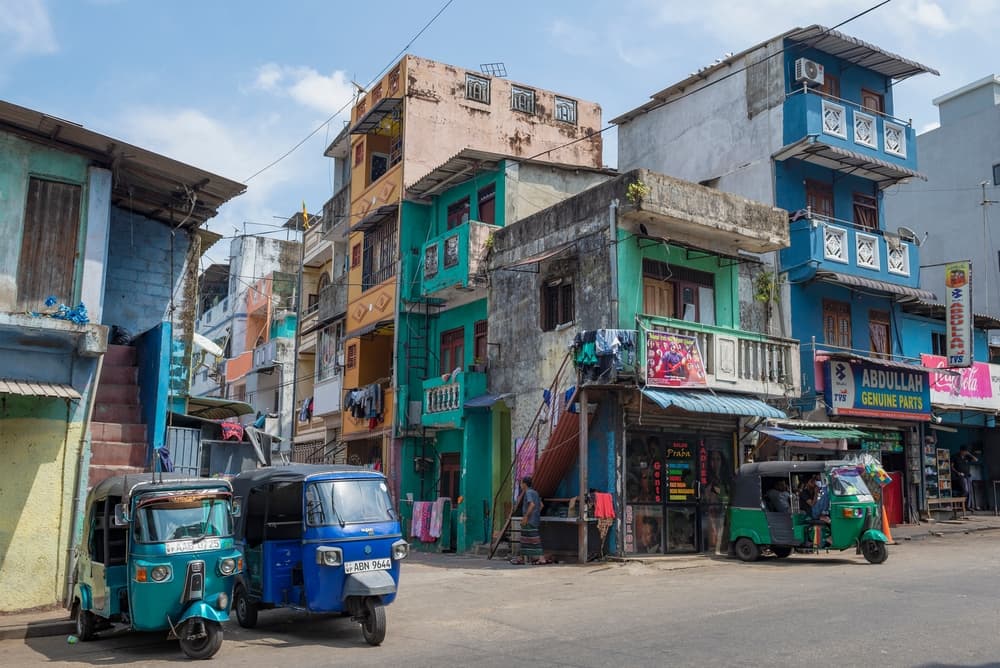
Colombo (AsiaNews) – Sri Lanka has launched a historic initiative to define its first National Building Code (NBCSL), a project set to transform the safety, quality, and sustainability of buildings, including their resilience to disasters.
The initiative was discussed last week at a meeting at the Ministry of Defence, attended by senior officials from the National Building Research Organisation (NBRO), the National Planning Department (NPD), the Urban Development Authority (UDA), and the Construction Industry Development Authority (CIDA).
The project will be managed jointly, in consultation with relevant stakeholders with implementation in 2026–2028 after it was approved by the government on 21 October 2025.
Safety, sustainability, and uniform standards
For Australia-based civil engineers Samadhi Kalupahana and Mayantha Senanayaka, Sri Lanka currently lacks a single, legally mandated national building code.
“Design and construction practices are currently based on a mix of international standards - including the International Building Code, Eurocodes, British Standards, and Indian Standards - alongside local regulations and sector-specific requirements,” they said speaking with AsiaNews.
Since the use of different standards can lead to inconsistencies in building design review, approvals, and the enforcement of regulations, they stress the need for a model tailored to the country.
The proposed NBCSL should provide a unified framework based on internationally recognised standards, while taking into account the country’s specific climatic, geological, and environmental conditions.
“It will cover 10 key technical areas - such as structural and fire safety, sustainability, and universal accessibility - and define procedures for building permits, inspections, compliance, and the enforcement of regulations.”
What is more, “The initiative will focus on clarifying the responsibilities of government institutions and establishing uniform procedures for approvals, inspections, and enforcement."
Capacity-building programmes aimed at regulatory authorities and construction industry professionals will also form a fundamental part of the project.
"The development process will involve government institutions, professional associations, academia, the construction sector, and the public," the civil engineers told AsiaNews.
Disaster prevention, new building regulations
According to senior officials at the NBRI, “a consultancy firm will be selected through a competitive bidding process, in accordance with the guidelines of the National Procurement Agency, and the project will be funded by the Consolidated Fund.”
As the assignment is expected to last 24 months, culminating in the preparation and official gazetting of a National Building Code, the project reflects “the Government’s firm commitment to protecting human lives and property through modern, scientifically-based building standards. A national building code is long overdue, and its development marks a significant step towards a safer and more resilient Sri Lanka.”
Shirantha Hewapathirana and Nimalka Mendis, university lecturers in civil engineering, believe that the need for a code applicable nationwide is particularly critical given the country’s diverse climatic, geographical, and environmental conditions, which include natural hazards such as floods, landslides, and strong winds.
“This initiative will provide a clear and consistent foundation for safe design, construction, maintenance, and regulatory oversight. The proposal aims to consolidate these requirements into a single national framework, tailored to Sri Lanka’s specific conditions while remaining aligned with internationally recognized best practices,” they state.
Finally, as indicated by senior officials at the Sri Lanka Sustainable Energy Authority (SEA), “the SEA is empowered by Act No. 35 of 2007 to introduce a Code of Practice for buildings, through its Section 36 (2) (f).”
The drafting was carried out by the consultancy firm Co-Energi (Pvt) Ltd and subsequently developed into various modules by the SEA, with the assistance of relevant experts.
"This Codesets forththe requirements for design of newfacilities of commercial buildings, industrial facilitieswhich includelarge-scalehousing developments.”
At the same time, “the building code will minimize potentialdamagesto human lives, property,businesscontinuity, includingcost ofemergencyresponse, by enhancing the resilience of the built environment.”