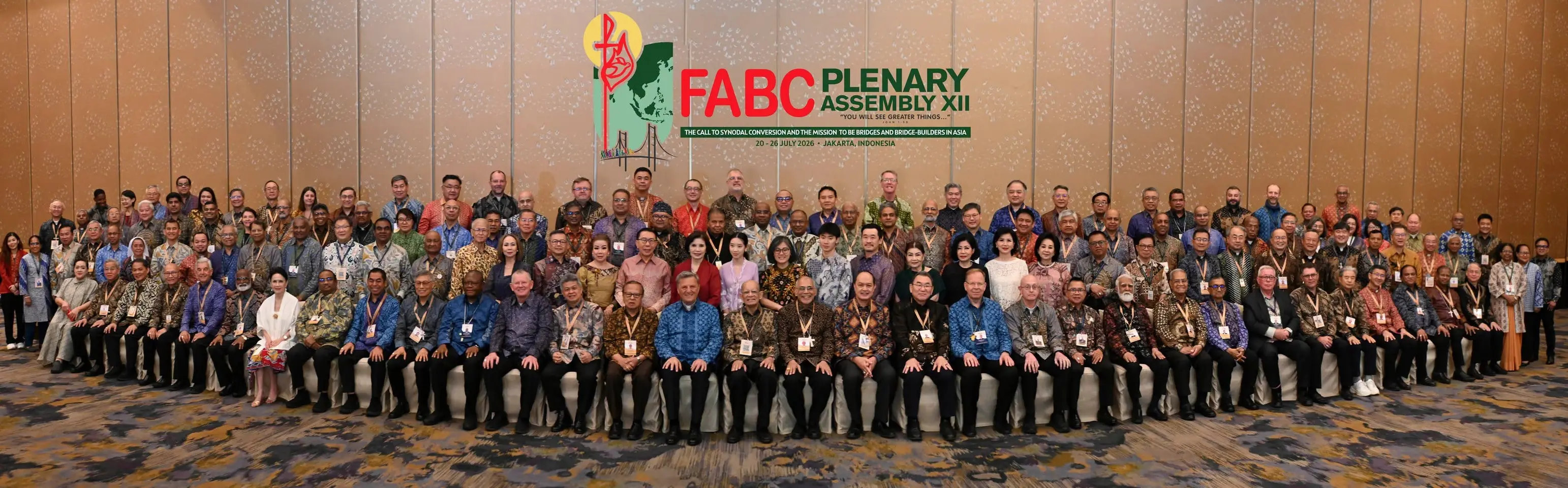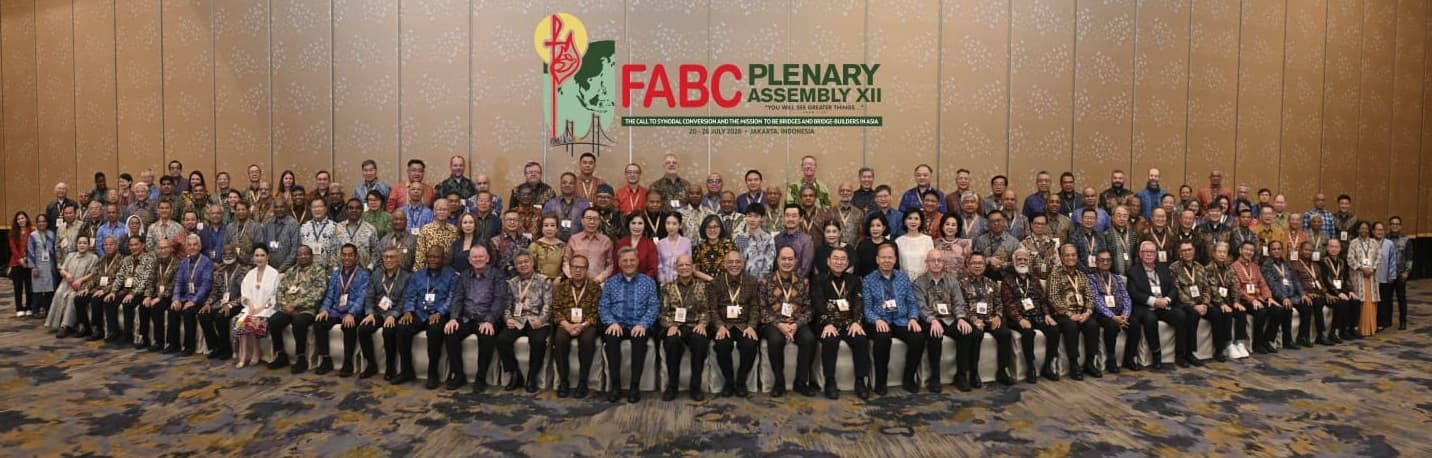
Jakarta (AsiaNews) – Dr Choong Pui Yee, senior lecturer in the Department of Southeast Asian Studies at the University of Malaya in Kuala Lumpur, spoke today at the 12th Plenary Assembly of the Federation of Asian Bishops' Conferences (FABC), currently underway in Jakarta.
In one of the most significant addresses of the day, she warned that polarisation is one of the main threats to the Church in Asia, even more than persecution or secularisation. In fact, “political, ethnic, and social divisions do not stop at the Church door,” she stressed.
In her view, phenomena such as migration, religious nationalism, the shrinking of democratic spaces, and the spread of social media are fuelling polarisation.
The scholar, invited to address the 150 bishops from across the continent gathered for the Assembly, referred to the concept of "affective polarisation”, that is, the tendency to view those with differing opinions no longer as legitimate interlocutors, but as enemies. “When this happens, dialogue becomes difficult because people stop listening to one another," she said.
Choong warned that Christians can also be influenced by these trends, bringing political, cultural, and ethnic conflicts into Church communities. For this reason, in her view, the Church in Asia must prevent national or ideological identities from prevailing over the common identity as believers in Christ.
“The Church should demonstrate that disagreement does not have to lead to hostility," she explained, inviting Christian communities to become places of dialogue, reconciliation, and mutual respect.
Citing the theme of this FABC Assembly, which calls on the Church to become "bridges and a bridge builder”, Choong noted that bridges are necessary precisely where divisions exist.
The Christian response to polarisation must not be based on political power or ideological victory, but on the Gospel, founded on love, mercy, forgiveness, and reconciliation.
Synodality, she added, must translate into building communities where differences do not become divisions and communion prevails over conflict.
In his address, Father Jan Stefanów, general secretary of the Catholic Biblical Federation (CBF), called for the renewal of the commitment to the biblical apostolate.
Regarding the theme chosen by Asian bishops for their Assembly, he noted that "the Word of God is the first bridge between heaven and earth," so that every bridge built by the Church with the poor, as well as various cultures, and religions finds its foundation precisely in Scripture.
Noting the FABC's biblical tradition, he emphasised the historic role of the Bishops' Institute for the Biblical Apostolate (BIBA), a biblical training programme that marked the path of the Churches in Asia over the years.
He cited in particular the BIBA II meetings in 1999 in Malaysia, BIBA III in 2010, and BIBA IV in 2013, key moments in the promotion of biblical training and the new evangelisation.
The clergyman praised the Asian Integral Pastoral Approach, based on Gospel-centred basic communities, saying that they have enabled the Asian Church to show the universal Church “what communal listening to the Word looks like in practice."
According to Father Stefanów, however, in recent years the biblical apostolate has become less visible in the pastoral structures of the FABC.
He pointed out that the plenary assembly is an opportunity to bring biblical ministry back to the centre of church life, not as a simple pastoral programme, but as a source of inspiration for all Church activities, in harmony with Benedict XVI's apostolic exhortation Verbum Domini.
“There is no synodality without listening, and there is no Church of listening that does not begin with the Word of God," he explained.
Finally, Father Stefanów offered Asian bishops the CBF’s support for any new biblical initiatives, such as the training of biblical educators, renewing the BIBA training programme, and launching collaborative programmes.
"The Catholic Biblical Federation is ready to accompany you in your search for synodal conversion through the Word of God," he said.