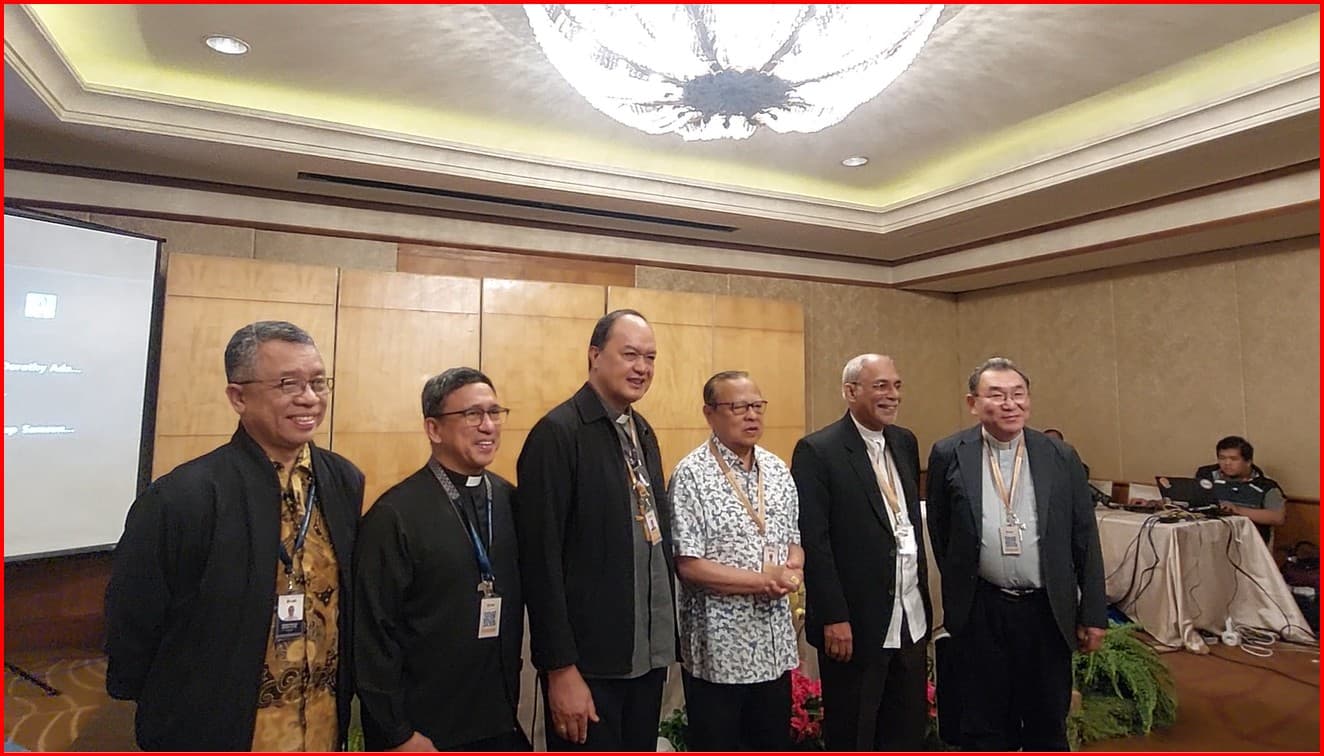
Jakarta (AsiaNews) – The Federation of Asian Bishops' Conferences (FABC) and Cardinal Ignatius Suharyo, Archbishop of Jakarta, today highlighted at a press conference held at the Mulia Senayan Hotel in the Indonesian capital two main challenges that many Asian countries face at present.
One is the uniquely Indonesian heritage of Pancasila, a philosophy that calls for unity and represents one of the world's best examples of how to manage ethnic, cultural, linguistic, and religious diversity. The other is a commitment to social justice and the defence of the dignity of every person.
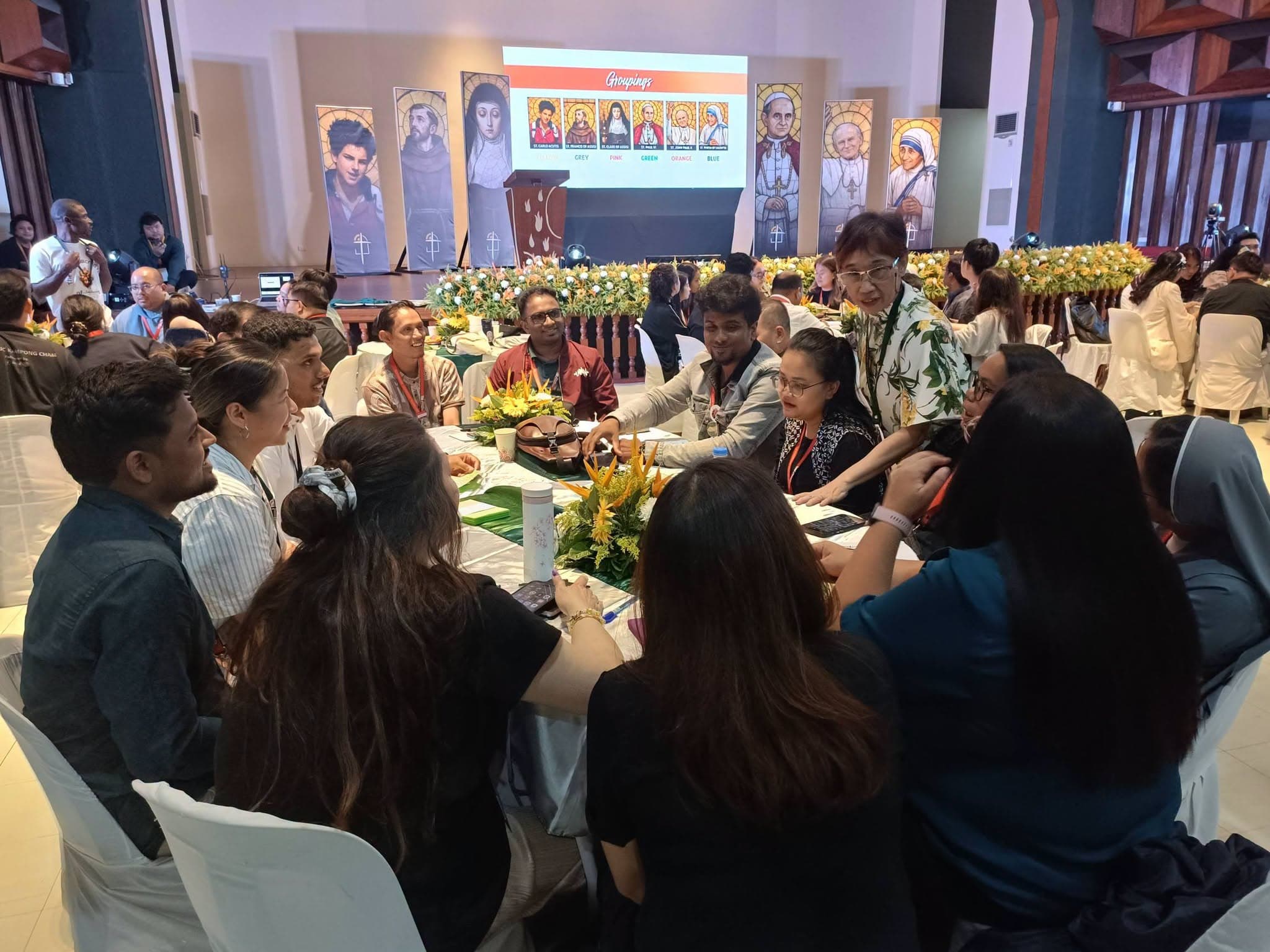
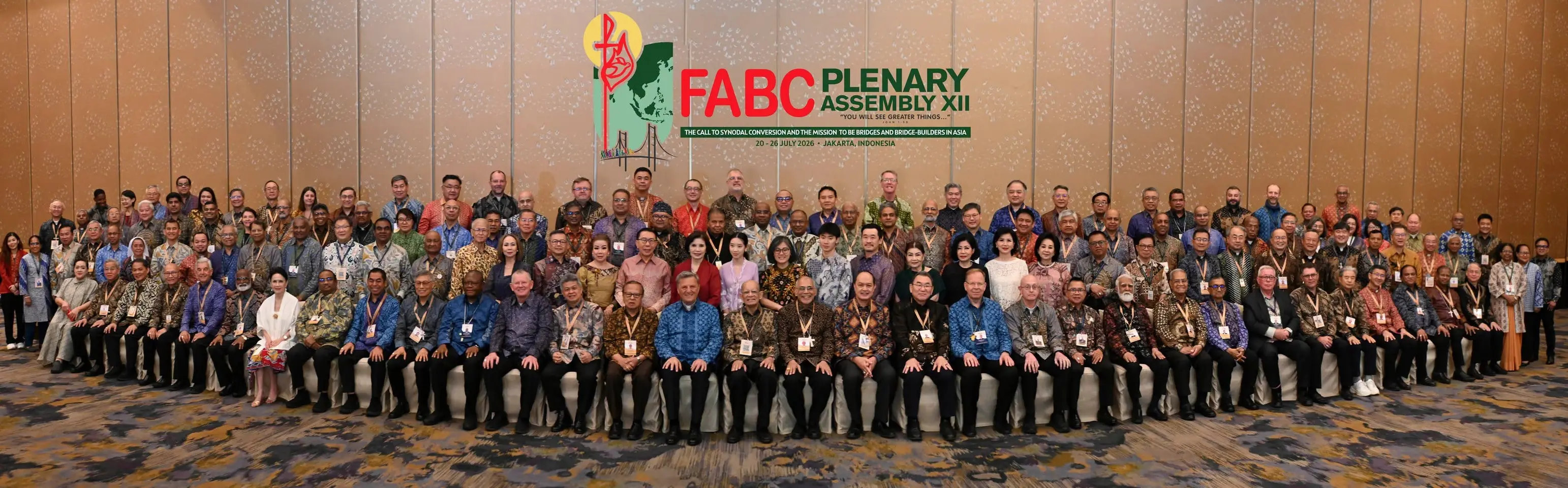
Before the assembly’s official opening tomorrow, the prelates outlined the event, which will bring together more than 150 bishops from across the continent until next Sunday, stressing the importance of its location.
“Indonesia is a model in demonstrating how cultural, ethnic, linguistic, and religious diversity can be successfully managed, creating a peaceful and harmonious society. This is possible because Indonesia is founded on the philosophy of Pancasila," said Cardinal Pablo Virgilio David, Bishop of Kalookan (Philippines), FABC vice president and president of the Commission for Synodality.
His remarks were echoed by Cardinal Ignatius Suharyo, Archbishop of Jakarta, for whom the spirit of the FABC plenary assembly must go beyond theological reflection and be translated into concrete actions that make the Kingdom of God visible in everyday life.
“In a language that people can more readily understand, this vision is expressed through the Church's social teaching, which promotes human dignity and the common good," the cardinal said.
The prelate noted that Asia continues to face serious challenges, including structural poverty, social injustice, and the failure to fully uphold human dignity. For this reason, the Church is called to stand with the poor by advocating access to education, healthcare, and decent living conditions while promoting greater social justice.
“When human dignity is respected, the inevitable consequence is that everyone is called to work for the common good," he said.
Synodality as an antidote to clericalism
During the press conference, Cardinal Pablo David stressed that one of the Church's greatest challenges today is the culture of clericalism.
He noted that Pope Francis consistently urged the Church to move away from leadership models centred exclusively on the ordained. “We have to recognise clericalism as a problem,” he said.
According to the cardinal, synodality teaches shared responsibility in the Church's mission. Bishops, priests, men and women religious, and lay people all possess equal dignity through the baptism and are called to work together.
“We are not higher Christians just because we are ordained. We acknowledge our equality and dignity through the baptism,” he said.
Responding to a question from Royani Ping of Indonesia's Catholic news outlet Sesawi.Net on whether corruption would be discussed during the FABC Plenary Assembly, FABC President Cardinal Filipe Neri Ferrão, Archbishop of Goa and Daman, explained that corruption is not a specific agenda item.
Nevertheless, Cardinal Pablo David acknowledged that corruption remains a grave moral concern, particularly in the Philippines. “It is one of the biggest sources of embarrassment for us."
The prelate noted that a significant gap remains between faith and public life. For many believers, faith is often confined to worship and personal devotion, without being sufficiently reflected upon in honesty, integrity, and social responsibility in public life.
According to the cardinal, the Church must help bridge this gap by providing moral and spiritual leadership.
Indonesian Cardinal Suharyo added that the roots of poverty in Indonesia are not merely economic but are also linked to a deeply entrenched feudal culture. Social structures that distinguish people according to status and rank, he said, continue to foster inequality and poverty.
Cardinal Suharyo's hope for the FABC assembly
As the closed plenary sessions are about to begin, Cardinal Suharyo expressed hope that the gathering of Asian bishops in Jakarta would produce a common statement capable of addressing the many pressing challenges facing Asia.
He noted that Indonesia previously hosted the FABC Plenary Assembly in Bandung in 1990. That historic meeting introduced the vision of the Church in Asia as a Church of dialogue.
According to Indonesia’s third cardinal and head of the Archdiocese of Jakarta, this dialogue has three essential dimensions: dialogue with other religions, dialogue with local cultures through inculturation, and dialogue with the poor.
“This way, the Church does not appear as a foreign institution but becomes an integral part of society, working together to promote human dignity, solidarity, social justice, and the care of our common home," Cardinal Suharyo said.
Pancasila and the symbol of harmony between Istiqlal mosque and the cathedral
Speaking to journalists on the sidelines of the press conference, Cardinal Suharyo also reflected upon the historic significance of the Istiqlal Mosque, which stands near Jakarta cathedral.
He explained that Indonesia's first president, Soekarno, intentionally selected the site to symbolise an independent Indonesia that had moved beyond its colonial past while affirming the nation's commitment to peaceful coexistence among followers of different religions.
He added that the Tunnel of Friendship (Terowongan Silaturahmi), which now connects the Istiqlal Mosque and Jakarta Cathedral, is far more than a pedestrian passage. It serves as both a powerful symbol and an educational space that promotes fraternity, tolerance, and harmony amid diversity.
“This is the face of Indonesia that has been deeply appreciated by the bishops of Asia and one that we hope will continue to inspire both the Church and the international community," Cardinal Suharyo said in concluding.