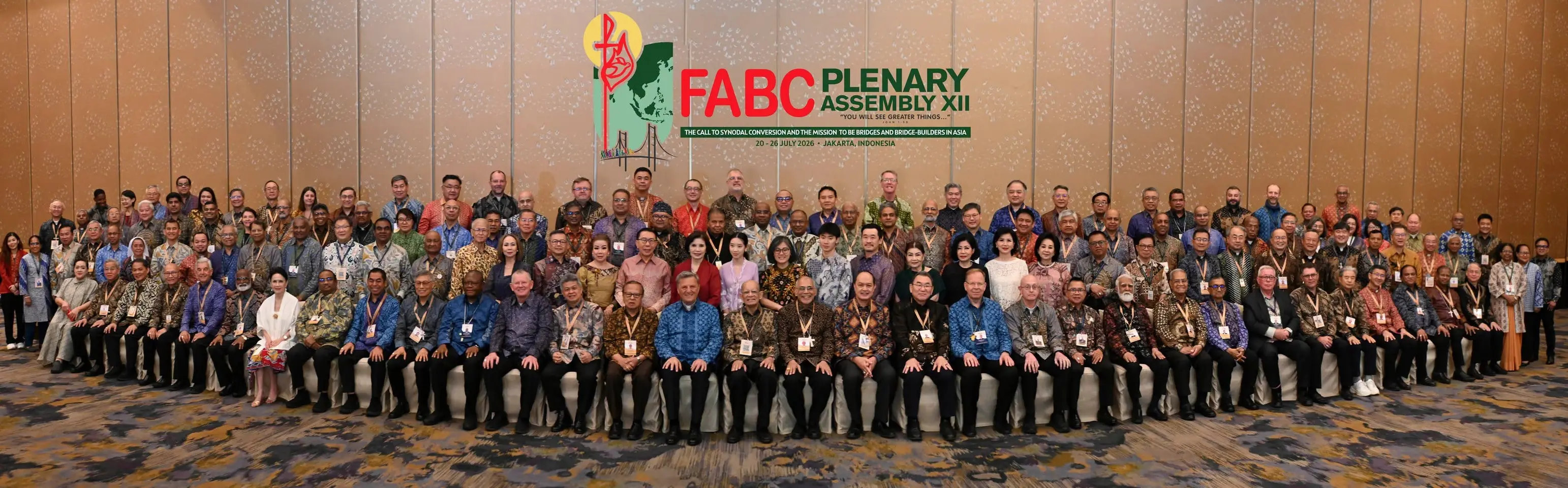
Jakarta (AsiaNews) – Several reports were presented at the 12th Plenary Assembly of the Federation of Asian Bishops' Conferences at the end of some 20-round table discussions.
The perspective that emerged from them is centred on an increasingly synodal, missionary Church capable of building bridges in a society marked by divisions, conflicts, and profound transformations.
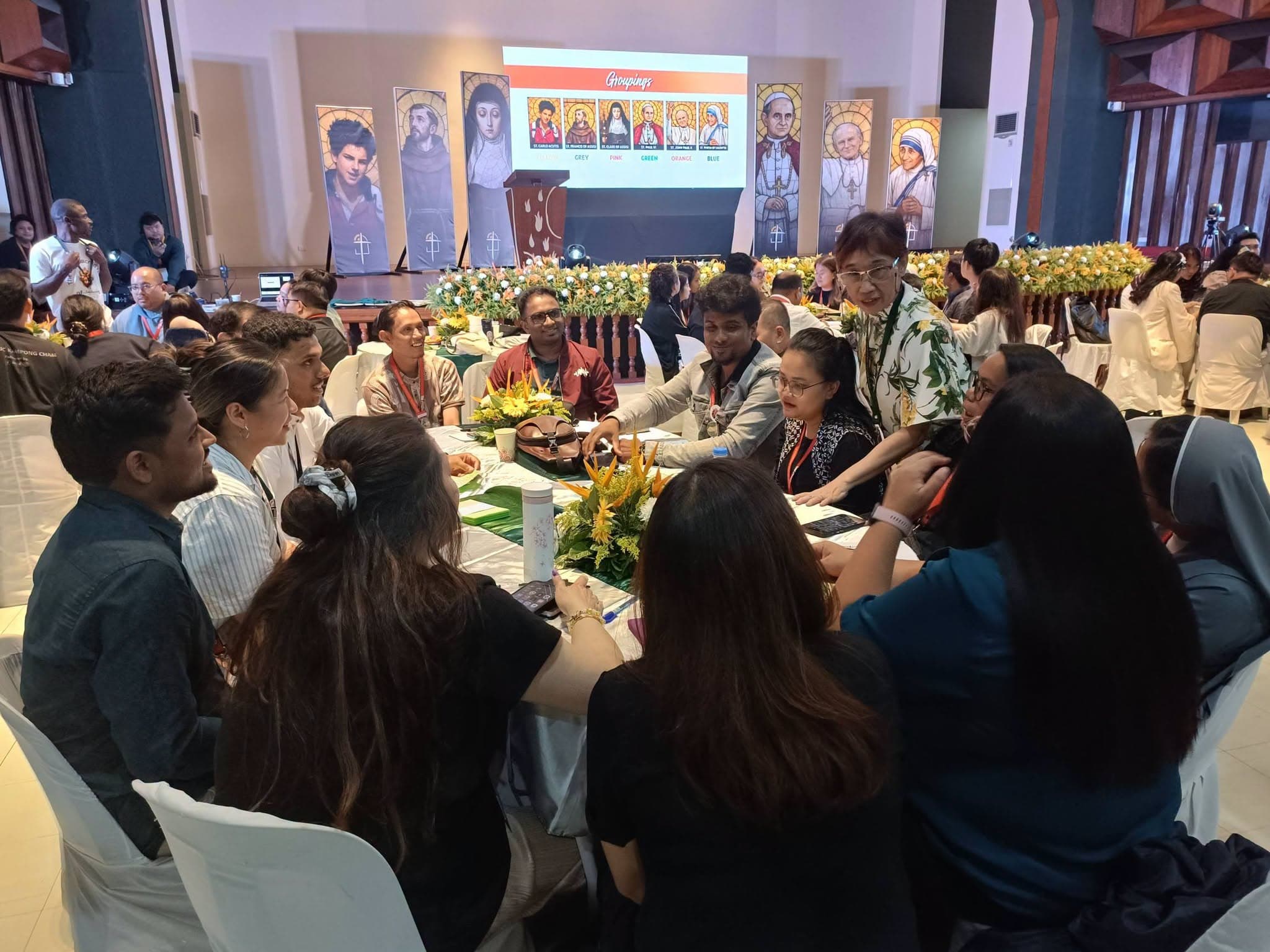
Over the past few days, about 150 participants (cardinals, bishops, as well as priests, religious, and lay people from across the continent) looked at the “conversation in the Spirit" in small groups with people from different backgrounds, a methodology that is now becoming the model of the Catholic Church's synodal style worldwide.
In Jakarta, this form of community discernment based on prayer and mutual listening reflects how the Church can respond to the rapid geopolitical, social, and cultural changes in Asia and on what conversions are necessary to make local Churches more missionary and authentically synodal.
The main challenges identified are wars, political polarisation, religious extremism, aggressive nationalism, forced migration, environmental degradation, growing economic inequality, and the rapid development of artificial intelligence and digital communication.
Added to these are the crisis of the family, the loss of trust in institutions, the spread of misinformation through social media, and the younger generations' search for meaning.
The delegates stressed how these challenges represent an opportunity to renew the Church's evangelising mission.
In particular, migration is seen not only a humanitarian emergency but as an opportunity to bear witness to the faith, as migrants carry the Gospel across borders while Christian communities that welcome and accompany them should foster communion.
Given their growing place, artificial intelligence and digital platforms are seen as new spaces for evangelisation, especially among young people.
Discussions paid particular attention to the contribution of Catholic institutions – schools, universities, hospitals, charitable organisations, and social services – as privileged tools for building bridges through service to people of all religions and cultures, especially in countries where Catholics are in the minority.
Participants also noted that the Church's mission must begin with internal renewal, promoting greater participation of lay people, women, youth, migrants, indigenous populations, and marginalised groups, in the belief that co-responsibility is one of the fundamental elements of synodality.
Finally, participants stressed the need for priestly training to be geared towards accompaniment, dialogue, and discernment.
Working with German Catholic organisations
An important moment during the assembly were discussions with three important German Catholic organisations dedicated to the mission and development cooperation – Misereor, Missio Aachen, and Missio Munich – who provide significant support and assistance to the Churches of Asia.
Misereor Director General Father Andreas Frick emphasised that the Church must be a prophetic voice alongside the poor, migrants, and victims of the climate crisis. For him, environmental justice is closely linked to the fight against poverty and inequality.
According to Father Frick, building bridges means creating relationships based on trust, solidarity, and long-term commitment.
Karina Struck, of Missio Aachen, reiterated that international cooperation is more effective when local Churches define their own pastoral priorities. She underscored the role of the Bangkok regional office in promoting shared decision-making and more participatory project management.
Branka Begic, Asia director of Missio Monaco, concluded by stating that true collaboration is not based solely on financial support, but above all on personal relationships, mutual listening, and respect.
Each local Church, she noted, offers experiences and gifts that enrich the entire universal Church, transcending the logic of a simple relationship between donors and beneficiaries.
Looking forward to WYD Seoul 2027
Today the FABC Plenary Assembly also discussed the progress towards World Youth Day, scheduled for Seoul next year, an event eagerly awaited by all the Churches in Asia.
The Organising Committee of the Korean Church told the bishops and other delegates gathered in Jakarta that preparations are focused not only on the logistical aspects, but also on ensuring a safe, welcoming, and spiritually meaningful experience for the young pilgrims.
Auxiliary Bishop Paul Kyung Sang Lee of Seoul, who is the WYD general coordinator, explained that the Korean Church has grown through persecution, wars and a long journey towards peace and democracy.
For this reason, through this major event, organisers wish to offer young people around the world an opportunity to discover how hope can be born from the wounds of history and how faith can continue to flourish even in times of difficulty.
The upcoming WYD will be held from 3 to 8 August 2027, preceded by the traditional days in the Dioceses (29 July–2 August).
The organisers presented the registration system, the public transport system that will serve pilgrims, the healthcare provided by eight Catholic hospitals, emergency services, the South Korean government's support for visas, and environmental initiatives to reduce plastic use.
The discussion also looked at red tape and logistics, which the organisers said they have already taken into account.
About half a million pilgrims from around the world are expected to take part in the event, while Bishop Lee urged Asian Churches to prepare their young people for Seoul now.