Singapore (AsiaNews) - At 12:25pm local time Pope Francis left Singapore for the long flight that will take him back to Rome this evening, after a long journey that since September 2 has seen him make stops in Indonesia, Papua New Guinea, East Timor and the city-state, a major crossroads in Southeast Asia.
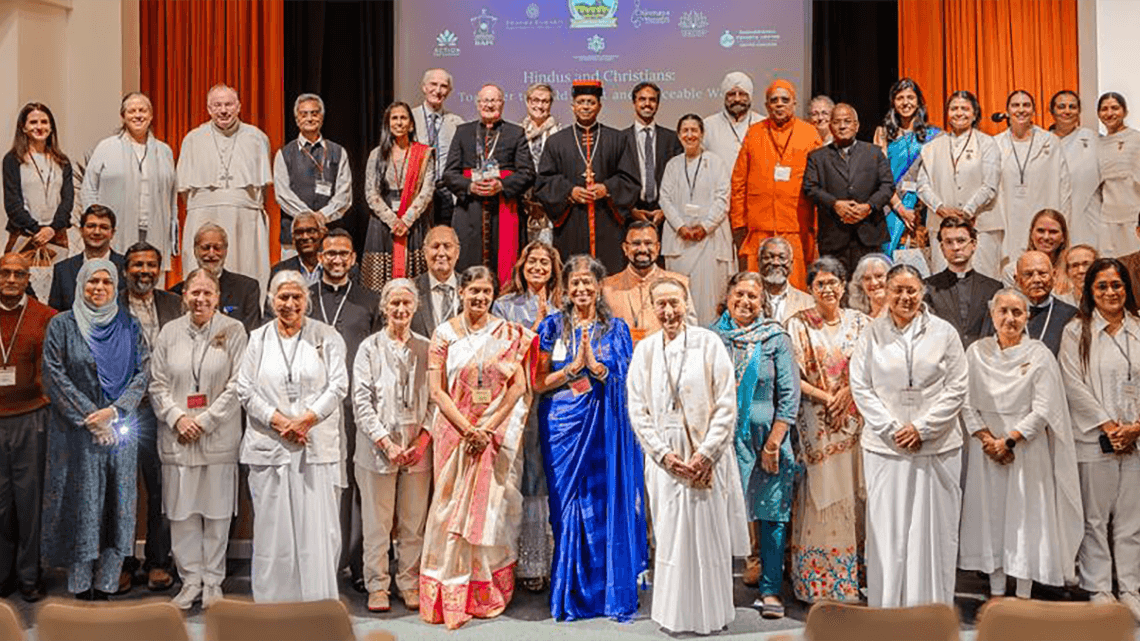
The Pope arrived at the airport directly from the Catholic Junior College, one of the most important among the local Church's educational presence, where the last appointment of this visit was scheduled: the interreligious meeting, which in Singapore had young people of the different religious denominations as protagonists, with the leaders sitting in the front row of the audience to listen to their dialogue with Pope Francis.
It was a lively discussion, in which the pontiff - as he had already done in East Timor with the young people - responded to their testimonies and questions, leaving aside the prepared speech. Raaj, a young Hindu, confessed to him the bitter sensation of finding himself pursuing interreligious dialogue as if ‘in a bubble’:
‘There are days when I cry,’ he said, ‘because I feel that just when we are making progress in promoting friendships among young people, we suddenly hear about global violence and loss of life in the name of religion’.
Preet, a young Sikh woman, asked him how to ‘overcome the fear of judgement, given the strong pressure to perform well in every aspect of life’. Nicole, a young Catholic educator, raised the issue of artificial intelligence and its fine line between truth and manipulation, even on religious issues.
In response, Francis spoke of the courage to allow oneself to be criticised by others, in a ‘sincere dialogue among young people’. Because anyone who chooses to always live in a comfort zone ‘is a young person who 'fattens' their mind. That is why I say to young people: take risks, go out, do not be afraid, fear is a dictatorial attitude, which paralyses'.
Referring to media and the new digital tools, he reiterated the invitation to use them, without remaining closed, but at the same time not to be enslaved by them, with the risk of being 'dispersing’. He also mentioned again the scourge of bullying and urged respect for the disabled.
As for the diversity among religions, Francis invited to look at them as ‘different languages’ on the ‘path to God’. ‘If we start saying ‘my religion is more beautiful and truer than yours’ we end up fighting,’ he commented. ‘But God is God for all. And as God is God for all, we are all God's children.’ And he concluded by inviting those present from every denomination ‘to pray in silence for one another’.
‘If you dialogue as young people, you will also dialogue as adults, as citizens, as politicians. And I would like to tell you something about history: every dictatorship in history, the first thing it does is cut off dialogue'.
At the end of the meeting, the young people read together a statement saying: ‘We, the future generation, commit ourselves to be a beacon of unity and hope in promoting cooperation and friendships that nurture harmonious coexistence between people of different faiths’. With them, Pope Francis also symbolically completed with a brush stroke a painting that will remain as a memory of this day and this commitment.
Before the interreligious meeting with the young people in private, Francis had received the priests, religious and bishops of the local Bishops' Conference, which brings together Malaysia, Singapore and Brunei. Then, as in each of the stages of his apostolic journey, he had met some elderly and sick people cared for by local Catholic facilities, at St. Theresa's Home, founded in 1935 by the Little Sisters of the Poor. ‘I ask you to pray for the Church and for humanity,’ he had told them, ’Your prayer is very important before God."