Milan (AsiaNews/Agencies) – “China expresses its condolences for the death of Pope Francis,” said Guo Jiakun, a spokesperson for the Foreign Ministry. “In recent years, China and the Vatican have maintained constructive contacts and engaged in useful exchanges. China is ready to work with the Vatican to promote the continuous improvement of China-Vatican relations,” the spokesperson added.
The death of Pope Francis has elicited a muted response from Beijing even though, more than any other pontiff, he extended a friendly hand to the People's Republic of China, with the signing of the 2018 Provisional Agreement on the appointment of Bishops (renewed three times, the last one last October) and various gestures of attention to China and its people.
The laconic statement suggests that the head of a prominent sovereign state passed away, not a spiritual figure that many Catholics in the People's Republic of China view as a point of reference. This represents a step backward.
When Pope Emeritus Benedict XVI passed away little over two years ago, the party-controlled Patriotic Association published a picture of the late pontiff on its website, Catholic Church in China, with the caption: “We entrust Benedict XVI to God's mercy and ask Him to grant him eternal rest in heaven.” This has not yet happened more than a day after Francis’s death.
The same goes for the websites of China’s dioceses. The Diocese of Shanghai, for example, was updated today with information about the annual pilgrimage to Our Lady of Sheshan in May, but no mention of the pontiff's death.
This does not mean that talking about it is banned in China. The Chinese Catholic website Xinde continues to reports news from the Vatican in Chinese.
But Chinese official catholics websites are still not allowed to express themselves publicly on the death of the universal pastor of the Catholic Church, because of the process of “sinicisation” that reiterates the autonomy of the Church in China from Rome, even though local prelates were able to take part in the work of the Synod in the Vatican in the last two years.
Meanwhile, we are just a few days away from the entry into force on 1 May of new rules on the religious activities by foreigners in China, which are designed to segregate Chinese and foreign Catholics in religious services.
It will thus be interesting to see what Chinese authorities will do regarding the pope’s funeral in Rome on Saturday, 26 April.
When John Paul II died in 2005, China did not send any delegation since there were no diplomatic relations with the Holy See. A delegation from Taiwan was present.
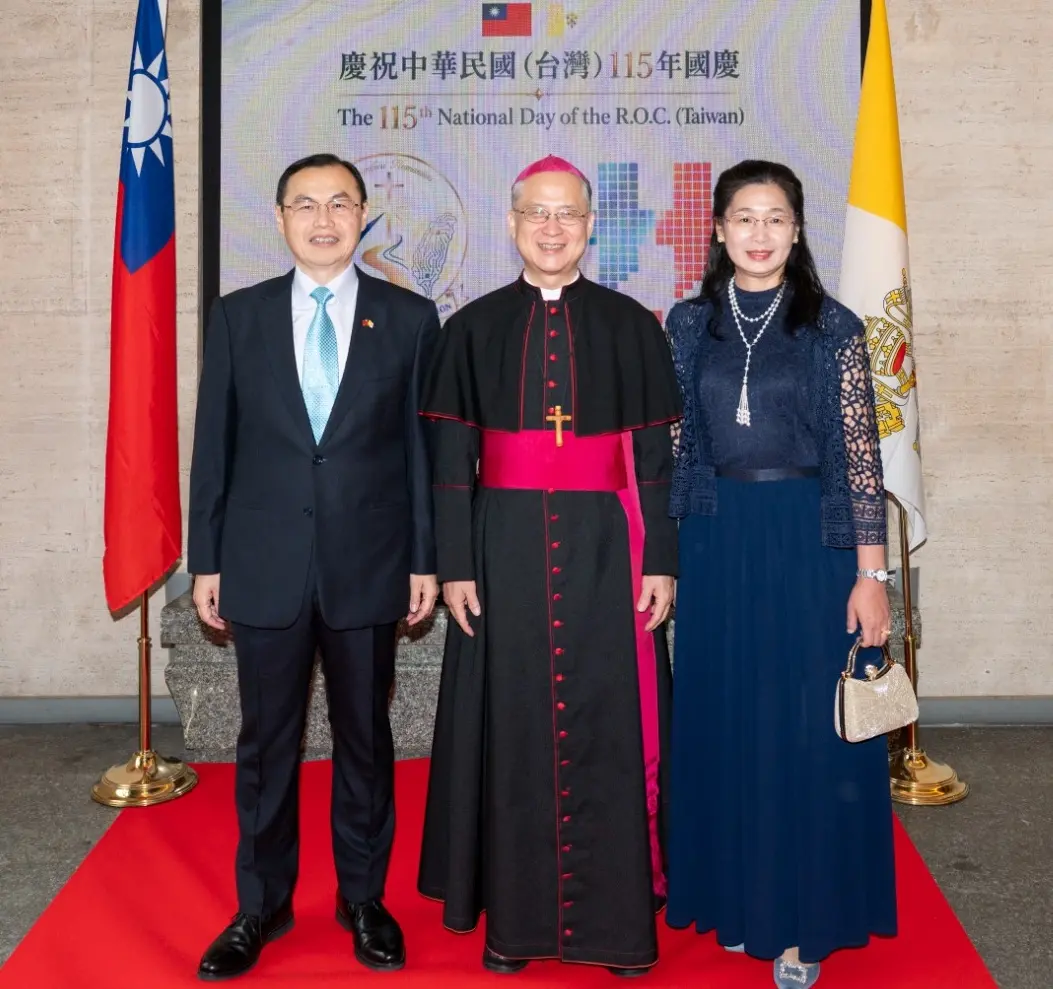
Taiwan, which maintains diplomatic relations with the Vatican, announced that it would send a delegation to attend the funeral of Pope Francis,.
One can expect mainland China to stay away this time as well. It remains to be seen, however, what will happen with its bishops, who were allowed to participate in the Synod. Their presence would be the easiest way for Beijing to show that it wants to pursue the path that Pope Francis also wanted.