Rome (AsiaNews) – In 1626, the same year that St Peter's Basilica in Rome was consecrated upon the official completion of its construction, the first Dominican missionaries landed in Taiwan, bringing the Gospel and a message of hope to the island.
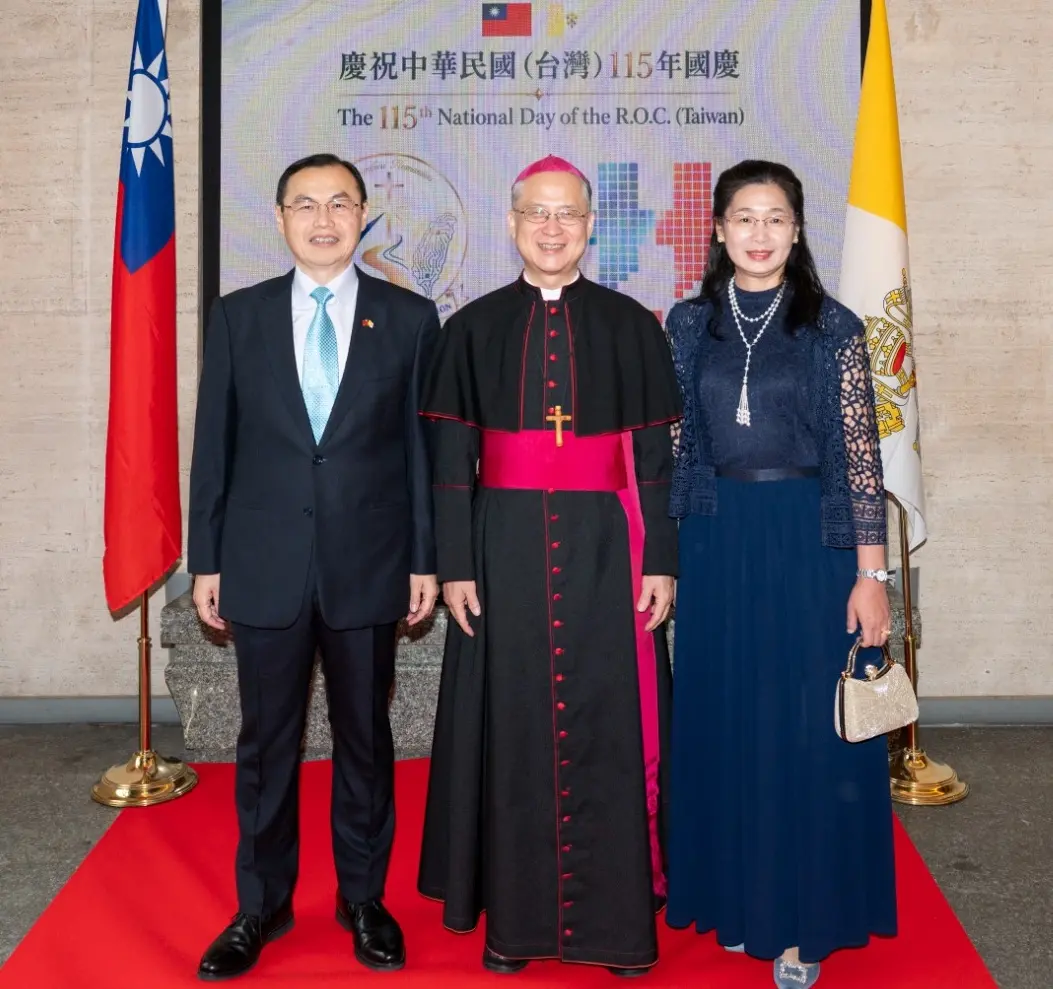
Taiwan’s embassy to the Holy See commemorated this significant anniversary yesterday in Rome during a reception at the Conciliazione Auditorium, held to mark the 115th anniversary of the founding of the Republic of China.
Ambassador Anthony C. Y. Ho underscored the importance of the occasion before an audience of over 200 guests, including cardinals, heads of Vatican dicasteries, members of religious orders, diplomats accredited to the Holy See, members of the Taiwanese community, and friends involved in the Taiwanese mission's various activities.
The event was also graced by the significant presence of Bishop John Baptist Lee Keh-mien of Hsinchu, who also chairs the Chinese Regional Bishops' Conference. The Vatican is one of only 12 countries worldwide with which Taiwan maintains full diplomatic relations and an embassy, the only one in Europe.
“For the past four hundred years, the Catholic Church has been a trusted partner of the people in Taiwan, making profound contributions to our society and caring for those most in need,” Ambassador Ho said.
“For many years,” he added, “Taiwan has also been a valued partner of the Holy See and the Catholic Church in Asia. Rooted in our shared commitment to freedom, peace, justice, truth, and human rights, this partnership continues to inspire us to uphold human dignity and work together for peace and love in the world.”
In the wake of the Jubilee of Hope celebrated by the Catholic Church, these principles were embodied in the HOPE initiative (Humanity, Opportunity, Partnership, and Encounter). In just over a year, through cooperation with Catholic Church entities, this initiative has seen the government of Taiwan support more than 50,000 people in need across Italy, Europe, the Middle East, and numerous African nations.
These initiatives of solidarity are centred on five key areas: promoting education and technological capacity-building, advancing healthcare, reducing poverty, caring for children and youth, and empowering women.
The ambassador also highlighted the alignment between the vision on artificial intelligence (AI) expressed by Pope Leo XIV in the encyclical Magnifica Humanitas and the call for the “ethical, democratic, and inclusive” development of this technological frontier, advocated by Taiwanese President Lai Ching-te.
This stance is particularly significant given the island's pivotal role in the global semiconductor supply chain, a factor driving Taiwan towards economic growth that could reach 11 per cent this year.
Finally, the ambassador noted that, “As we move together into the age of AI, Taiwan and the Holy See are not only partners sharing common values, but also partners in shaping a common future, to build bridges between innovation and ethics, to create opportunities and solidarity, and to serve humanity.”