Vatican City (AsiaNews) – The General Secretariat of the Synod held a press conference today to present the Instrumentum Laboris that will guide the work of the 16th General Assembly of the Synod of Bishops set to meet in Rome on 4 October 2023 for three weeks.
For the first time, the assembly will include 70 lay delegates, consecrated persons, and priests in accordance with Pope Francis’s will.
From being “abstract or theoretical", the goal is to make synodality into "a concrete experience" based on a method, in which "problems, resistances, difficulties and tensions" can become a moment of communion.
The Instrumentum Laboris is the synthesis of the process undertaken by the whole Church, following the pontiff’s call in 2021 to reflect on the topic, "For a synodal Church: communion, participation and mission".
Each diocese was invited to let everyone speak, with particular attention to the poor and those who would otherwise have no voice in Christian communities.
All the reflections were collected and summarised in documents prepared first at national level and then put together in special assemblies held in recent months at the continental level (Asia’s was in Bangkok last February).
The outcome, which is the text published today, will guide the October meeting. Its main threads are the questions the delegates will be called to discuss.
The initial phase of the past two years highlighted two key points.
First, we have some "characteristic signs" of a synodal Church: a community that listens, that knows how to ask for forgiveness, that is not afraid of differences within it, and - above all – is aware of the challenge of holding together the vocation to love everyone with fidelity to the truth.
Secondly, there is the way of proceeding, that of "conversation in the Spirit", a method tried and tested in the local phases of the synodal journey, where silence and prayer are intertwined with discussion.
In this spirit, after giving the floor to everyone, the first step is not to outline one's own thought, but to start from what good things the other has said. This path helps to avoid splits and helps to seek communally the steps to which the Holy Spirit calls the Church.
After clearly outlining this framework in its first part, the Instrumentum Laboris outlines in the second part, three "priority questions" for the Church today, starting from the terms laid out by Pope Francis himself: a communion called to radiate, the co-responsibility of all in the mission and the ways to participate taking into account synodality in exercising authority.
For each of these three, the Instrumentum Laboris develops five worksheets full of questions: scrolling through them, many extremely concrete questions emerge that the synodal path brought to light.
For example, there is the whole issue of the relationship between Western and other cultures in the Church and the question of forms of discrimination within ecclesial communities themselves.
The role of women in a synodal Church is another key issue that emerged (and the Instrumentum Laboris expressly reports that "Most of the Continental Assemblies and the syntheses of several Episcopal Conferences call for the question of women’s inclusion in the diaconate to be considered.”)
One of the questions on relations with other religions is: “How can we bear witness to the Gospel in countries where the Church is in the minority, without weakening our witness to the faith, but without needlessly exposing Christians to threats and persecution?”
As for how to exercise authority in the Church, mention is also made of the possibility of “more participatory selection procedures, especially with regard to the selection of Bishops.”
The Synod will not necessarily give answers immediately to all the questions.
“Synodality, not individual topics” will be the focus, noted at the press conference Card Mario Grech, secretary general of the General Secretariat of the Synod, and Card Jean-Claude Hollerich, its general rapporteur. “The important thing is that the Assembly show a way to walk together and listen to what the Holy Spirit is saying to the Church, even on issues on which there are different opinions.”
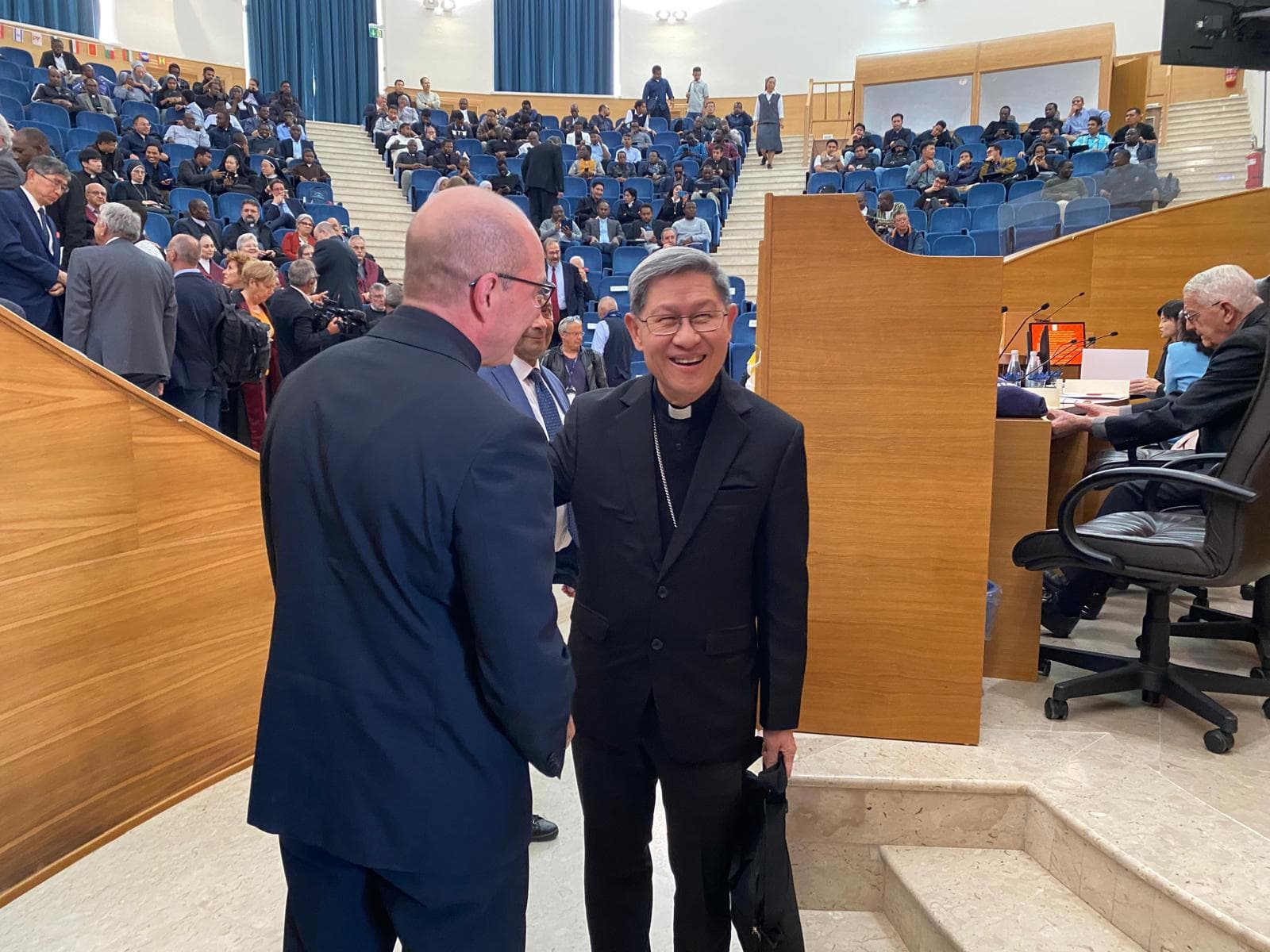
Meanwhile, the October Assembly will see some new things, most notably the number of participants, as well as the place of work; rather than the Synod Hall, delegates will gather in the Paul VI Hall, the large area where the pontiff normally holds general audiences.
In some sessions, the method of discussion tables already adopted in continental assemblies will be used with small groups of bishops, priests and lay people reflecting together. Even in the Vatican.