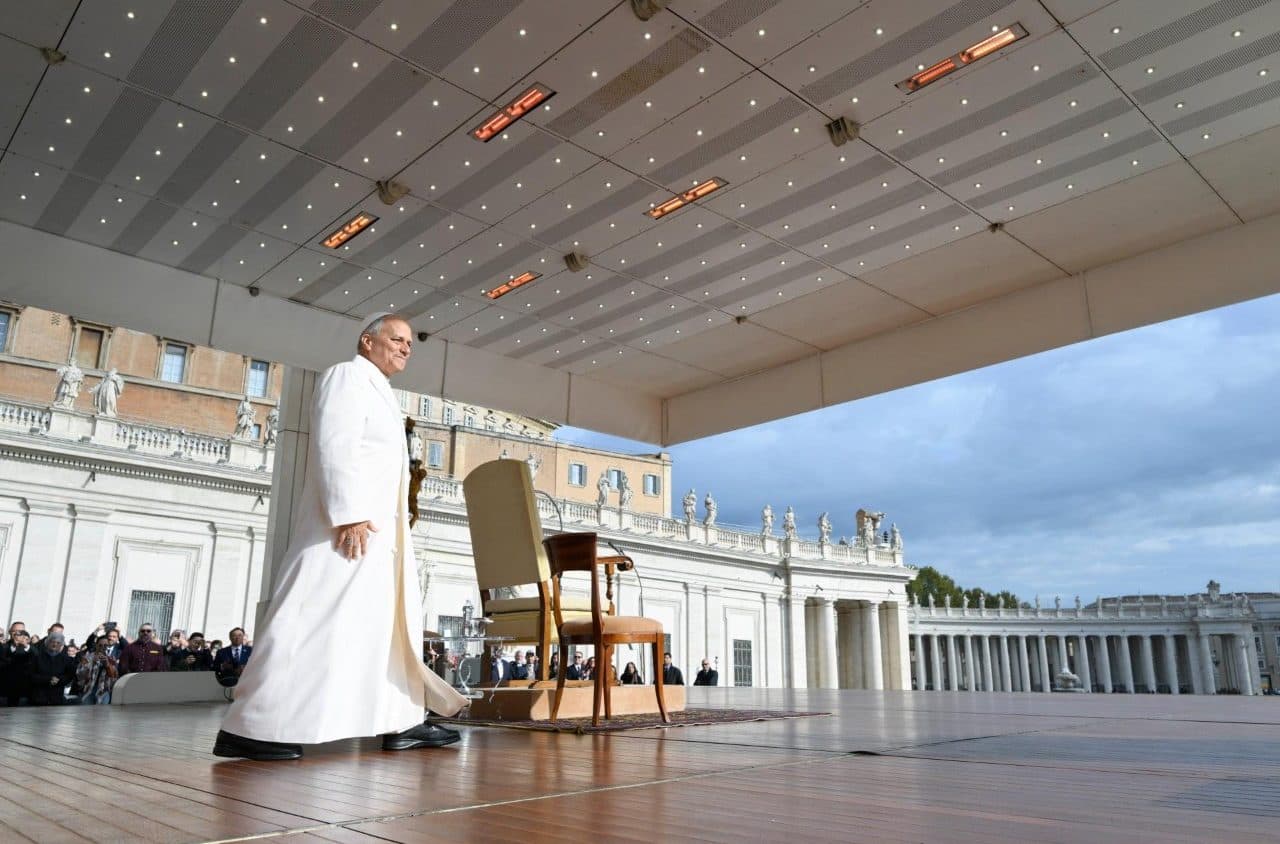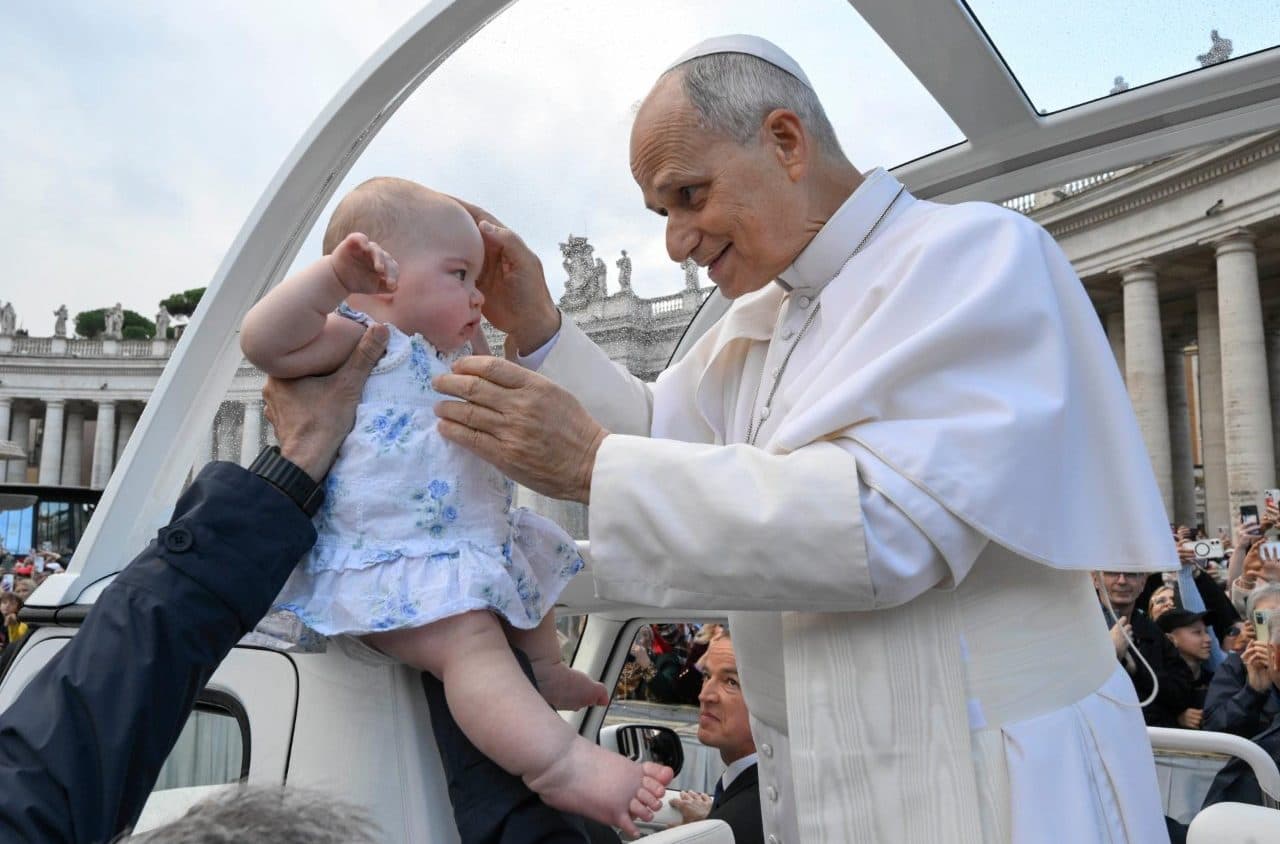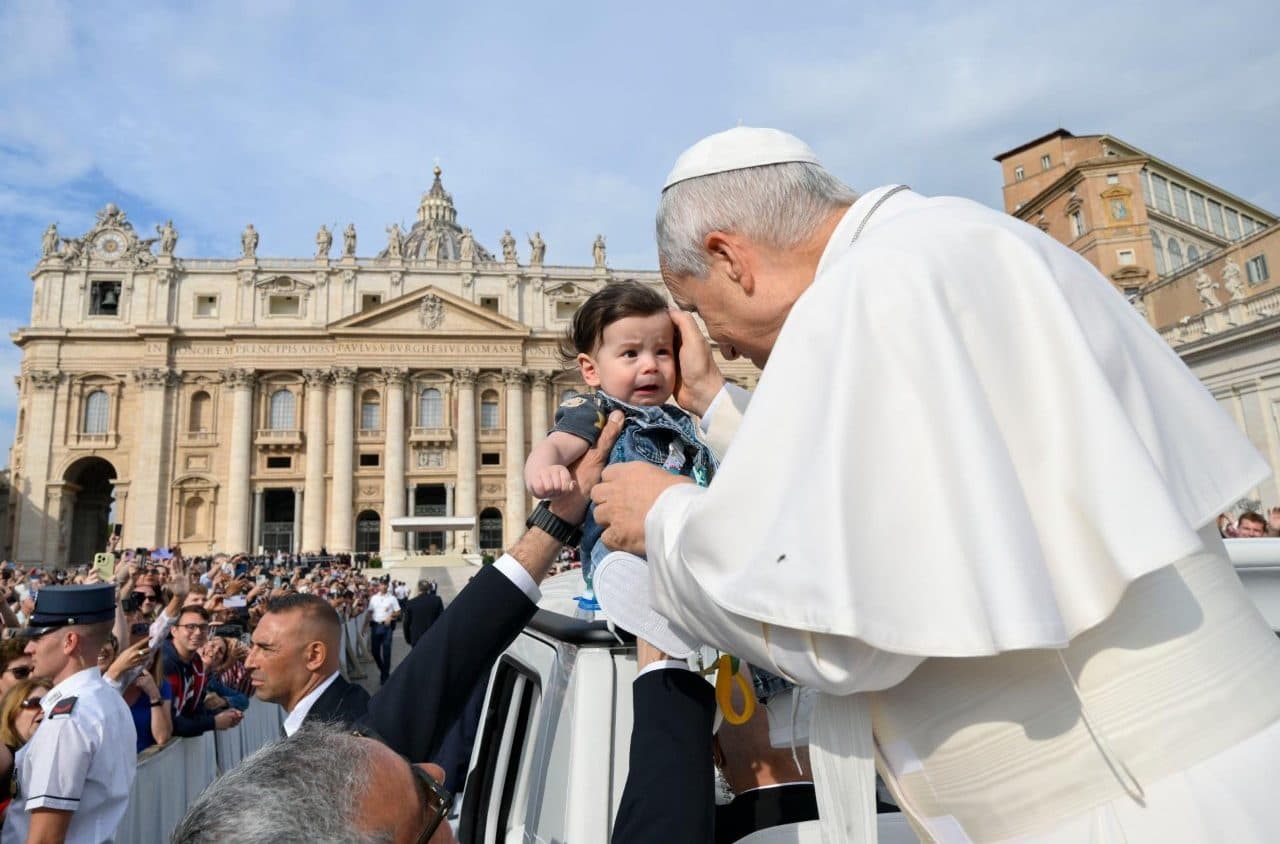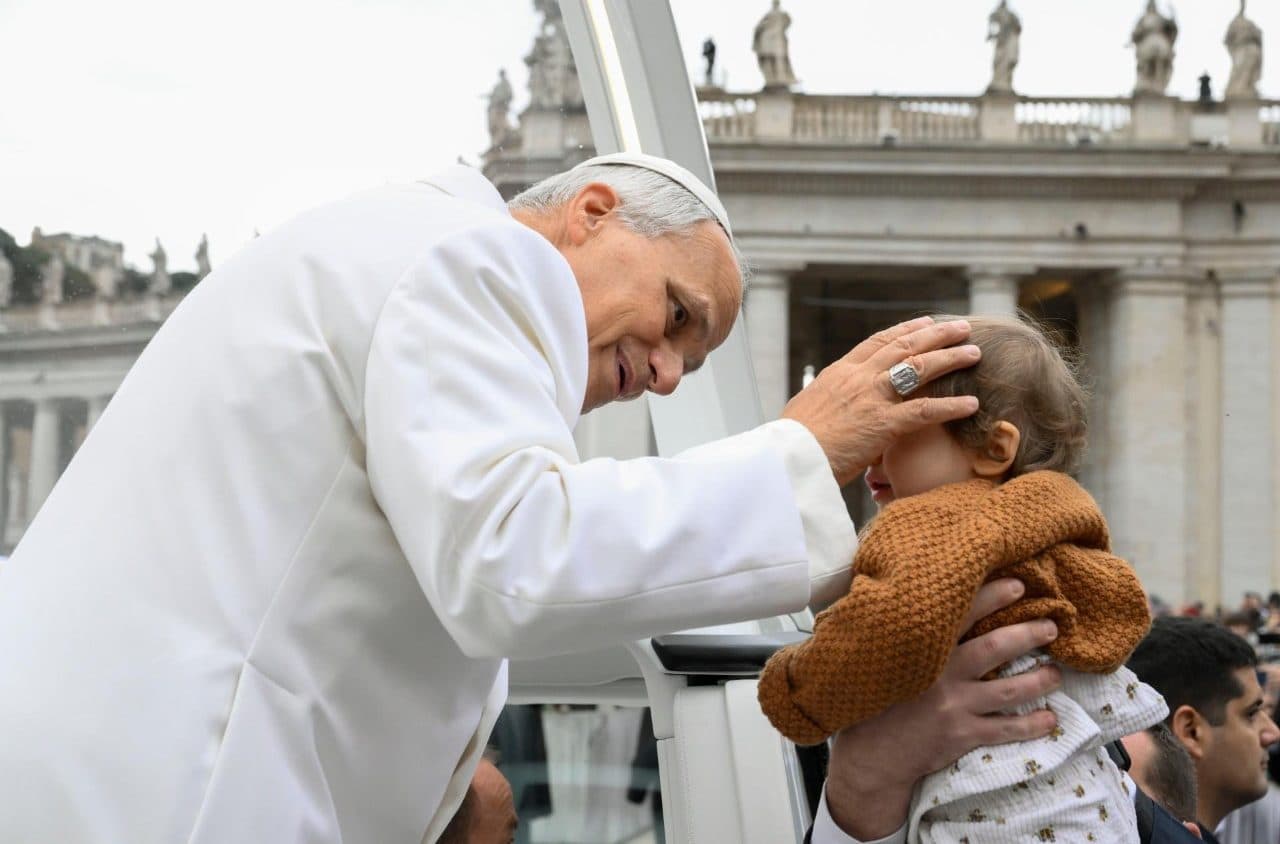
Vatican City (AsiaNews) – Pope Leo XIV spoke this morning, at the end of the Wednesday general audience in St Peter’s Square, about COP31, the 31st Conference of the Parties to the UN Framework Convention on Climate Change.
“Let us never forget the human face of the climate crisis,” he said. This “affects the lives of millions of people, impacts entire communities and jeopardizes the prospects of future generations”.
In light of the outcome, “it is a cause for concern that COP31 ended without the adoption by the international community of clear commitments to tackle the crisis seriously and responsibly.”
COP31, held in Antalya, Turkey, ended on 22 November without an agreement.
“This situation calls for a renewed sense of shared responsibility, new forms of solidarity among nations and fundamental changes in behaviour, socio-economic systems and the governance of our societies,” said Leo, who urged the international community and people of good will to promote “a culture of care for Creation that places at its centre the dignity bestowed by God upon every human being, the common good and solidarity with the poorest and with future generations.”
A new liturgical year to "sharpen our gaze of faith"
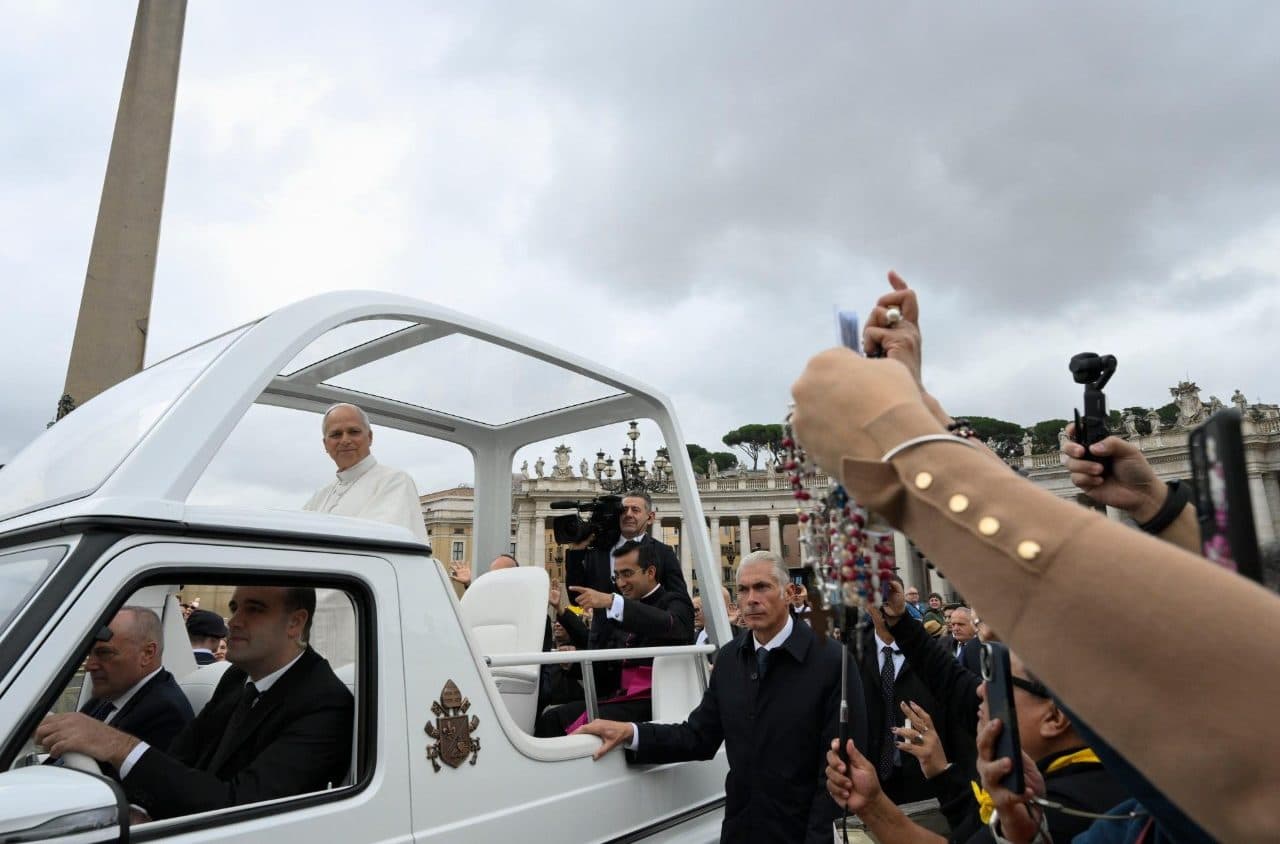
At the end of the general audience, before some 15,000 people in a square getting ready for Christmas, under an overcast sky, Leo XIV addressed the sick, young people, and newlyweds.
“In a few days, the season of Advent begins. May the new liturgical year renew in each of us an inner desire to sharpen our gaze of faith, which allows us to discover the mysterious, yet real, comings of the Lord in our daily lives,” the pontiff said in his greetings in Italian.
Catechesis on harmony among peoples
The catechesis shared at the beginning is part of a series dedicated to the pastoral constitution Gaudium et Spes.
Today, Leo focused his address on Chapter V, which deals with harmony among peoples and peace noting that “teaching it is not at all naïve”, that the document asserts that “peace is never attained once and for all, but must be built up ceaselessly”.
For this reason, “there is no room for resignation, as if violence were inevitable.” Instead, “the nature of modern wars leads the Council Fathers to update the Church’s teaching on the matter: such atrocities, they say, ‘compel us to undertake an evaluation of war with an entirely new attitude’.”
“This is indeed an ‘obligation’, sustained by the Holy Spirit, so that Christ’s disciples may observe history today in the light of the Gospel,” he added.
The arms race is among humanity's greatest scourges
Leo XIV went on to highlight this tragic reality. “Conflicts, which today appear increasingly inhuman and devastating, fuel hatred and injustice amongst peoples, whilst also disfiguring creation and its beauty.” Indeed, no one can “ignore” the “suffering” caused by them.
Hence, he reiterated the appeal made by the Council Fathers: “the arms race is an utterly treacherous trap for humanity, and one which ensnares the poor to an intolerable degree. It is much to be feared that if this race persists, it will eventually spawn all the lethal ruin whose path it is now making ready”.
The Council goes further, calling to work “together to build a global political and economic order founded on cooperation, dialogue and the sharing of nations’ cultural and material resources, at the service of integral human development.”
Against the background, “Christians are called to be the salt of the earth and the light of the world,” and “must not be afraid of working on the front line to build peace and defend human dignity.”
Audience with the International Theological Commission
This morning, prior to the general audience, Pope Leo XIV met with the members of the International Theological Commission at the Apostolic Palace in the Vatican, on the occasion of their plenary assembly, which is taking place in Rome from 23 to 27 November.
Paul VI established the commission in 1969 as an advisory body to the Holy See to examine significant doctrinal and theological issues.
In his address, the pope said that he was “grateful” for the “contribution it offers to the mission of the Church”.
His speech touched two themes: “the subject of your reflection takes on crucial significance: Apostolic Tradition and the cultural forms of the transmission of the faith.”
The first “indicates the very heart of the Church’s identity and mission.”
Leo explained that this is an “indispensable good for the Church”, that of “proclaiming and bearing witness to the living presence of the Lord Jesus at all times and in all places, passing it on with fidelity and integrity from generation to generation”.
Since the tradition is always “living”, it is a reality that “is subject to a coherent and constant deepening.”
“This dynamism commits the Church to recognizing and living out her mission as the transmission of the gift of grace that she has received from the Father, and from which she is continually reborn and takes shape,” Leo said.
Speaking about the second theme, cultural forms of transmitting the faith, he noted that, “The inculturation of the faith constitutes, in fact, an indispensable dimension of its coherent witness, from generation to generation.”
“The present historical phase,” he added, “calls for a new era of inculturation of the faith. [. . .] It is therefore more valuable than ever to reflect on the fundamental theological principles and practical guidelines needed to interpret, evaluate and, above all, promote the forms of proclamation, catechesis, preaching, teaching and celebration of the faith”.
The Private Diary of Pope Francis
Among those present at the meeting was Cardinal Victor Manuel Fernández, prefect of the Dicastery for the Doctrine of the Faith.
Cardinal Fernández oversaw the publication of The Private Diary of Pope Francis, which was released yesterday in five languages, published in English by Penguin Random House, and distributed in 94 countries.
The text compiles personal notes written by Jorge Mario Bergoglio between 1992 and 2024, which were kept in a planner bound in a black cover.