Vatican City (AsiaNews) – The Vatican today released a new document titled A Journey of Hope, looking at the key stages of interreligious dialogue undertaken since Nostra Aetate, assessing its achievements and challenges, as well as future prospects.
The note summarises reflections marking the 60th anniversary of the promulgation of the historic conciliar declaration, a milestone in relations with the Jewish world and in the dialogue between the Catholic Church and believers of all other religions.
It is a lengthy and substantial paper, jointly drafted by the Dicastery for the Doctrine of the Faith, the Dicastery for Promoting Christian Unity, and the Dicastery for Interreligious Dialogue, and personally approved by Pope Leo XIV during an audience on 22 June.
“Sixty years after its promulgation,” reads the introduction, “Nostra Aetate continues to inspire the Church’s pastoral and theological orientations and to nourish the dialogue that is the very form in which human life unfolds, and which has become all the more indispensable in the societies of our time.
“Such dialogue, however, also constitutes an abiding challenge: How can fidelity to Christian identity be reconciled with a sincere openness to otherness? How can the call to universal fraternity be lived concretely in societies marked by increasing cultural and religious diversity, by war and violence, and by a growing trend toward secularization?”
Christians and Jews: together beyond Middle East conflicts
To address this, the text calls for an extensive re-examination of the origins and significance of the conciliar document, situating its roots in the desire to respond to the tragedy of the Shoah and, in doing so, reaffirm the unique nature of the dialogue between the Church and the Jewish world.
Citing the “rich spiritual heritage shared by Jews and Christians,” the call is made not to view it as “a secondary activity for Christians”, merely aiming at general knowledge or diplomatic relations, but rather, for a Christian, as a way to engage in dialogue with the Jewish world by “becoming fully aware of one’s own original identity.”
This required the condemnation of every form of antisemitism, but also a call to ensure that the conflicts in the Middle East “do not leave a mark” on this dialogue.
“Many channels of communication have been strained and continue to be tested by differing interpretations of the events that have unfolded, interpretations that are often not unanimous even within the respective religious communities,” the note reads.
“Nevertheless, the pillars of dialogue among believers, built over sixty years of common effort, have remained firm. Upon these foundations, it is both possible and necessary to continue building, once again drawing inspiration from the Council Fathers’ recommendations to grow in mutual knowledge and esteem ‘above all through biblical and theological studies and through fraternal dialogue’.”
The fruits and challenges of interreligious dialogue
From the very opening of the Council, however, John XXIII explicitly called for the promotion not only of Christian unity but also of a broader fraternity with believers of other religions, grounded in mutual “esteem and respect”.
This dimension subsequently became a central element of the declaration Nostra Aetate and was further asserted by the papal magisterium over the past 60 years. It is precisely on the fruits and current challenges of interreligious dialogue that the note focuses in its third and fourth parts.
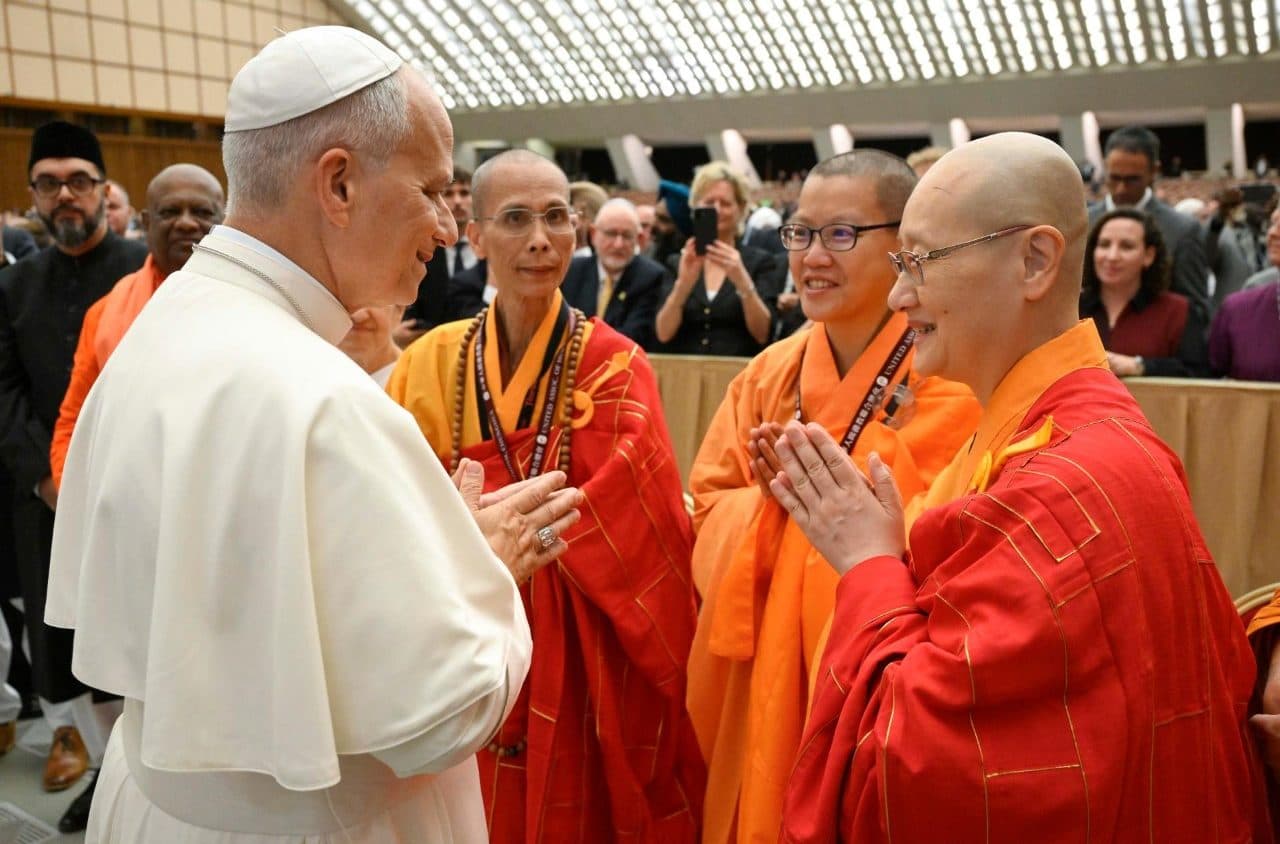
Over the past 60 years, “the Catholic Church has engaged in dialogue and collaboration – in various fields and at different levels – with followers of Hinduism, Buddhism, Jainism, Sikhism, Shintoism, Taoism, Confucianism, and Zoroastrianism, as well as with traditional religions, particularly those of Africa.”
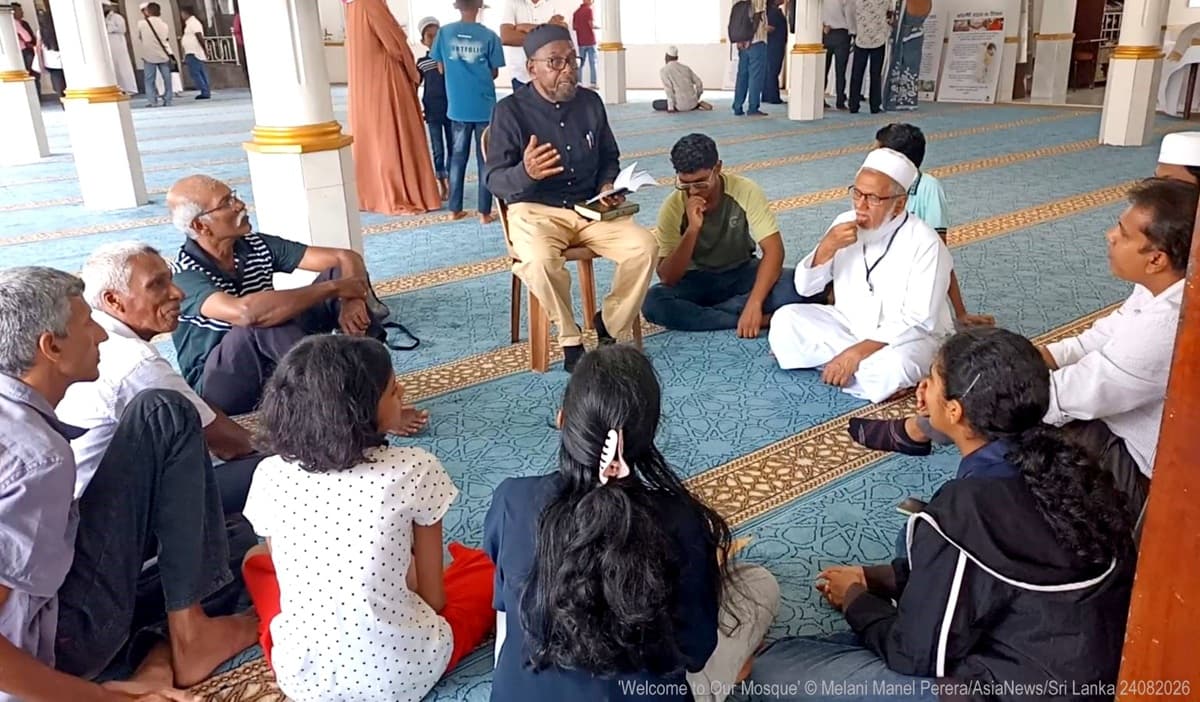
It lists the spheres in which this dialogue takes place today. Alongside dialogue among theologians, the “dialogue of life” has grown, encompassing multi-religious daily life in villages and cities alike, large and small; the “dialogue of action”, involving shared gestures performed together; and the “dialogue of religious experience”, carried forward primarily by monks and nuns.
The paper expresses appreciation for the “growing critical awareness of manifestations of Islamophobia, which fail to distinguish adequately between, on the one hand, cases of fundamentalism and violence and, on the other hand, the peaceful lives of other Muslim believers”.
The note also hopes to foster conversations and forms of collaboration with “members of ‘new religious movements’ and representatives of new religious experiences.”
These fraternal encounters are not to “be understood as ecumenical dialogue or as interreligious dialogue”, but can offer concrete opportunities to work together to promote shared values and “contribute to a more attentive understanding of contemporary spiritual aspirations”.
The three Vatican dicasteries do not shy away from difficulties. “Some circles continue to question its appropriateness, fearing doctrinal relativism or a dilution of religious identity.”
“Outside the boundaries of the Church, misunderstandings are no less significant. In some regions, relations between believers of different religions have historically been marked by conflict, and the memory of past wounds makes mutual trust difficult”.
In fact, “Elsewhere, the increase of fundamentalism, the persistence of prejudice, the political manipulation of religious affiliations, and violence committed in the name of God undermine the very foundations of dialogue.”
A pedagogy of dialogue
In light of all this, the note calls for nurturing “humility, courage, and discernment.” It asks the entire Church to “renew and deepen its pedagogy of dialogue,” which entails not only enhanced training but also the ability to value and share the fruits of concrete initiatives undertaken by local Churches.
“Tensions over identity, the closing off of communities, fundamentalist ideologies, conflicts with a religious dimension, the political manipulation of religion, and the growing indifference in many countries toward all forms of spirituality compel us to renew the ways in which dialogue is pursued in a rapidly changing world.”
“It is not a matter of founding one great world religion in which all beliefs are flattened. Such a possibility must be excluded out of respect for oneself and for others. Rather, it is a matter of building a fraternal society capable of accepting differences.”
This entails no longer fearing or keeping at a distance from other believers, other civilisations, other ways of thinking, but daring to encounter them.
“The one who was once perceived as a threat, an enemy to be feared, respected only from a distance, or even destroyed, can become a dialogue partner, an ally, a friend, even a ‘pilgrim of truth’ with whom one shares a part of the journey.”
“In a world confined within the suffocating limits of immanence, believers belonging to different religions do not wish to give up presenting to the world the truth of transcendence and God’s love for all people.”