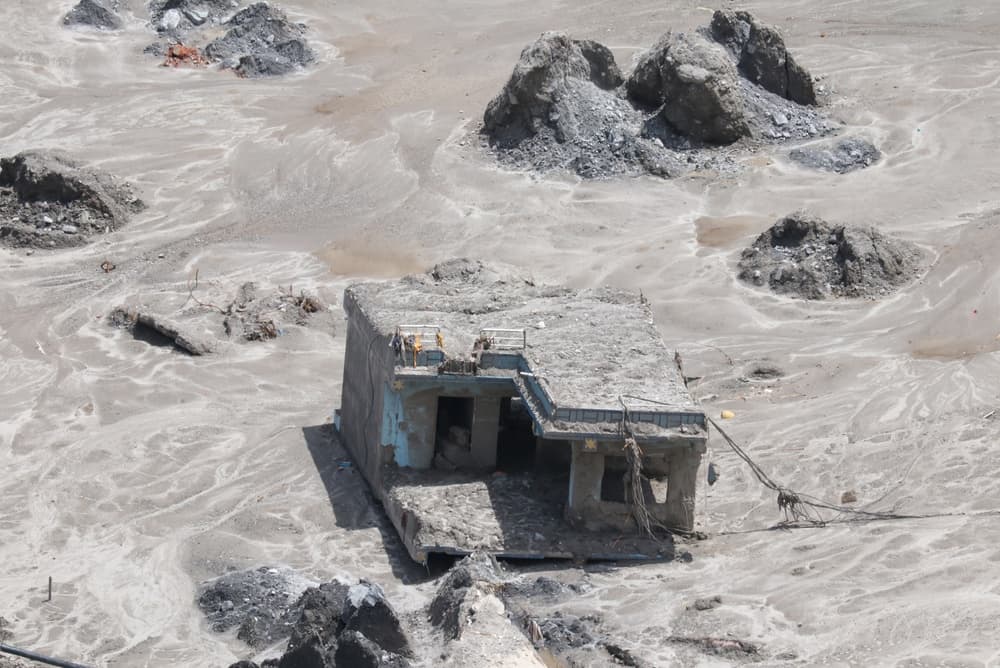
Rome (AsiaNews) – Nearly three weeks after the floods and landslides that struck Nepal, the consequences are taking a heavy toll on the local population, which – in addition to mourning the victims and continuing to search for the missing – must clearly face the challenges posed by the displacement of residents and the task of restoring safety to the area, as well as the various needs of the 84,000 people who have been affected, according to recent figures released by the International Organisation for Migration.
AsiaNews has already reported on the efforts of Catholic organisations, like Caritas Nepal, which, alongside various other organisations, sprang into action immediately. In a predominantly Hindu country, where many of the victims were caught while on a pilgrimage to Mount Kailash, Hindus have also mobilised to bring help.
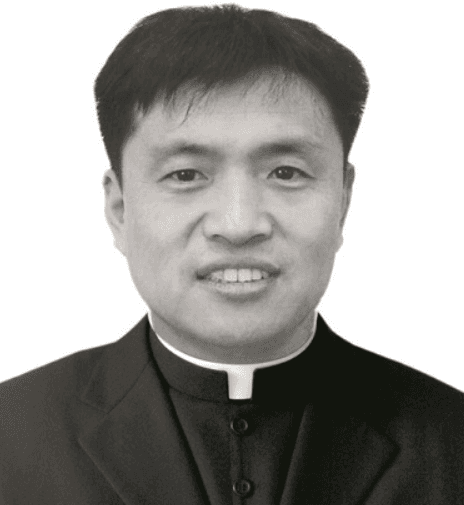
We spoke with Chinmay Pandya, vice president of Dev Sanskriti Vishwavidyalaya (DSVV) University in Haridwar, India, and president of the South Asian Institute of Peace and Reconciliation, which is part of the All World Gayatri Pariwar, a Hindu organisation that today has, as Pandya states, close to 150 million members and more than 5,500 centres worldwide, and which is coordinating a humanitarian aid project in Nepal.
How are you getting organised to support the Nepalese population in the current situation?
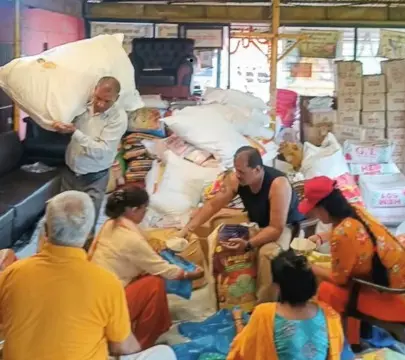
Our immediate priority is to reach people with practical help where it is most urgently needed. Gayatri Pariwar volunteers in India and Nepal are coordinating closely with local teams to identify affected communities, understand their immediate needs and mobilise relief accordingly. This includes food, essential supplies, medical assistance and support for families facing displacement and hardship. We are particularly conscious that humanitarian response must be compassionate, organised and locally grounded. Our volunteers are therefore working alongside the affected communities, respecting their dignity and understanding their specific needs. We see this not simply as relief work, but as an expression of our shared humanity and our deep bonds with the people of Nepal.
What is the main challenge the population is facing now in Nepal?
The immediate challenge is the disruption of normal life – access to food, shelter, healthcare, transportation and other essential services. But beyond these visible needs, there is also fear, uncertainty and emotional distress.
Is this the first time you are intervening in neighbouring communities?
No. Humanitarian service has been an important dimension of Gayatri Pariwar’s work for decades. Whenever communities have faced natural disasters, social emergencies or other humanitarian challenges, our volunteers have come forward to serve according to their capacity. We worked tirelessly during Uttarkahsi, Gopeshwar, Latur, Kutch in India and Nepal earthquakes as well as during the Kedarnath disaster and provided relief and rehabilitation to countless people. Nepal has a particularly special place in our hearts because of our shared civilisational heritage and the close people-to-people relationship between our two countries. We do not look at this as charity from one country to another. We see it as an expression of Vasudhaiva Kutumbakam – the understanding that the world is one family, and that in difficult times, members of that family must stand beside one another.
Could you tell me more about the religious and philosophical root of service and mutual support in your tradition?
In the Indian spiritual tradition, seva, or selfless service, is itself a spiritual discipline. Pujya Gurudev Pt. Shriram Sharma Acharya Ji emphasised that spirituality cannot remain confined to prayer, meditation or personal transformation; it must manifest in the welfare of society. The Bhagavad Gita teaches the ideal of nishkama karma – performing one’s duty without selfish attachment to its fruits. Our tradition also gives us the profound vision of Vasudhaiva Kutumbakam, the world as one family. When we recognise the same divine consciousness in every human being, compassion ceases to be an occasional response and becomes a natural way of living. Service is therefore both a social responsibility and a path of inner growth.
What is the main goal of the All World Gayatri Pariwar fraternity, and how is this humanitarian support responding to that?
The central vision of All World Gayatri Pariwar, founded by Pujya Gurudev Pt. Shriram Sharma Acharya Ji, is the transformation of individuals and society through the awakening of higher human values. Gurudev placed great emphasis on the transformation of thought, character and conduct, believing that a better world can be created only through better human beings. Humanitarian service is a natural expression of this philosophy. When someone is suffering, our spiritual understanding calls us to respond. Relief work therefore becomes a bridge between inner awakening and social responsibility. In this sense, serving people in Nepal is not an activity separate from our spiritual mission – it is the mission expressed through action.
As Vice President of Dev Sanskriti Vishwavidyalaya University, which affirms a consciousness-based education system, how are your students introduced to that system? Are some of your students part of the teams serving now in Nepal?
Dev Sanskriti Vishwavidyalaya was established from the educational vision of Pujya Gurudev Pt. Shriram Sharma Acharya Ji, who believed that education must develop not only intellect, but also character, consciousness and a sense of responsibility towards humanity. This is the foundation of what we describe as consciousness-based, value-based education. At DSVV, students are encouraged to combine academic learning with self-discipline, reflection, spiritual practice, social engagement and service. We want them to become not merely successful professionals, but compassionate and responsible human beings. Our students participate in social internships, community outreach and humanitarian initiatives, including service activities connected with Nepal. When a student serves a person in distress, they learn a lesson that no classroom can fully teach: knowledge becomes meaningful when it is transformed into compassion, and compassion finds its fulfilment in service.