Malé (AsiaNews) – On 2 November, the National Council of the Maldivian Democratic Party (MDP), the Maldives’ main opposition party, approved a resolution calling on the government to hold a public referendum on the Maldives Waterfront and Marina project in Rasmalé.
The party has also issued an ultimatum: if the government does not set a date for the referendum by tomorrow, 15 November 2026, the opposition will organise mass protests and take to the streets.
However, the President of the Maldives, Mohamed Muizzu, has already rejected the request, ruling out the possibility of holding a public referendum on the project.
The Maldives Waterfront and Marina, launched in September 2026, is a project developed by Eagle Hills, a property development and investment company based in Abu Dhabi, in the United Arab Emirates.
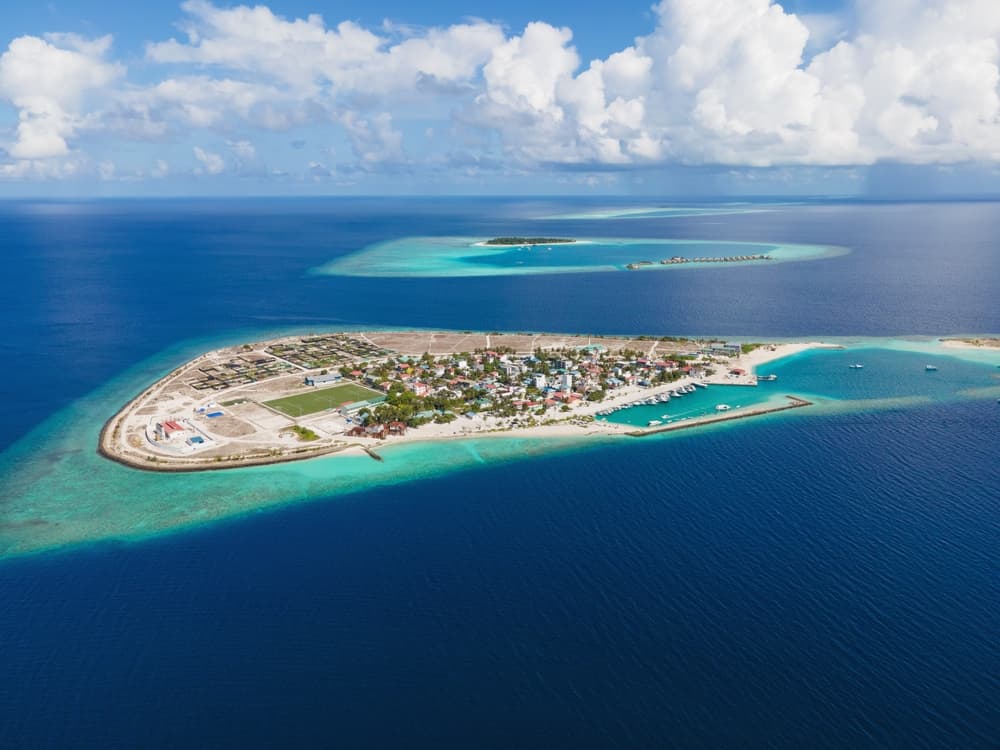
The agreement between the company and the Maldivian government provides for the construction of a vast infrastructure complex on a new artificial island, created by reclaiming land from the Fushi Dhiggaru lagoon, a few kilometres from the capital, Malé.
With a projected investment of 20 billion dollars, the project includes international hotels and resorts, private apartments, a marina for yachts, seafront promenades, shops, restaurants and wellness centres, as well as educational and healthcare facilities.
Eagle Hills’ aim is to replicate Dubai’s development model in the archipelago, transforming Rasmalé into the Maldives’ ‘second economic engine’. According to forecasts, the project will attract over $30 billion in investment, create 60,000 jobs, and generate $11 billion in revenue for the state coffers.
The properties will be marketed prior to construction, and lease agreements of up to 99 years will be available. This last aspect has drawn considerable criticism from the opposition, which is concerned about the long-term granting of land to foreign investors.
Former Foreign Minister and MDP member Abdulla Shahid, who has expressed an interest in standing in the party’s primaries ahead of the 2028 presidential elections, has described the Rasmalé project as “a fraud”.
Shahid accused the government of misleading the public regarding the intended use of the reclaimed land in the Fushi Dhiggaru lagoon, now renamed Rasmalé.
According to the former minister, the reclamation project, which cost $800 million, was initially carried out to provide new homes for Maldivian citizens. The agreement with Eagle Hills, however, appears to involve the transfer of this very land to foreign investors.
The MDP’s resolution, tabled by Mahfooz Saeed, a human rights lawyer and party member, contains nine demands, including the publication of the commercial terms of the Rasmalé agreement (which, according to the opposition, remain opaque), the holding of a referendum on awarding the project to Eagle Hills, and the suspension of the transfer of land rights pending the outcome of the referendum.
The MDP is also calling for respect for the will of the people, greater transparency and a strengthening of parliamentary oversight, announcing awareness-raising campaigns, possible direct action and collaboration with other political forces and civil society organisations should the government fail to meet these demands.
Despite the opposition of Mohamed Nasheed, former President of the Maldives and former leader of the MDP, who has declared himself in favour of the project, the party’s National Council approved the resolution by an overwhelming majority, with 57 votes in favour out of 58 members present.
During a press conference on 9 November, Maldivian President Mohamed Muizzu rejected the MDP’s criticism and ultimatum, stating that the government has no intention of holding a referendum on the Rasmalé project. He confirmed, however, that development of the project will continue as planned and will be given the green light once Parliament approves the draft bill on the property sector, which is currently under discussion.