Vatican City (AsiaNews) – This was “a great gift for me and for the People of God,” said Pope Leo XIV about the apostolic journey to France he undertook from 25 to 28 September in Paris, Lourdes, and Metz.
At today’s general audience in St Peter’s Square, the pontiff spoke about it, expressing “gratitude” to all those who wished to meet the Shepherd of the Church in the heart of Europe “as an apostle of Christ and a messenger of peace.”
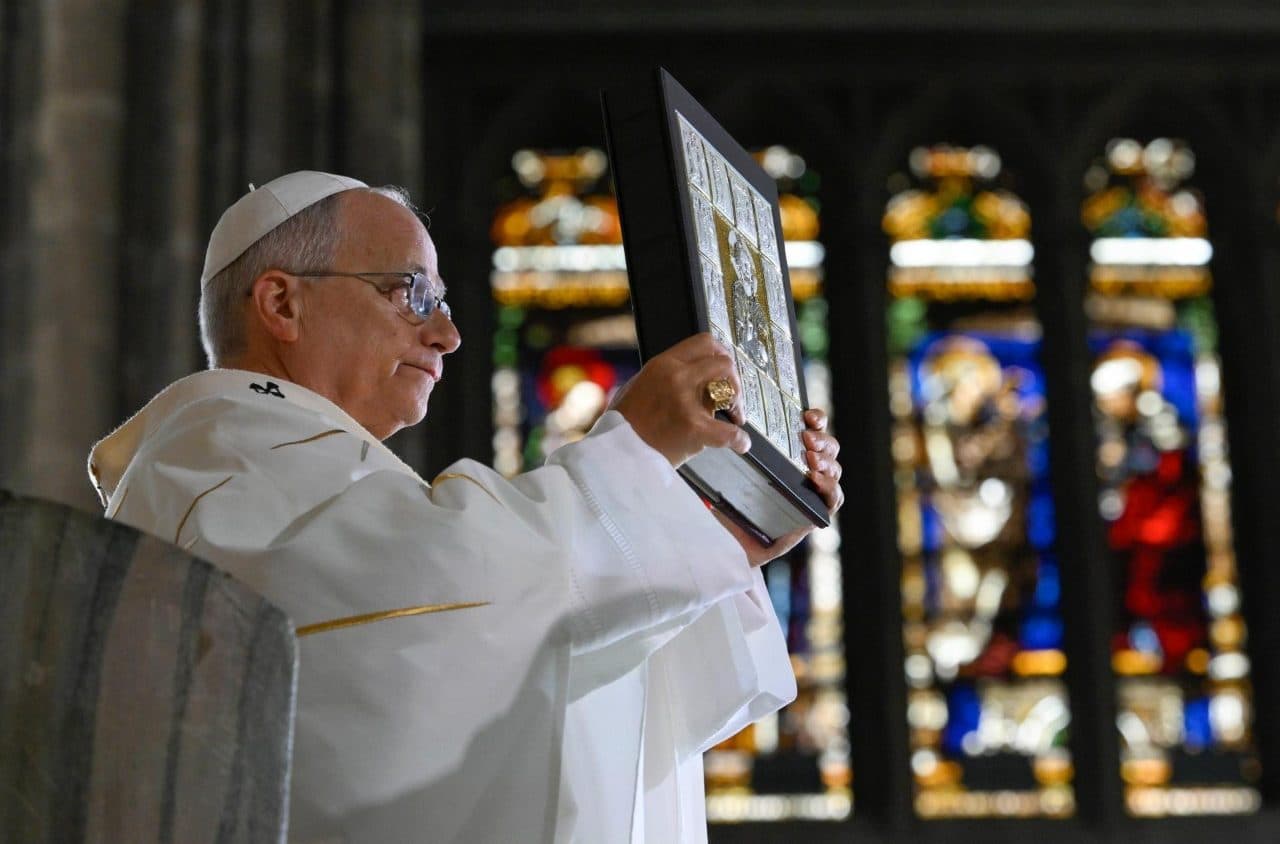
The Gothic cathedral of Notre-Dame in Paris – rebuilt following the 2019 fire thanks to the “Church, the State, public institutions, and civil society” groups working together – was the “great symbol” the pontiff chose to share his “thoughts” and “impressions” about the visit.
“It is precisely Notre-Dame, with the tragedy it has endured, that can symbolically shed light on this entire Apostolic Journey, offering a perspective that I would summarize in one word: rebirth,” Leo said.
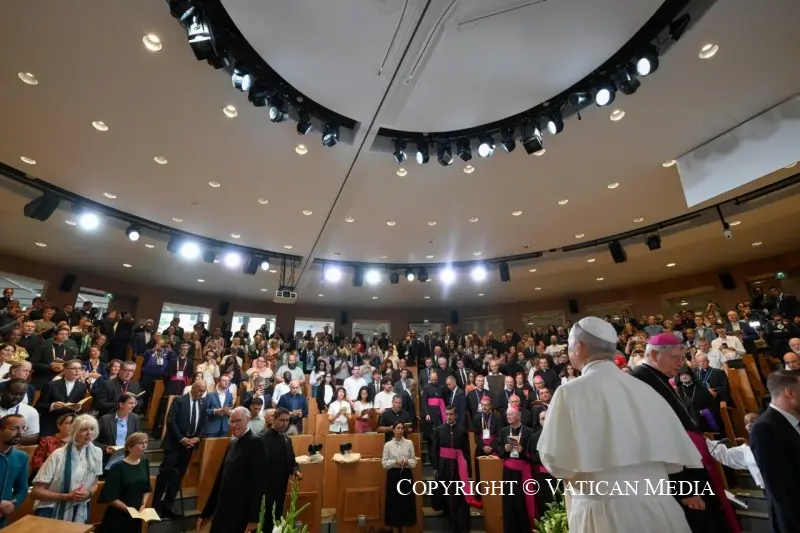
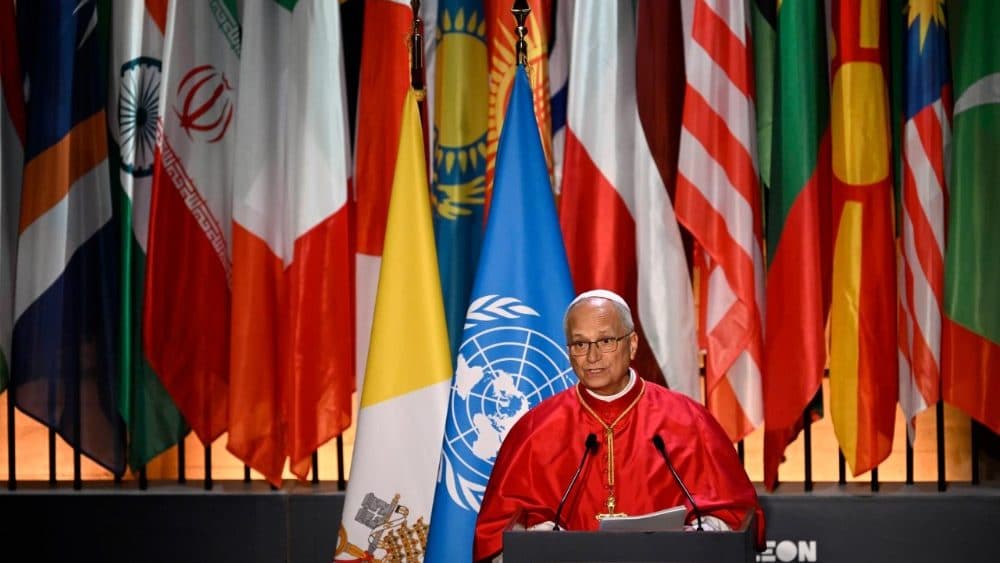
On the first day, Leo XIV celebrated Vespers in the rebuilt church. The same “synergy for the common good”, which had restored the cathedral to a state “more splendid than ever”, lay at the heart of the message he delivered to French authorities at UNESCO headquarters in Paris, where he emphasised “the fundamental criterion upon which such collaboration must be based: the dignity of the human person.”
A Church not made of stone and concrete
“But above all, Notre-Dame is the image of the Church made up of living stones, of the holy people of God,” he explained, drawing a parallel between the early afternoon Vespers and the vigil attended by 80,000 young people at the Stade de France in Paris, a “great sign of hope.”
The settings were different, yet united by the conviction that the Church “is not made of stone or concrete, but of people who love Jesus Christ because they have been loved by Him.”
Priests, deacons, consecrated persons, and pastoral workers were present at Vespers, while young people at the stadium were “yearning for truth and love”, the “saints of France,” as the pope called them.
Leo mentioned his visit to Maison Bakhita, “one of the many places, fruits of the Gospel, where people commit themselves every day to serving the dignity of the human person with love.”
Another sign of hope lies “in the smallness that God favours.” Indeed, Pope Leo XIV noted the “beautiful ‘surprise’ from God” regarding the “remarkable” increase in baptisms among young people and adults in France in recent years.
The “climax” in Paris was the Mass in the Place de la Concorde, which drew 800,000 people, according to the French authorities, with people from the “Avenue des Champs Élysées up to the Arc de Triomphe and beyond,” the pope said.
“[E]veryone was able to receive the Eucharist, which was distributed everywhere. This is the true reconstruction, the restoration of the Church that only God can bring about”.
Every human life deserves care
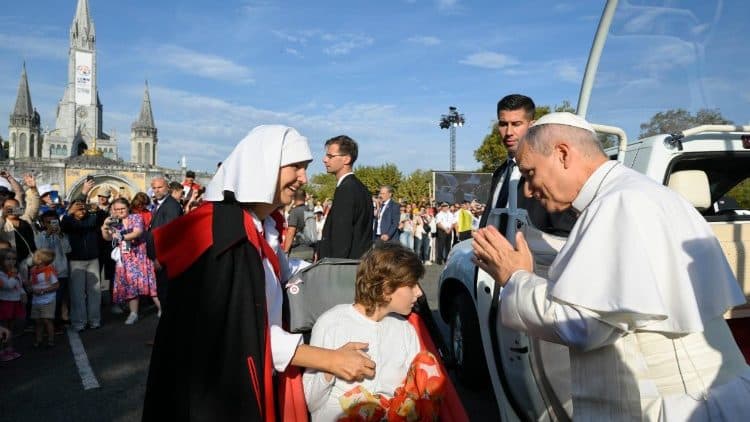
After the French capital, Leo XIV travelled to Lourdes, a “natural and proper” step “to venerate the Mother of the Church, Mary, she who, in the hour of passion and death, keeps alight the lamp of faith and hope.”
The message the Pope reiterated at the renowned Marian Shrine of the “civilization of Love” is this: “[E]very human life, in whatever condition, even in the most extreme frailty, retains its inviolable dignity and deserves to be cared for, accompanied and relieved of suffering with human compassion and with the aid of the means offered by science.”
Today, in the address before thousands of the faithful, he spoke about his meeting in Lourdes with seven victims of clerical abuse. “I asked them to help me express to other victims too my own wish, and that of the whole Church, to listen to them and walk alongside them as they seek healing, acknowledging the pain inflicted upon their lives and working to prevent abuse,” he said.
Lastly, the pope went to Metz, a city “in a region of France and Europe ravaged by the Second World War”, where “Contemporary Europe was indeed born as a project for peace in the wake of the destruction wrought by war,” he said.
“We might say that what happened to Notre-Dame in Paris with the fire was what had happened to Europe during the Second World War. And Europe was reborn, founded on those principles of democracy, solidarity and fraternity amongst peoples, which owe much to its Christian roots.”
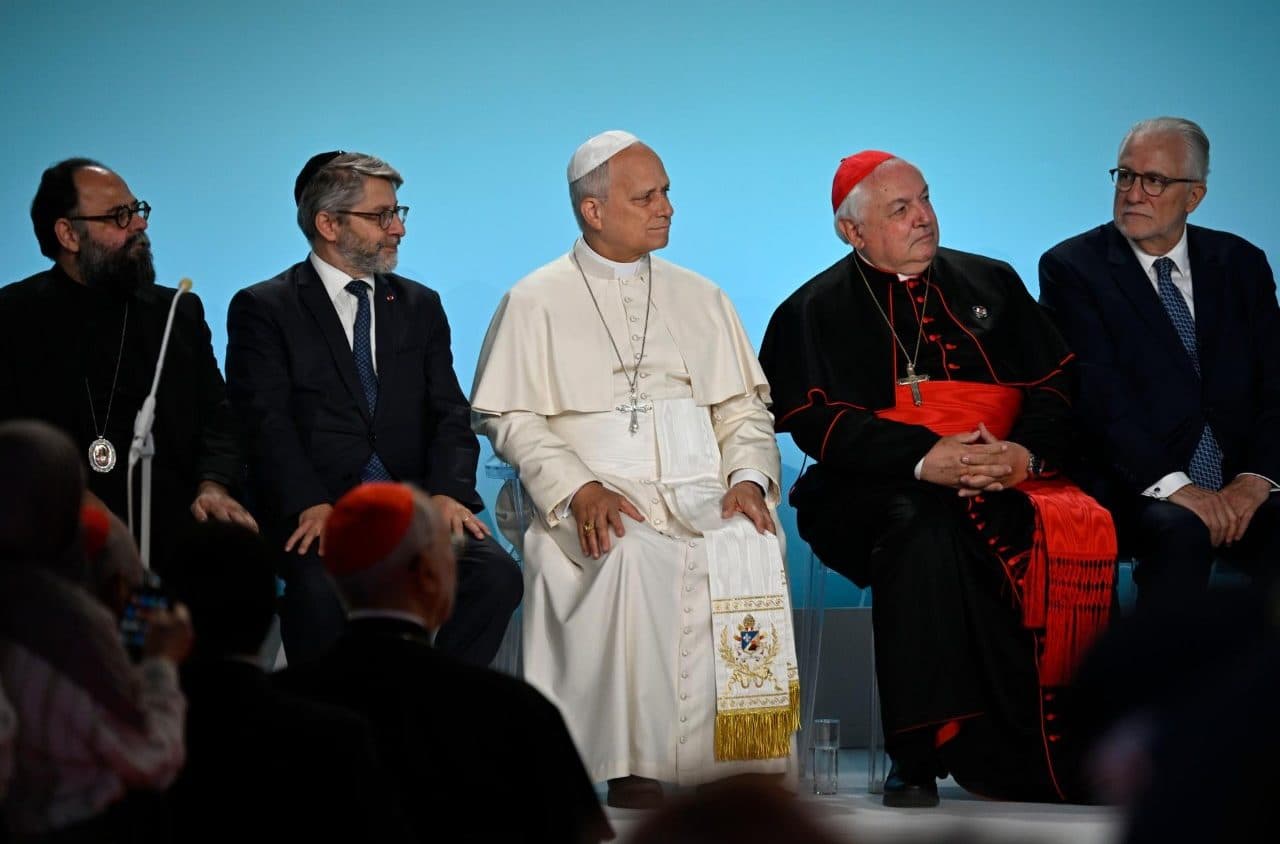
Leo also mentioned the Metz Appeal for dialogue and peace, signed by representatives of various religions.
Final appeals
As he ended his address, Leo XIV issued an appeal, expressing “deep concern” over renewed hostilities in Ethiopia’s Tigray region and neighbouring Afar and Amhara, urging the international community to ensure the delivery of humanitarian aid.
“I extend my heartfelt plea to all parties to choose the path of dialogue. Armed conflict never solves problems but only worsens them, leaving in its wake a trail of death, destruction, and resentment. Only honest engagement can lay the foundations for lasting peace,” he said,
The pontiff also spoke about the beatification of three martyred priests, which took place last Sunday in Bologna: “Ubaldo Marchioni (a diocesan priest), Elia Comini (a Salesian), and Martino Capelli (a Dehonian), killed in 1944 during a tragic phase of the Second World War because of the Nazi troops' contempt for their ministry to their parishioners.”
“The supreme sacrifice made by these ministers of God shows Christians today the courage to draw close to their brothers and sisters, especially in times of trial,” he said.