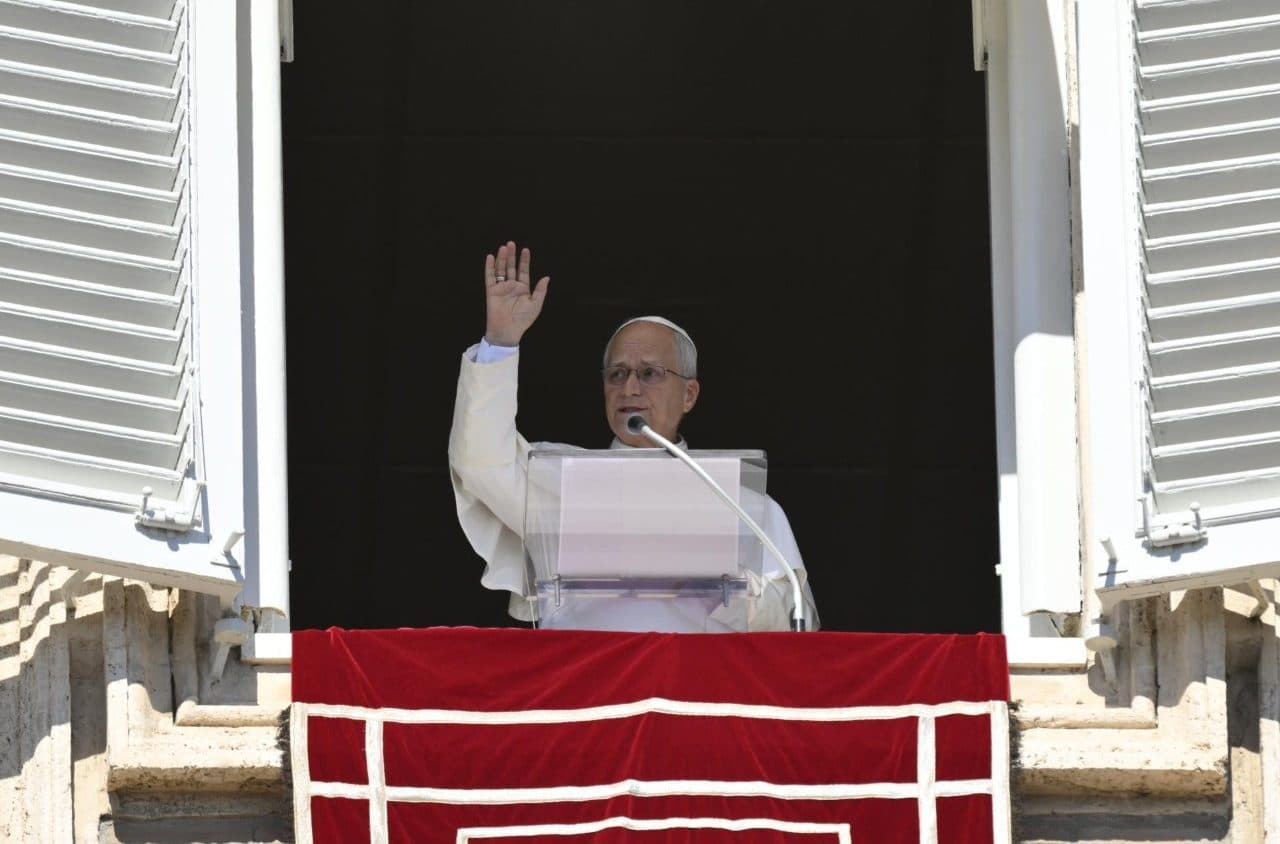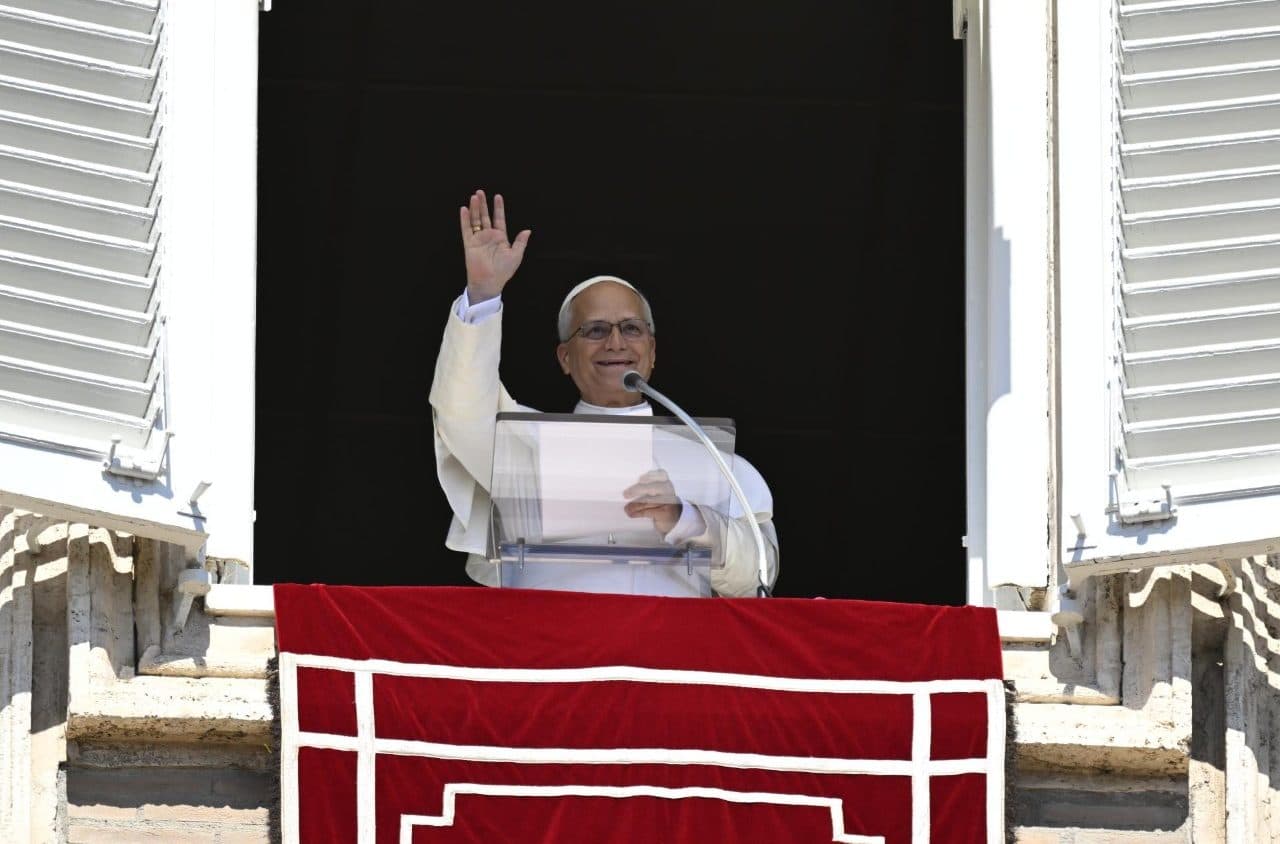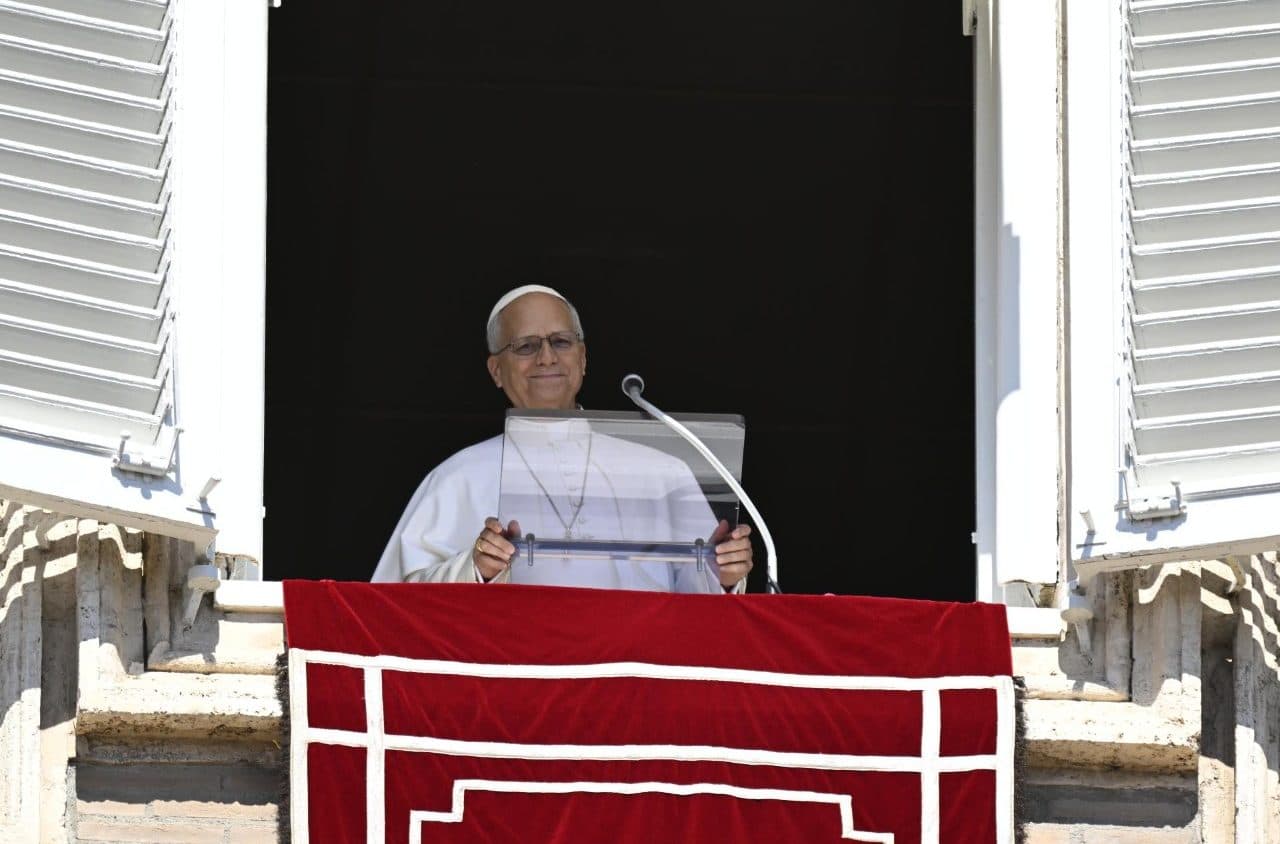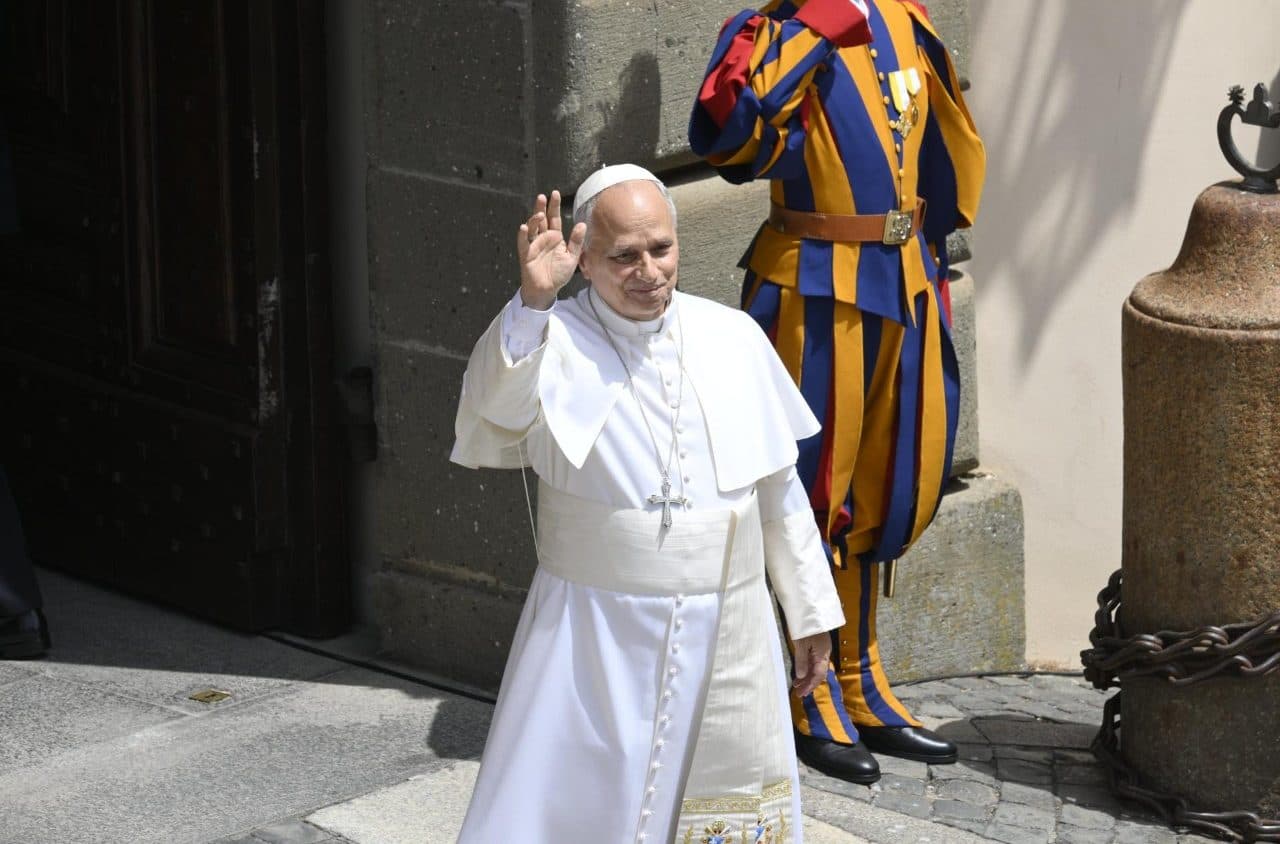
Castel Gandolfo (AsiaNews) – This morning, Leo XIV recited the Angelus from the entrance of the Apostolic Palace of Castel Gandolfo, where he is spending "a few days of rest".
The pope greeted the residents of the town. Located not far from Rome, it has welcomed pontiffs for centuries, as well as pilgrims "from every part of the world!”
Following the Marian prayer, Leo turned his attention to what is “unfolding in various countries torn apart by war and violence”, full of “concern” for the desperate situations that plague humanity.
The pontiff urged the faithful “not [to] forget those who are suffering and dying because of these conflicts,” calling for “our constant prayers to the generous efforts for peace.”
Before the Angelus, the pope spoke about "three short parables" and associated images, from today's Gospel (Mt 13:24-43), i.e. “the good wheat and the weeds, the mustard seed and the yeast in the dough”.
Leo XIV explained that with this Jesus refers to "the coming of the Kingdom of God", as much as “its action in human lives”.
He warns against thinking of a God as a “powerful figure” who uses "force" to dominate. “Instead, God favors smallness, a sign of his discreet love, by which he leaves us free to accept or reject him.”
The pontiff spoke of the temptation of men and women to wait for a "spectacular" sign from God to immediately uproot “the weeds of the evil" adapting “our way of being Christians and [our] way of being the Church" to "this image”.
Instead, “the Kingdom of God” requires “us to train our vision so we can discern the good that sprouts despite the darkness of evil,” while “avoiding rash judgments. It comes like the smallest of seeds and thus calls for patience in accompanying these processes”.
For the pope, this is “God’s way”, which individuals and the Church should follow “amidst the reality that surrounds us.”
Ultimately, “We are called to adopt a Gospel-centered approach, without hastily opposing others through arrogant judgments, without imposing ourselves through power and force, and without losing trust in God’s work.”
In 2010, then Cardinal Ratzinger noted that, this “is a matter of submitting ourselves to the logic of the seed – which is not that of success and greatness, but that of making ourselves small and serving others.”