Yerevan (AsiaNews) – Why is coffee drunk in Armenia, wine in Georgia and tea in Azerbaijan? The South Caucasus is a region where three neighbouring countries share the mountains but have completely different characters, as illustrated in a report by Vestnik Kavkaza.
The national character of Armenia, Georgia and Azerbaijan is best reflected in their staple drinks: a cup of strong coffee, a glass of amber wine and armuda with aromatic tea are not merely culinary preferences, but a cultural code embedded in their geography and history.
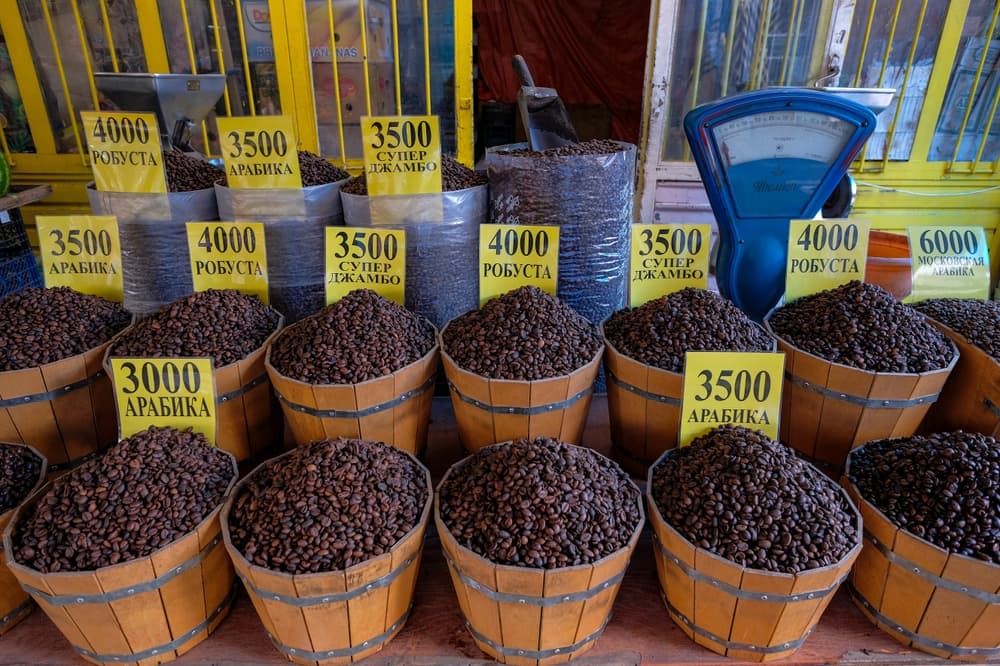
In Armenia, the day does not begin until the rich aroma of surč – as coffee is known here – wafts through every home. It is consumed in vast quantities, at any time of day and for any occasion. Armenia’s mountainous landscape is not suited to the cultivation of coffee trees, but the dry climate and crystal-clear mountain water provide the ideal basis for brewing imported beans.
The mountain air calls for rich, hot drinks that invigorate from the very morning. Armenians first encountered coffee many centuries ago, thanks to trade links with the Middle East; a veritable coffee culture flourished in Armenia after the Second World War, at the end of which Armenian refugees in Syria, Lebanon and Egypt began returning to their homeland in droves, bringing with them the Middle Eastern tradition of drinking strong coffee brewed on hot sand and reading the coffee grounds.
Traditionally, in Armenia, coffee is prepared in a čezve over a low heat or on hot sand: the drink is thick, with a very aromatic foam. Offering a guest a cup of coffee is a sign of hospitality; business deals are struck over a cup of coffee, disputes are settled, gossip is discussed and, of course, the patterns left on the bottom of an upturned cup are admired. For Armenians, coffee is synonymous with communication.
And, after all, it is impossible to imagine Georgia without its vineyards: here, wine is more than just an alcoholic drink; it is the foundation of national identity and religion, and the heart of local culture. Nature has created ideal conditions for viticulture in Georgia: the temperate climate, the protection from cold winds offered by the Caucasus Mountains, the abundance of sunshine and the mineral-rich soils of the Alazani valleys and other areas allow for the cultivation of unique indigenous grape varieties such as Saperavi, Rkatsiteli and Mtsvane.
Historically, Georgia is officially recognised as one of the world’s oldest cradles of viticulture: archaeologists have unearthed clay pots here containing the remains of grape seeds dating back over 8,000 years. The country’s greatest source of pride is its method of ageing wine in enormous terracotta amphorae called qvevri, which are buried underground – a method recognised as a UNESCO Masterpiece of the Intangible Cultural Heritage. Even Christianity arrived in Georgia in the 4th century, bringing with it a vine cross which Saint Nino tied with her own hair. T
he Georgian tradition of the banquet is a sacred ritual presided over by a master of ceremonies, and wine is not drunk to get drunk, but to bring people together. Each glass is accompanied by a heartfelt and poetic toast to God, the homeland, one’s parents and the world, and in the villages, the tradition is still alive: qvevri wine is drunk from special horns (kanzi), which must be emptied completely as a sign of respect for the guest.
If, on the other hand, you visit Azerbaijan, the first thing you will be offered in any home, restaurant or bar is a cup of hot, clear tea, the colour of a ripe pomegranate. Azerbaijan thrives on its own tea cultivation: the Lankaran Plain, in the south of the country, nestled between the Caspian Sea and the Talysh Mountains, enjoys a subtropical climate.
It is here that the delicate and aromatic black tea is harvested. The hot and windy climate of the rest of the country lends itself to long gatherings outdoors, where hot tea offers the perfect respite from the summer heat and a cosy warmth in winter. Historically, tea culture reached Azerbaijan via the Silk Road from China, and was subsequently reinforced by close ties with Persia.
By the 19th century, the tea room had become the main public space in Azerbaijani towns and villages; tea is prepared in large porcelain teapots and drunk from armuda, small pear-shaped glass cups in which the drink cools more quickly at the top (the wider part), whilst the bottom (the narrower part) remains warm.
Tea is always served with icing sugar, lemon and jam (made from white cherries, figs or walnuts). In Azerbaijan, the tea house is an exclusively male domain, where men play cards, discuss the latest news and relax. Tea also plays a key role in arranged marriages: if the bride’s parents offer sweet tea to the matchmakers, it means they consent to the marriage; if, however, there is no sugar, the matchmakers will have to return another time.