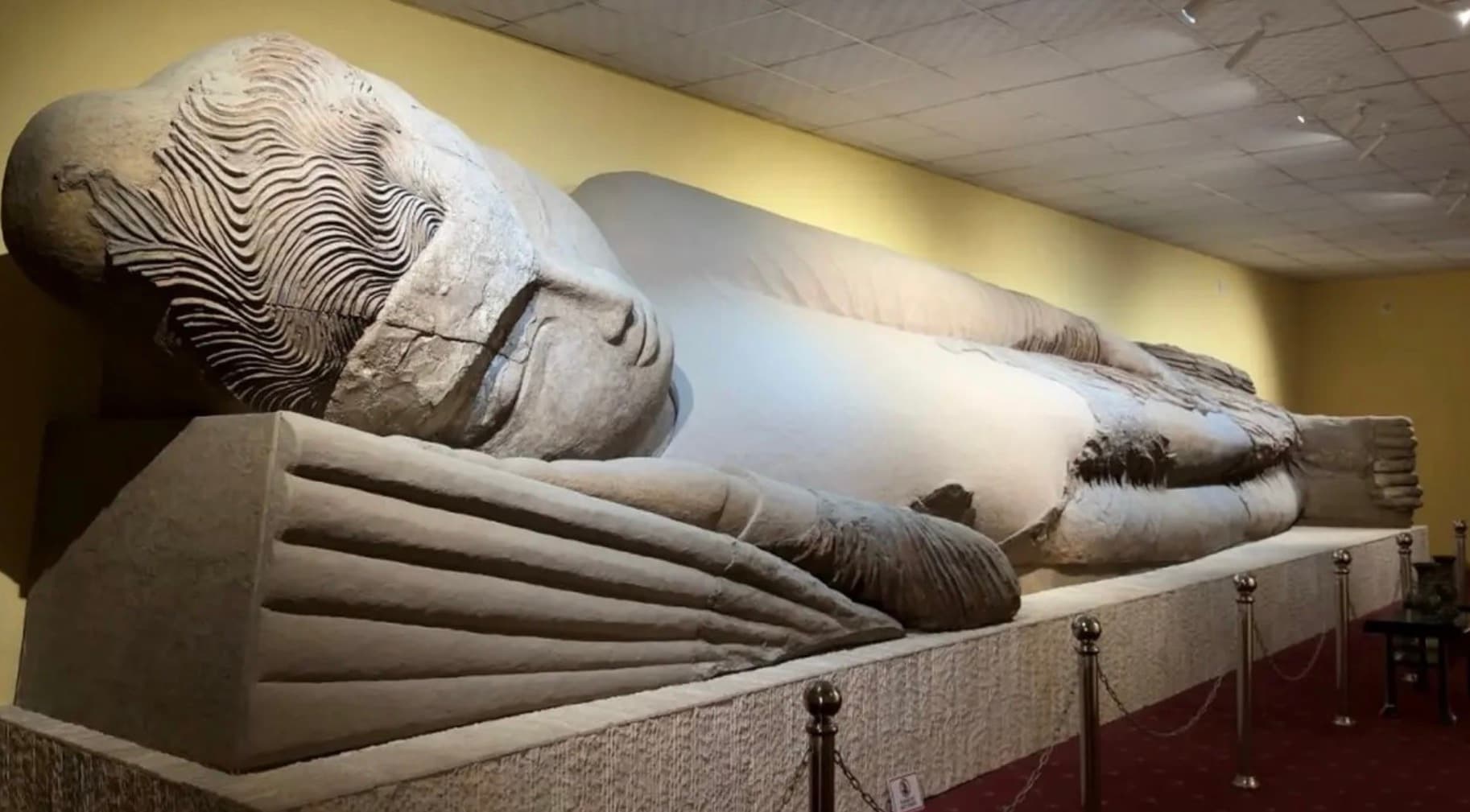
Moscow (AsiaNews) – The National Museum of Antiquities of Tajikistan is celebrating its 25th anniversary; over the last quarter of a century, it has become one of the country’s leading centres for the conservation of archaeological heritage. It houses thousands of artefacts that tell the story of ancient civilisations in what is now Tajikistan, from stone tools to the famous statue of the Buddha in nirvana. In 1996, by decree of the Republic’s government, the museum was established at the premises of the Museum of History, Archaeology and Ethnography of the A. Doniš Institute of History, Archaeology and Ethnography; in 1997, the museum was given a separate premises in the centre of Dushanbe.
Its collection comprises archaeological research materials, artefacts donated by scientific institutions and objects discovered during expeditions throughout the republic. The museum’s defining feature is that its core collection consists of archaeological finds discovered specifically within the territory of present-day Tajikistan; the exhibitions cover various historical periods, from the Stone Age to the Middle Ages, and allow visitors to trace the development of the cultures that have inhabited the region over the millennia.
The museum’s permanent exhibition features archaeological artefacts from various regions of Tajikistan, including stone tools and objects from the Palaeolithic and Neolithic periods, pottery, jewellery and metalwork, domestic items and weapons from ancient settlements, works of art from the Kushan period, and objects associated with Buddhism, Zoroastrianism and other religions. One of the museum’s most famous galleries is Sarazm, one of Central Asia’s oldest agricultural settlements, dating back to the 4th millennium BC and designated a UNESCO World Heritage Site. A special place is reserved for the Buddhist sculptures of Ajina Tepe, a monument from the Kushan period discovered during archaeological excavations in southern Tajikistan. The most famous find from this site is a statue of the Buddha in nirvana, considered one of the largest surviving Buddhist images in Central Asia.
According to data published in official and scientific publications about the museum, the exhibition contains around 1,500 artefacts, whilst the total collection comprises tens of thousands of items. The development of the museum’s collections is directly linked to the archaeological expeditions carried out over the decades in various regions of Tajikistan, including Sarazm and the ancient settlements of the Zeravshan Valley, Penjikent and the Sogdian region, the settlement of Khulbuk in the Khatlon region, the Buddhist monastery at Ajina Tepe and many other sites.
One of the museum’s main activities is the conservation of archaeological finds; many artefacts are recovered from the ground in a damaged state and require special treatment. The restoration of such objects requires an examination of the material, the manufacturing techniques and the conditions in which the object was found prior to its discovery. Collaboration with specialist institutions, including the State Hermitage Museum in St Petersburg and other scientific restoration centres, plays an important role in this work. The international exchange of expertise helps to improve methods of conservation, diagnosis and storage of archaeological collections.
The museum hosts permanent and temporary exhibitions dedicated to individual archaeological sites, historical periods and areas of research; it also participates in international exhibition projects and presents individual artefacts from its collections abroad. Such projects enable foreign audiences to familiarise themselves with the history of Tajikistan and strengthen cooperation between museums and scientific organisations. On 9 October 2025, the international scientific conference ‘From the Past to the Future: 25 Years of Preserving the Historical and Cultural Heritage of the Tajik People’ was held in Dushanbe. This event marked the start of celebrations for 25 years of history and research, and was attended by numerous representatives of international institutions.