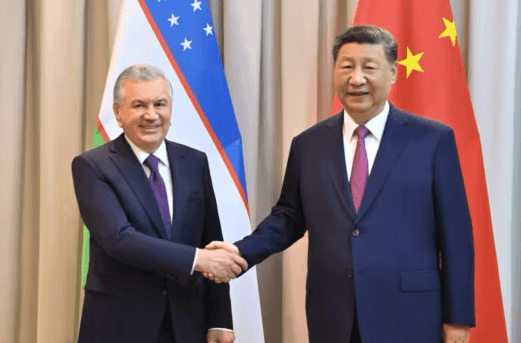
Tashkent (AsiaNews) – Uzbekistan is seeking to develop relations simultaneously with Russia, China, the United States and Iran. Tashkent is attracting investment, concluding multi-billion deals and expanding cooperation with various players. However, each of these nations has its own interests in Central Asia, and a rapprochement with one partner could irritate another. This has already become evident following US Secretary of State Marco Rubio’s visit to Samarkand in October, and the diplomatic dispute between Uzbekistan and Iran over the issue of historical heritage.
“Russia and China continue to dominate Uzbekistan’s foreign policy; the foreign policy privileges granted to Russia do not extend to other countries, and Uzbekistan remains largely dependent on Russia,” Džakhongir Mukhammad, a former member of the Supreme Council of Uzbekistan, told Azattyk Asia correspondents. Moscow remains one of Tashkent’s key partners: the two countries boast long-standing relations, close trade ties and economic cooperation. Labour migration plays a significant role: around 1.5 million Uzbek citizens work in Russia, sending remittances home, and these transfers are crucial for the country’s economy and for the income of many families.
In 2025 alone, Uzbekistan received nearly $19 billion in remittances from abroad, and according to World Bank estimates, around 78 per cent of these funds came from Russia.
Cooperation between the two countries also extends to industry and energy. One of the major joint projects is the construction of Uzbekistan’s first nuclear power station, with the participation of Rosatom. At the same time, Russia’s position in the Uzbek economy is gradually changing; for many years, Moscow was regarded as the leading foreign investor, but since 2023 it has been overtaken by China.
In 2024, the gap between the two countries widened: China’s share reached 27.9 per cent, whilst Russia’s stood at 13.2 per cent. In 2025, the difference became even more pronounced. China accounted for 39.9 per cent of foreign investment and loans disbursed in Uzbekistan from January to September, whilst Russia’s share stood at 7.8 per cent.
Trade between Tashkent and Beijing is also on the rise: in 2025, trade between China and Uzbekistan increased by 34 per cent, reaching $17 billion, according to Uzbekistan’s National Statistics Committee. Russia ranked second with $13 billion, whilst Kazakhstan came third, with nearly $5 billion. Currently, over five thousand Chinese-owned companies operate in Uzbekistan across the energy, industrial and infrastructure sectors. According to the Uzbek presidential administration, by December 2025, Beijing was involved in over 30 energy projects with a total capacity of nearly 10 gigawatts.
Against the backdrop of close economic ties with Russia and China, Uzbekistan is seeking to expand cooperation with Western countries; US Secretary of State Marco Rubio’s visit to Samarkand demonstrated that Washington is interested not only in diplomatic contacts but also in large-scale economic cooperation with Uzbekistan and the whole of Central Asia. Washington is particularly interested in Central Asia’s resources: the United States wishes to diversify its sources of supply for critical minerals in order to reduce its dependence on individual suppliers and strengthen its supply chains. Political scientist Alisher Ilkhamov, director of the London-based Central Asia Due Diligence, believes that cooperation with the West could help Uzbekistan reduce its dependence on Russia, but such a policy also has a downside: as Marco Rubio’s visit to Samarkand demonstrated, Tashkent’s rapprochement with Washington could provoke mixed reactions from other powers. And the dispute with Iran has shown just how sensitive issues relating to historical legacy and political interests can be.