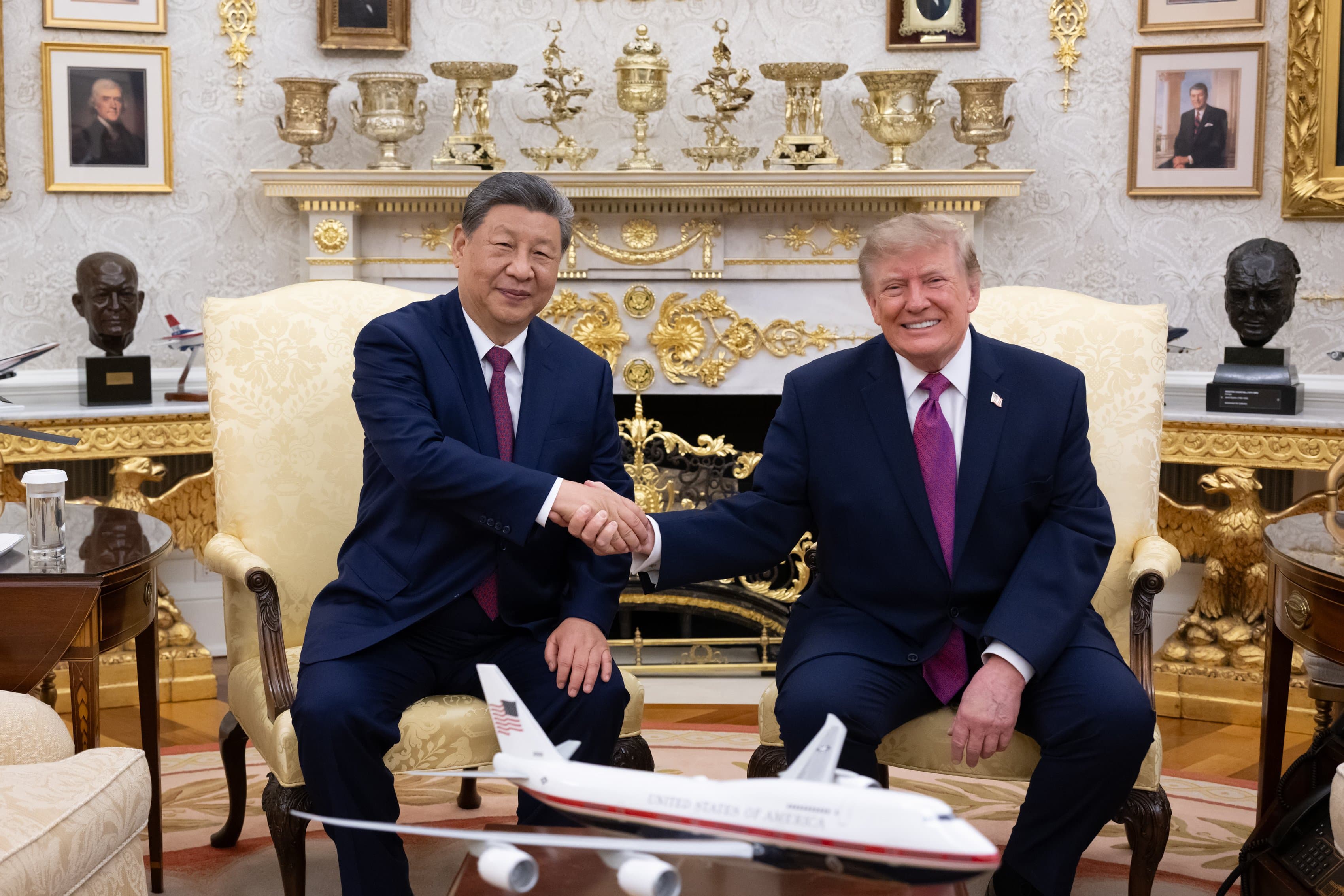
Milan (AsiaNews) – Chinese President Xi Jinping is set to leave Washington today, concluding a three-day US visit filled with solemn words and symbolism regarding the relationship between the two superpowers, yet yielding few concrete results on the issues dividing China and the United States.
In China’s narrative, the prevailing theme of these past few days has been the consolidation of a "responsible" relationship, one that frames the competition over major global issues within mutually respected boundaries.
In this context, the underlying message of the Chinese leader’s visit, deliberately framed as a second act to Trump’s visit to Beijing in May, is the desire to limit the immediate confrontation, albeit without achieving any real convergence, superficial pleasantries aside.
Ultimately, the summit served to buy time, allowing the two sides to effectively keep all options open amid gala dinners and panda diplomacy (Xi promised two pandas to the Atlanta Zoo). This is evidenced by the only tangible result: the extension of the tariff truce.
While the extension was indeed secured, it comes with a very limited timeframe, just two months, rather than the two years Beijing had hoped for.
This is a clear sign of just how far apart the two sides remain: China has honoured its commitments regarding the purchase of American soybeans but has failed to do the same for other agricultural products. At the same time, it continues to use restrictions on rare-earth exports as leverage to exert political pressure on Washington.
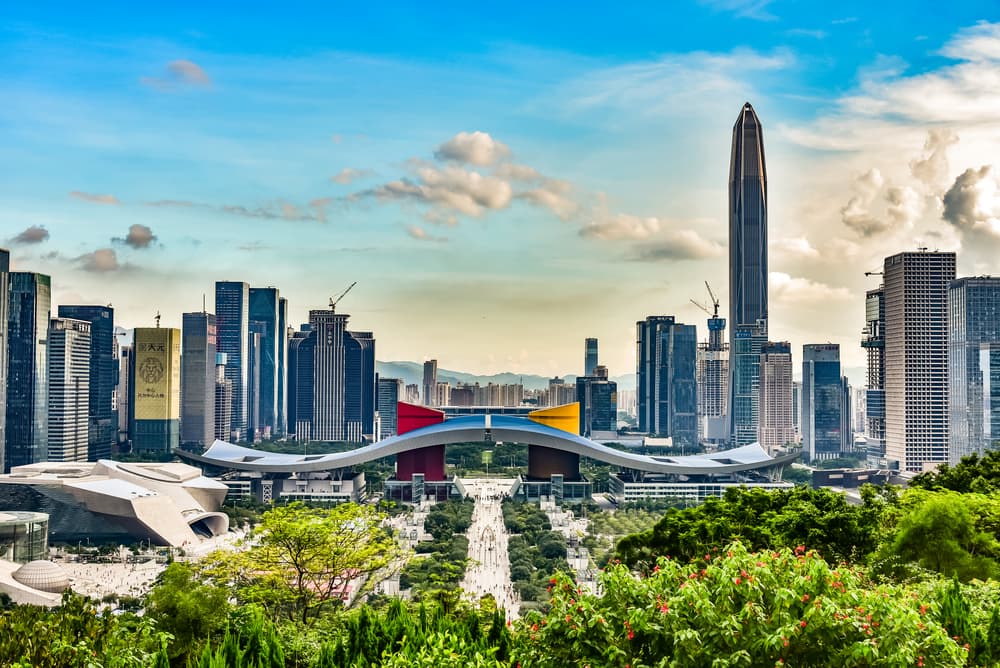
By setting the new deadline for the tariff truce at 10 January 2027, China and the United States are effectively pushing it back to a date following two upcoming multilateral meetings where they will sit at the same table: the APEC summit in Shenzhen and the G20 summit in Miami.
This avoids mutual boycotts of these two major events while keeping the door open for further rounds of negotiations on the sidelines.
Artificial intelligence and Taiwan
Regarding the issue of artificial intelligence (AI), highlighted as a key topic of the talks and symbolised by the presence of high-tech executives at the gala dinner alongside the two leaders, the positions are not merely far apart.
The crucial point is that the two countries are far removed from the horizon of freedom that Pope Leo XIV, in the encyclical Magnifica Humanitas, identified as essential today for safeguarding humanity.
Trump, who, true to form, has recently rebranded the concept, urging the use of the term “superintelligence”, rejects any notion of regulatory bodies and views these tools simply as a means to assert US supremacy. Xi, for his part, appears to acknowledge concerns about the need to ensure AI develops "under human control," avoiding reckless leaps forward.
However, it is important to consider the nature of the control envisioned by a government like China’s, which makes no secret of viewing AI as a tool for enhanced social surveillance, capable of nipping in the bud any voice that deviates from the doctrine and political vision imposed by the Party.
Predictably, Xi also raised the issue of Taiwan, a matter complicated by the question of new arms shipments already approved by Congress.
“China hopes the U.S. side will adhere to the correct position of opposing ‘Taiwan independence,’ and handle the Taiwan question with prudence to lay a solid foundation for bilateral strategic cooperation and the development of China-U.S. ties,” Xi told Trump at the White House in remarks published by the Chinese Foreign Ministry.
The emphasis here is on opposing Taiwan’s independence, which goes beyond the current US policy of backing the status-quo and merely not explicitly supporting it, and on a “solid foundation” for cooperation, which sounds like a clear prerequisite.
The reference to the alliance against Japan
One final chapter, highly sensitive from an Asian perspective, involves the cooperation against Japan during World War II.
Trump introduced the topic in his speech, stating that, “Throughout history, pursuit of those common interests has connected our people across the vast oceans, the tremendous distances and many differences, and even made us allies in World War II. Look at the greatness that we had together fighting in World War II.”
Xi echoed this sentiment, noting that the Chinese and American peoples "stood shoulder to shoulder in the fight against Japanese militarist aggressors," specifically citing the “hundreds of American pilots” who were rescued in the Himalaya at “the cost of hundreds of thousands of Chinese lives.”
All said, it must be noted that rescue operations in question were carried out by Chiang Kai-shek’s nationalist forces, not by Mao’s Communists. Thus, Xi Jinping invoked and reframed a historical event from 80 years ago using a new nationalist (and anti-Japanese) rhetoric, a move that has not gone unnoticed in Tokyo.
When asked about the matter, Japanese Prime Minister Sanae Takaichi simply said: “Although there was a war between Japan and the United States, we have since achieved a solid reconciliation and deepened our relationship,” adding that, “Today, we are allies bound by very strong ties and have a relationship based on mutual trust.”