Beijing (AsiaNews/Agencies) – Chinese President Xi Jinping presented an eight-point plan to revamp the Belt and Road Initiative (BRI) with less emphasis (and money) on large infrastructure projects and more on the green economy, high technology, and digital finance.
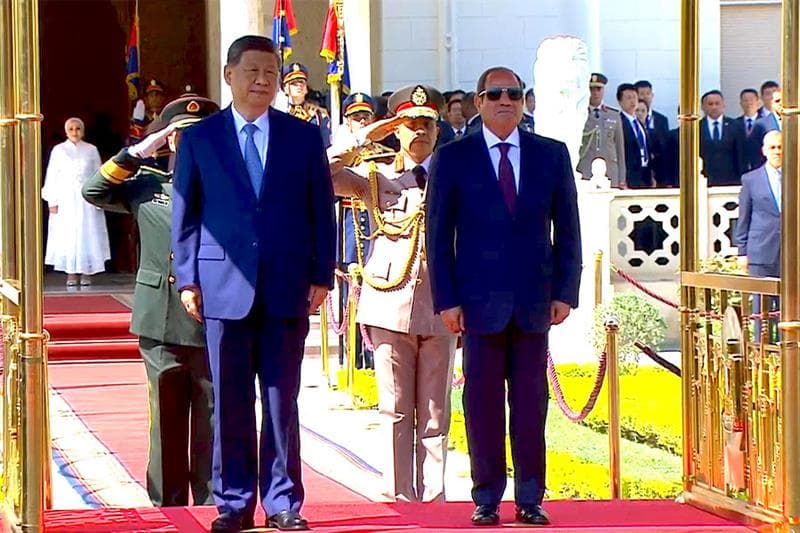
The Chinese leader delivered his long-awaited speech at the 3rd BRI Forum in Beijing’s Great Hall of the People, which brought together a thousand representatives from 130 countries, mostly from the so-called Global South.
Russian President Vladimir Putin was a notable presence, on his first visit to China since the beginning of the war in Ukraine. So was Haji Nooruddin Azizi, Minister of Commerce of the Taliban government of Afghanistan, who said: “The Chinese have more interest in economic affairs, that's why we're here”.
In his address, marking BRI’s 10th anniversary, Xi Jinping criticised efforts by Western countries to reduce their dependence on the Chinese economy, saying that “our lives will not be better and our development will not be faster if we view the development of others as a threat and economic interdependence as a risk.”
To this end, he announced an eight-point plan to develop a “New Silk Road”. The first point is certainly a network of logistics corridors across Asia, Europe and Africa, backed by a " Silk Road e-commerce zone" with more free trade agreements and investment treaties.
Despite the current difficulties of China’s economy, Beijing is pledging US$ 47.8 billion financing from Chinese development banks to boost green development, scientific research and artificial intelligence, and cultural and people-to-people exchanges, including a tourism alliance.
Xi also offered "clean cooperation" to improve transparency and the establishment of institutions to govern the BRI, including a secretariat.
The BRI’s future is more in line with China's ambition to act as a catalyst for the global South, for a "green and sustainable" development as opposed to what it calls "Western neocolonialism".
However, Indonesian President Joko Widodo raised the issue of the heavy constraints created by the debts contracted with China noting that BRI projects "must not complicate (countries') fiscal conditions". Indonesia is heavily indebted through BRI with China.
For his part, Putin, who spoke after Xi, called for global investment in the Northern Sea Route, which he said could deepen trade between East and West.
“Russia does not just offer its partners to actively use its transit potential, I will say more: we invite interested states to participate directly in its development, and we are ready to provide reliable ice breaker navigation, communication and supply," Putin said.
Finally, with respect to the confrontation with the West over new technologies, Chinese Foreign Ministry Wang Yi said that his government will push for the creation of a United Nations body to regulate artificial intelligence.
At the same time, his ministry issued a statement noting that Beijing opposes “malicious obstructing” of other countries’ AI development, a direct reference to the Biden administration’s efforts to block export of advanced AI chips to China.